The opening of four-two is a great beginning. Vitally it makes the 4pt. It produces a trio of blockers whose toothy gaps are just where the opponent wants to anchor. Conflict and a strong attack are imminent.
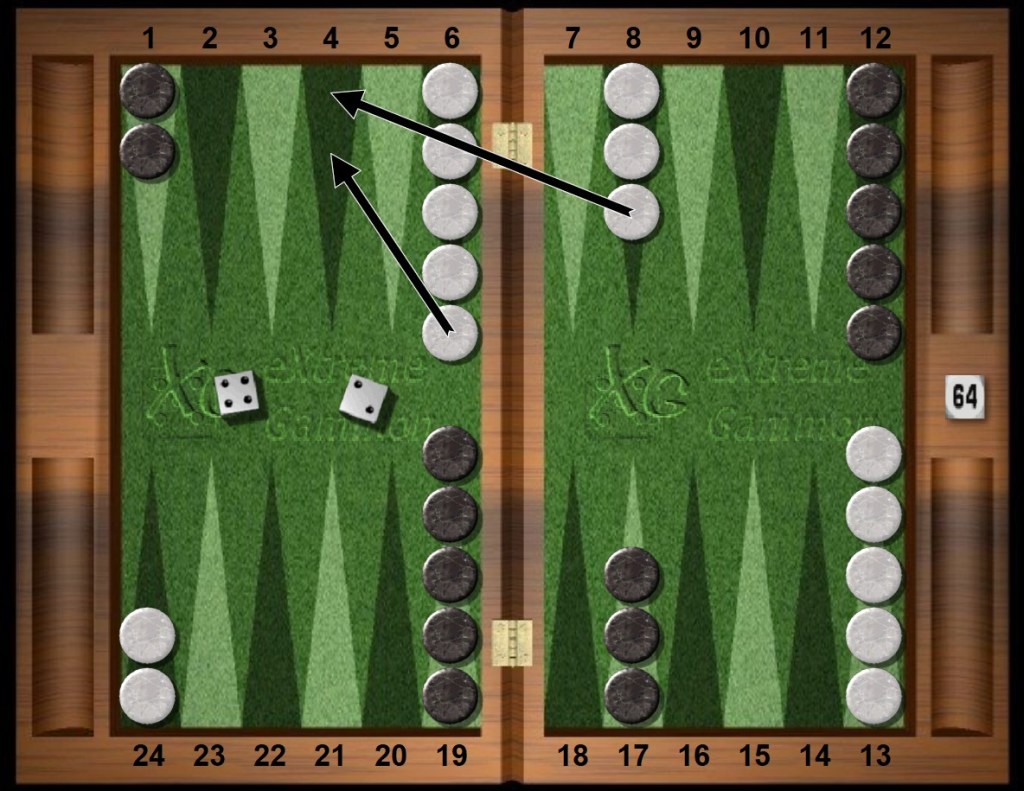
When Black’s responds with 64s to White’s opening of 24s, the large split to the black barpoint becomes the third choice, no longer the top dog among the 64s breed. Both making the deuce point and running toward safety now surpass it.
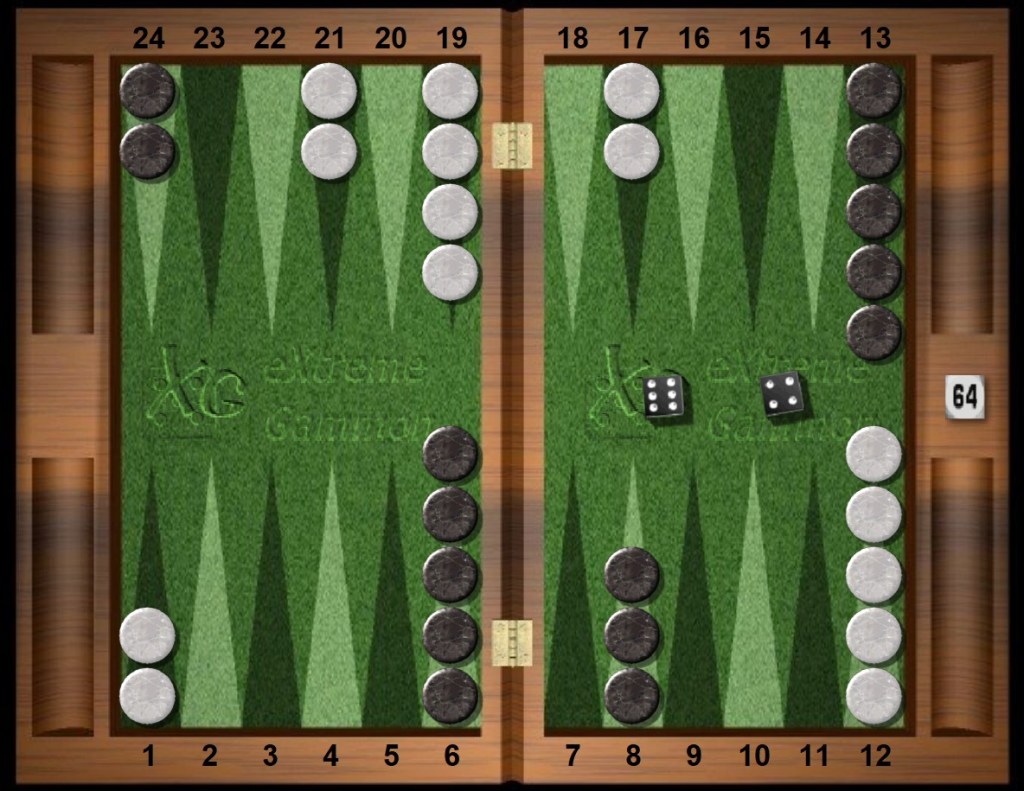
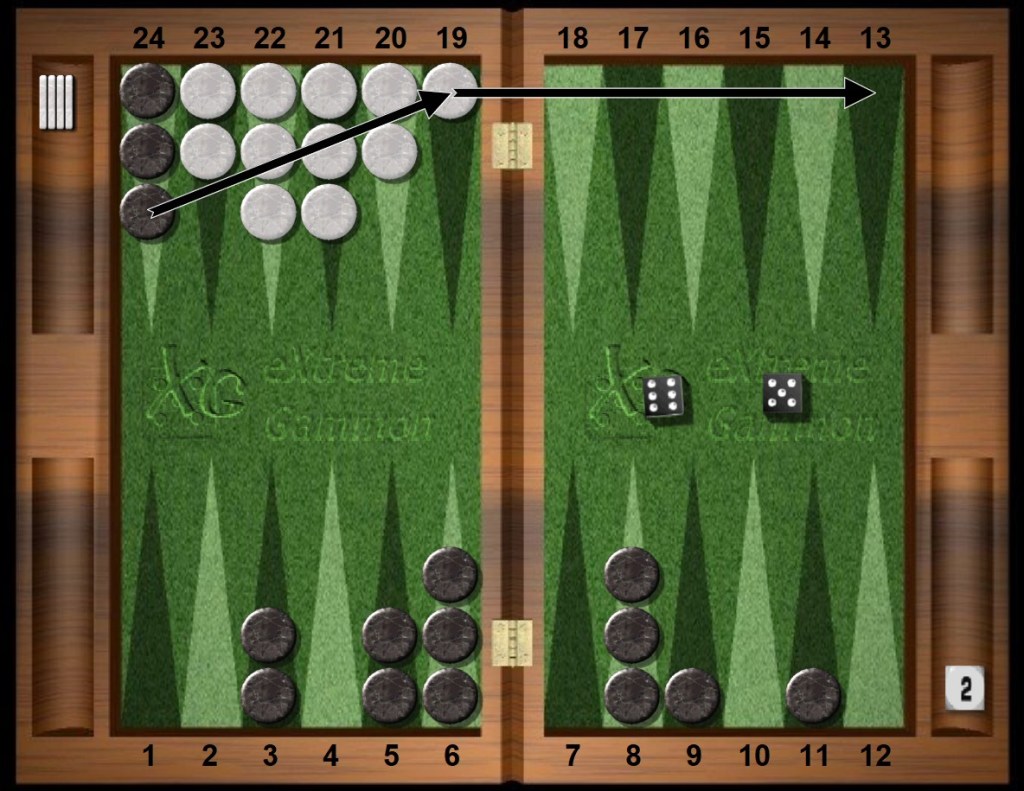
Black chooses the run to the 14pt with his 64s.
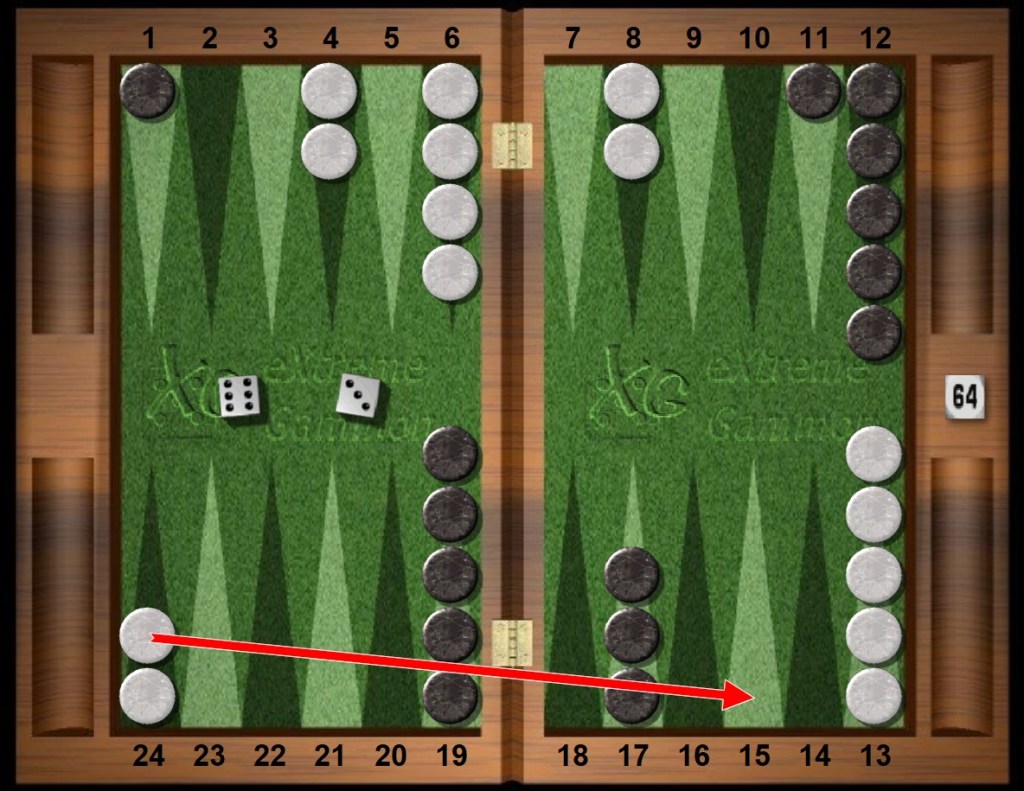
White rolls 36s. Running a white backman to blot in the outfield when Black’s previous 14pt blot awaits is simply a bad idea. The extra direct shot lets Black attack with lightning quickness.
Instead, White returns to the standard big split of the opening toss with her 36s.

Black to play 31s. Hitting loose on the bar point then involving the outfield runner in an attack are very tempting. But Black would prefer to have the edge in home board strength before committing to an attack. As the say goes: The 5pt is the 5pt. That’s why it’s golden.
Hitting leaves three avenues for White to hit back: combo sixes from the bar provide six shots, plus enter with direct sixes provides another eight shots. Include White’s rolls of 22s and 55s and 33s, and the retaliation tally is seventeen. Plenty. Perhaps too rich a game plan for Black, given White has the better home board. Then again, making the golden point still leaves thirteen shots for White to hit Black’s blot in the far outfield.
Rollouts confirm the surprise that making the golden point and hitting the barpoint blot are a photo finish in equity. Either. Or.
Structure radiates into the game plan. Black elects to make the best home board point.
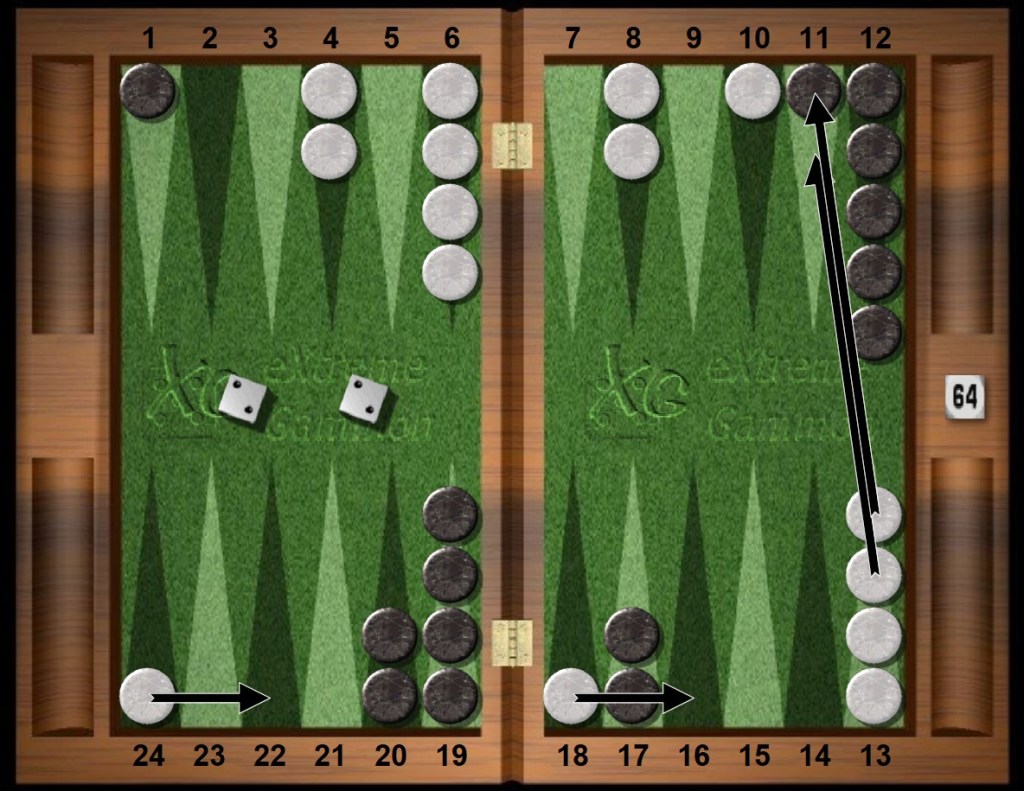
White rolls 22s, one of the tosses that hit whichever way Black decided to play. White hits and points on the outfield black blot then slides the pair of white runners ahead two pips each, thereby keeping direct communication, synchronized. The camaraderie between a pair of runners is an art-form in itself.

Black dances.
And White cubes. Just over the starting line for a first double of the cube in a cash game.

Of course, Black takes.
White begins to blitz, but Black soon anchors on the ace point, thereby forced into an ace point holding game. The game continues. Eventually White leaves a blot during the bearoff and Black conveniently hits.
Things change. Black considers a recube.
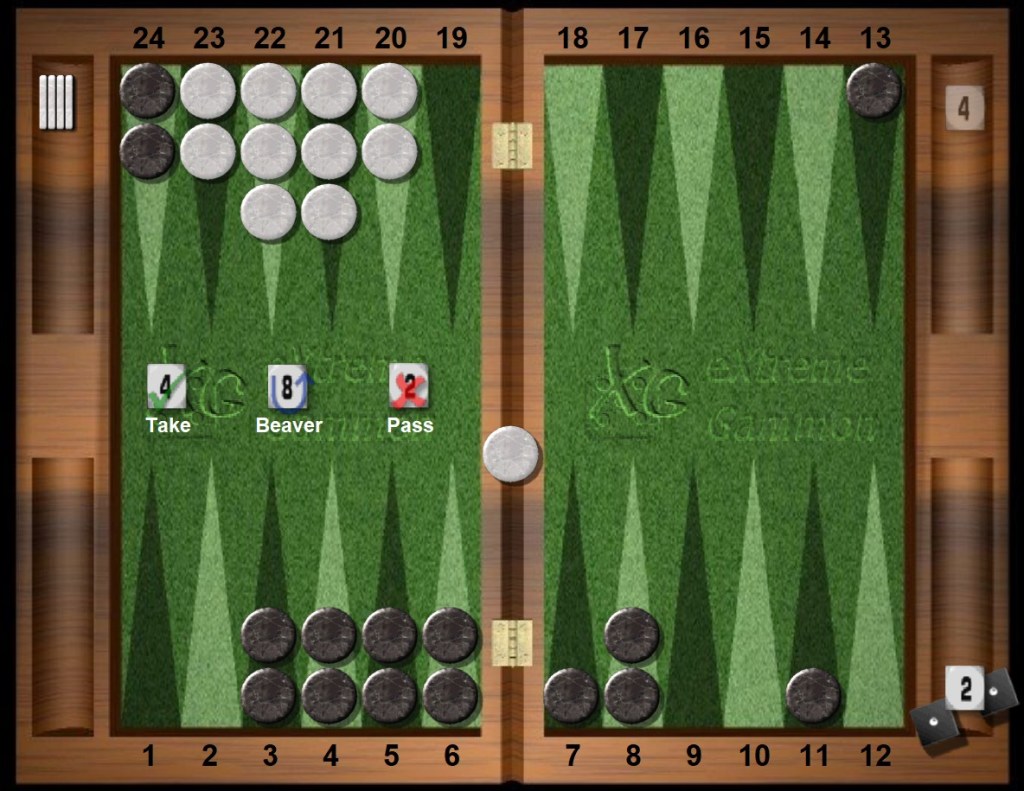
White takes the redouble. Rollouts confirm this is a close pass. And the finale for Black.
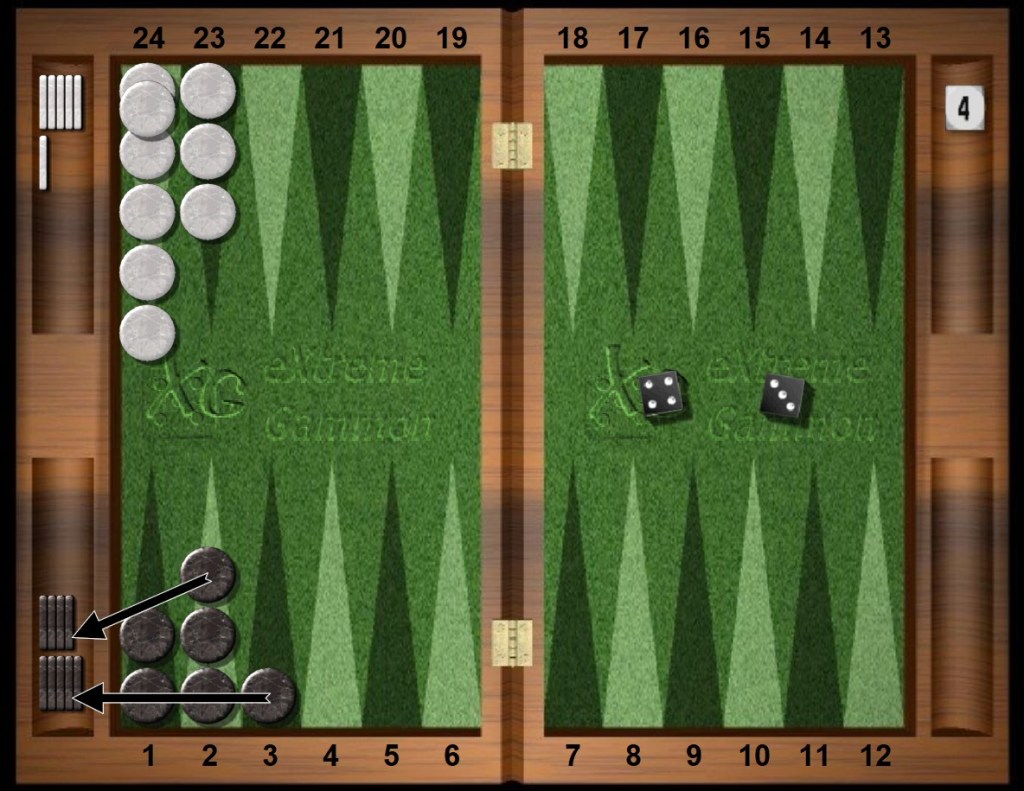
The end.
 the baron talks backgammon