On the management of gammon prospects …
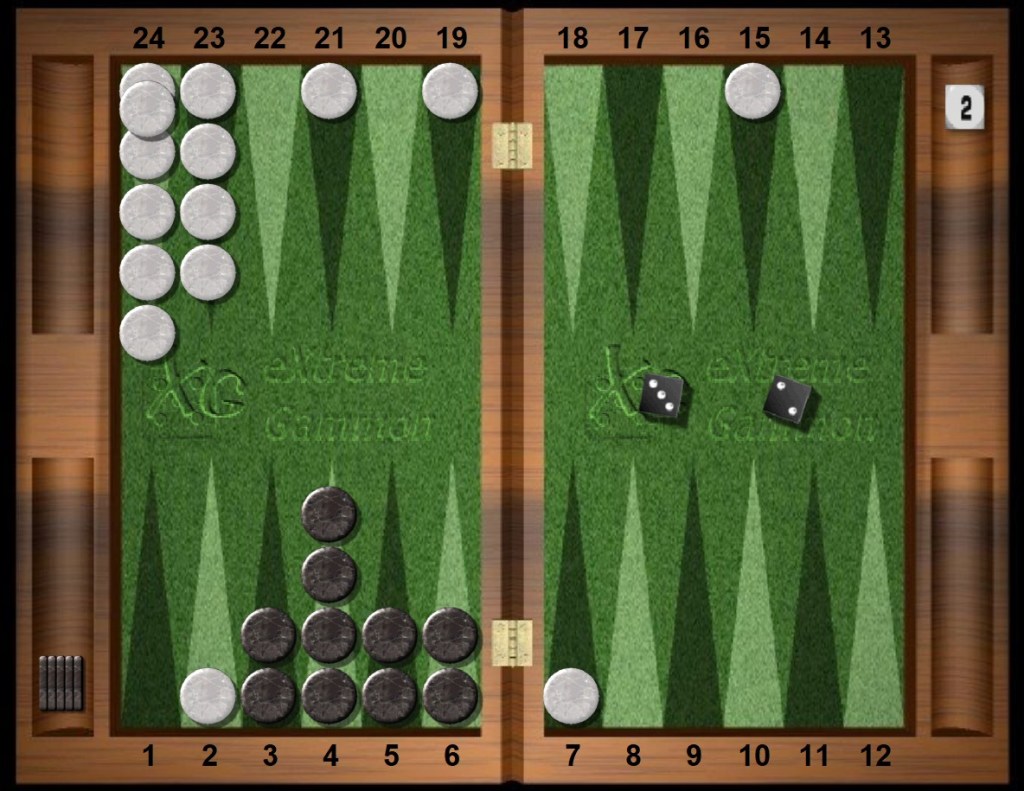
Seven “long” crossovers will save the gammon for White. Black rolls 32s and has ten long crossovers to a victory bearoff.
Two choices play safely. Black can bearoff one checker with 3/0 3/1 and bury a blot safely behind the action. However, the odd number of nine crossovers is only a small improvement over ten, a byproduct of long crossovers. Hence, clearing the 6pt seems the better play.
Instead, Black can try to impede White’s progress home by disruption, either delaying White’s forward motion from the bar or hurrying White’s exit from Black’s home board. Black tries to precipitate a volatile crisis before White develops and saves the gammon. Delay often grants more gammon wins but hurry tends to avoid Black losses. The impediment must put the white checker on the bar, hoping either it dances or it exits beyond. The plan gambles by leaving black blots in the home board after the loose hit. White’s entry and hit from the bar is most unwelcome, except when Black scoops up more white blots on the run back home. Various situations for the loose hit provide an opportunity or two for everything to go wrong.
Two hitting plays create a situation with White on the bar and two black blots decorating the home board and awaiting White’s entry from the bar. Twenty direct shots to hit, plus a few combos, means Black is an underdog to be missed. By contrast, three black plays hit loose and leave only one black blot. White’s entry and hit now is a direct shot plus a few combos. Black then is favored to be missed.
Backgammon requires both technique and imagination. Any study of the game should somehow practice both. Endgame tactics in particular benefit from a long stare at the final shapes of the black home board — the final positions just before Black picks up his dice and makes the play official. One learning drill compares two or more final shapes before deciding. This waffling with the checkers — move ahead then promptly move back — is perfectly legal and acceptable etiquette; unlike chess, touch checkers does not apply in backgammon. Waffle at will against a computer program as the bots do not object. During human versus human play, a courtesy to a transparent waffle is perhaps to hover a tentative checker on the pip: above, a gap, untouched by another checker or board edge — like a flat halo. All will agree as to which checkers be returned where.
In any case, first look at the shape each play makes. The tactical number counting comes later.
When White misses, either by dancing or shoots wide of the target, how easy is it for Black to continue safely through the bearoff? Most high doubles and high rolls for Black are safe enough either way, as the same upper points need clearance. The clearance is not a big issue.
When hit, the black blot freezes the bearoff until Black enters from the bar and scurries home. Black could lose the game. How much does Black fear this outcome? Certainly not happy about it. Yet there is an upside. Should Black hit back when entering from the bar, either now or a roll or two later, White’s gammon losses skyrocket. The correct comparison uses the currency exchange in cash games of two new gammons for each additional black loss.
During study, rollouts chronicle the extra gammon wins bought by the extra losses for each choice of play.


The safe plays act as the voice of reason: clearing the 6pt wins a bit over 99% of the games and earns 16% gammons; whereas clearing the 3pt with a checker off wins 98% of the time but earns 18% gammons. The 2-to-1 exchange rate suggests these clearing plays are close, but the 6pt is better slightly because of “the extra bit over”.


The loose hit can go hog wild by leaving two loose blots in Black’s home board, asking to be hit. The 2-6 blot pair wins almost 93% games and 28% gammons, but only retains three home points. The 1-2 blot pair still retains four home points and wins over 92% games but 33% gammons. This exchange rate quickly eliminates the 2-6 blot pair from consideration.
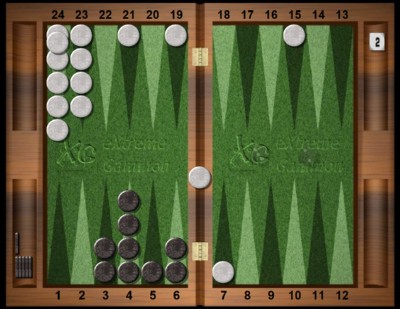

A more demure loose hit leaves only one blot. The hit-and-off blot on the 5pt leaves three home points and wins 96% games but 28% plus gammons. The clear of the 5pt leaves a 2pt blot with three home points and wins almost 96% games but almost 26% gammons.
Finally, in classic Hitchcock style of suspense, Black lands on the white blot at the 2pt and still leaves four home points with a single blot on the 5pt. It wins 96.5% games but tallies a whopping 35% gammons.
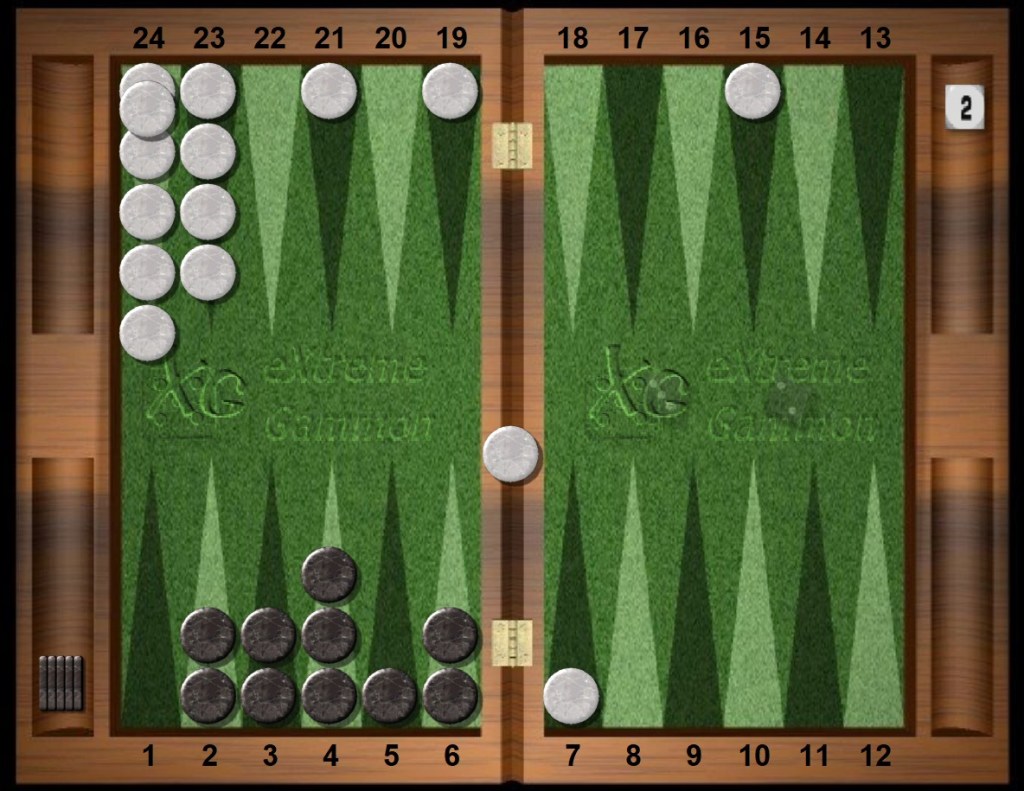
5/2* 4/2 is easily the best play. All other plays are blunders.
And it just looks right.
Balanced. Yet aggressive. Calculated to extol its worth.
In the endgame, the number crunchers go to work only after the visionaries see the truth.
When two or more positions remain undecided, the number crunchers must be summoned. Here, that is not necessary. The number crunchers would say stuff like: Picking and passing 5/2*/0 with a bearoff checker leaves fifteen shots for White to hit from the bar, and three black home points for dancing, and reduces the bearoff crossovers to nine.
The number crunchers would blather on: Pointing on the deuce point leaves only thirteen hits from the bar, but ten crossovers, and four home points for dancing. Two fewer return shots, an extra modest crossover price, but sixteen dancing tosses rather than nine — clearly the fourth home board point matters for dancing. And dancing with white boxcars robs White of four long crossovers.
The number crunchers intone: Clearing the highest bearoff point leaves this many shots this way, and that many shots that way.
But this endgame teaser features a foray into the shape school. Cultivate the habit of a good looksee. The decision is dredged from the shape school of backgammon, but modified by hidden numbers that balance gammon prospects against extra losses using the proper exchange rate. Eyes wide open.
 the baron talks backgammon