Sometimes during a practice session against the bot it is worthwhile to design and build a blunder into the game, to make a mistake on purpose which launches a worldly exploration of a play’s merits. There could be a whole series of blunders in response to an opening play, different rolls that push the parental limits. A famous example occurs when White opens with a blockbuster roll, such as White 13s, obviously makes the golden 5pt, and puts Black instantly behind in the game. Few opening replies by Black can redress the balance, so perhaps Black can elevate a substandard reply into a blunder, and thereby sharpen the reasons why those two golden points are the keys to backgammon.
Below is an example. Game #1 of a three-point match. White opens with the roll 13s and makes her 5pt. Black rolls 64s, a toss which usually offers three sensible plays as an opening roll but now these plays spread in equity as specific replies to a strong opening by White. Include a deprecated play once preferred during the wild 1970s and several 64s moves react distinctly to White’s new home board strength.

In contrast to the silent role of holding the golden point, Black shows some daring and brings two builders down as blots — a blunder unfortunately — which try to disrupt the placid grandeur of an opening 5pt. The play is Toulouse-Lautrec. The correct play runs to the 14pt, and nearly to freedom. The run is a different yet simple game plan that could work.

Here 13/9 13/7 with the two exposed builders, what is the tradeoff in positions? Rather large in equity. The tradeoff of gammon losses? Moderate, a couple percentages.
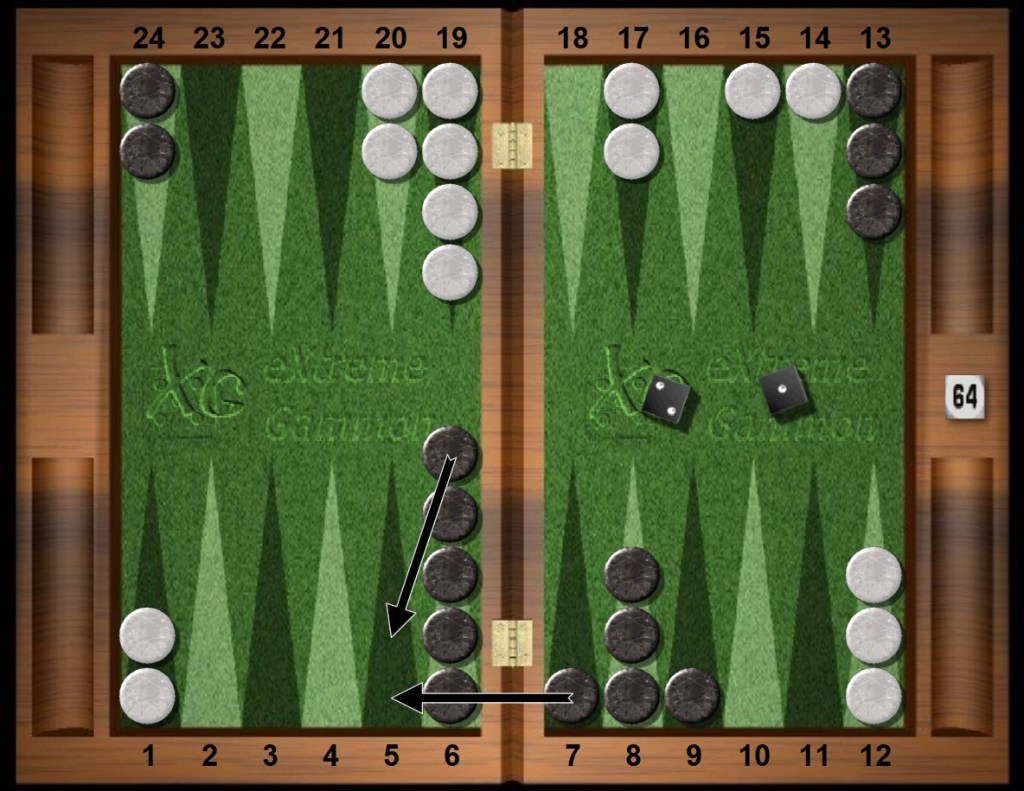
When Black plays recklessly, White immediately sees how the black blunder ushers White’s chance closer to the finish line, revealed by furtive glances at the centered doubling cube. Instead of cubing, White rolls 23s and misses both black blots. Worth noting, White 23s would have hit a black run to the 14pt. Backgammon is not like chess.
Perhaps Black’s risky development will succeed? Black rolls 21s and makes the only play: the golden point.
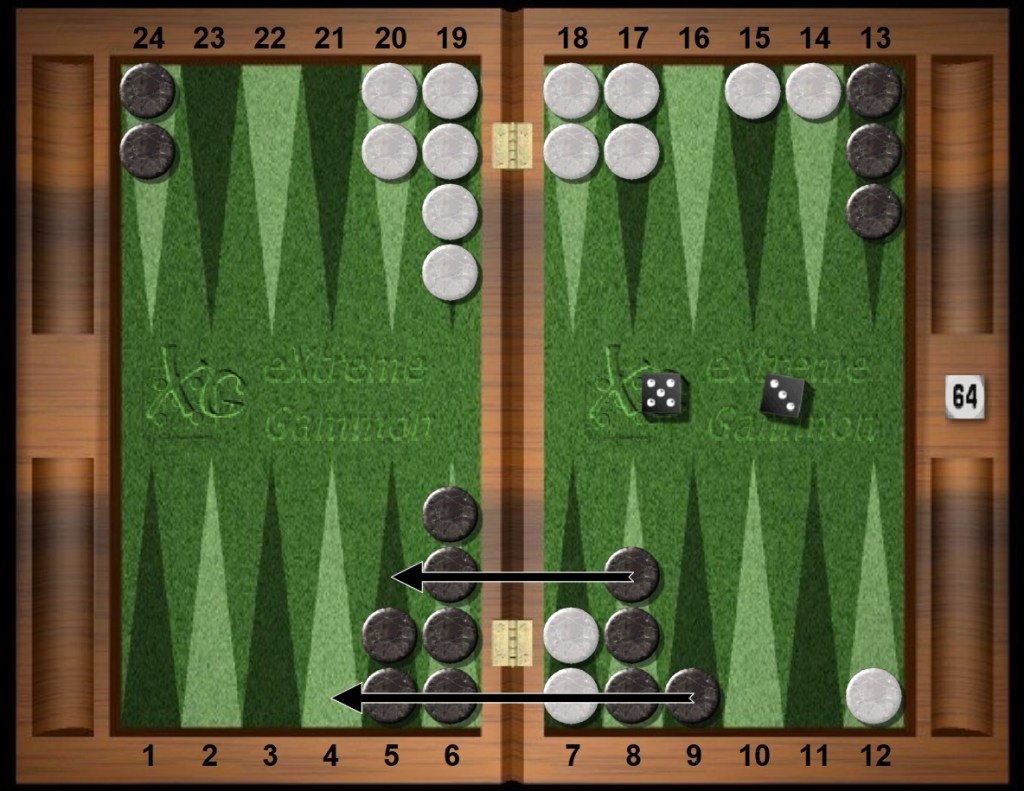
White glances again at the doubling cube, but rolls the dice, boxcars, 66s. The game-changing white checkers inhabit both bar points, as shown above.
Black rolls 53s. Black prepares his home board but his position may already be unplayable.
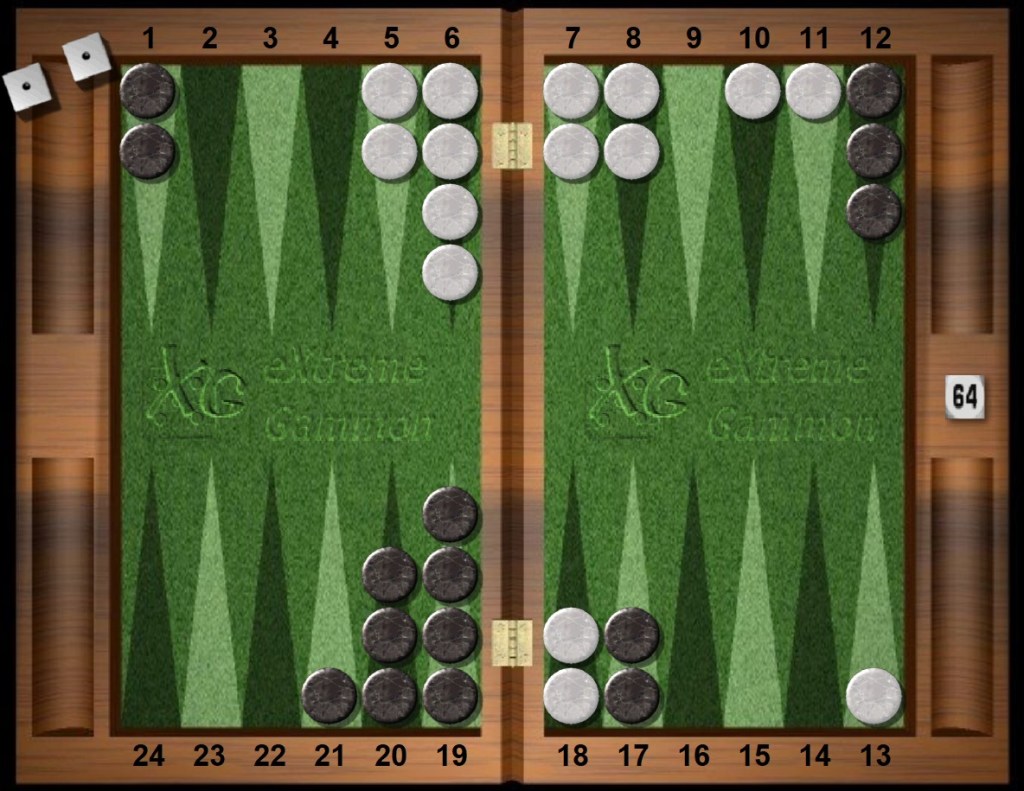
No checkers hit. No catastrophic Black rolls. But bang! Boxcars. White has a massive structural advantage.
White reaches for the cube. A big Double.
And a big Pass. Cube dropped, before Black’s fourth roll. White ends Black’s fruitless struggle with a hidden brigade of a thousand market losers on the horizon of dice exchanges.
This is a short game, full of twists. After such games, be sure to review White’s cube decisions from the beginning. Study the progression of cube actions leading to White’s massive double. One player’s blunder followed by another player’s joker foreshadows an upcoming cube.
To recap: White takes an immediate lead in equity by making the golden point. Black rolls a good reply 64s, but squanders almost twenty cents on the dollar in equity by reckless aggression. White tosses dice that miss the black blots; White brings down her own builders. Now Black strengthens his home board by making his golden point. The exchange benefits Black. Miraculously, White now throws monster boxcars and claims both barpoints. Black replies with an average 53s, safely preparing his home board. White doubles and Black passes. Throughout this short game, White has positive equity and thoughtful cube action. White pulls the trigger in the encore, after the boxcars make the barpoints.
A single outcome proves little in backgammon. Assets like home board points persist, sometimes dictate, and always influence. Opening reply blunders, or not. Roll your own blunders, or not.
 the baron talks backgammon