A fascinating first game in a three-point match.
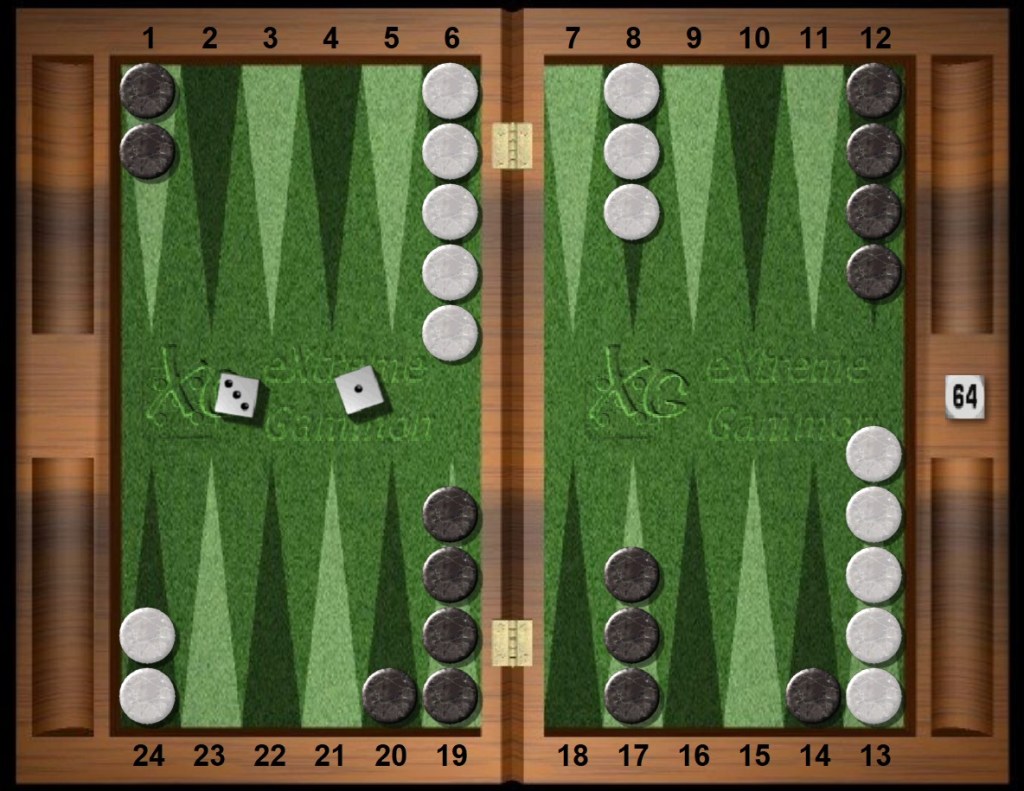
Black begins with opening roll 21s. With the smallest pip lead, objectives matter and Black wants to squeeze the most out of his small advantage. Black slots his golden point then brings down a midpoint spare as a safe yet effective outfield builder. The white hit of the black outfield blot is “duped” by the better combined hit on the black 5pt.
White responds with her opening reply of 13s. White’s reply to Black’s opening roll is entirely duplicated. Make White’s golden 5pt? Or prevent Black from making his golden 5pt by hitting and get paid almost three rolls in pips? There is no comparison in equity: hit the black blot. The proverb “Make the 5pt, stupid!” is usually good advice, but here is an early choice for White where the proverb is very wrong.
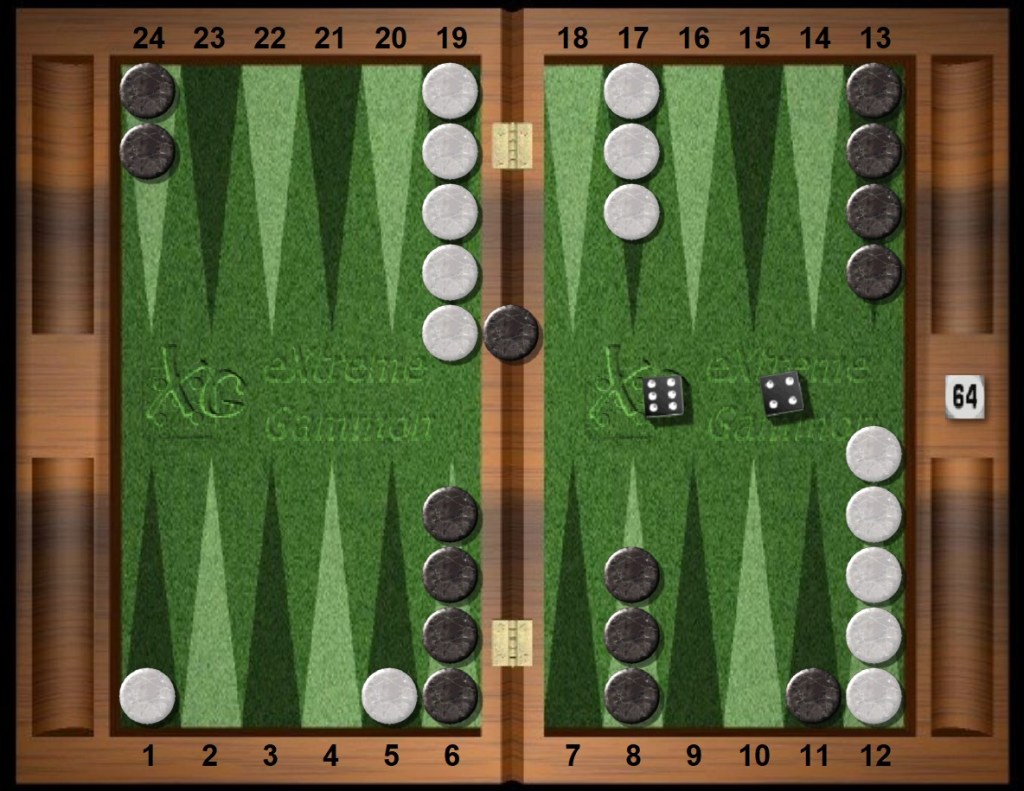
Black enters from the bar and hits loose on his golden point. Black and White will throw jabs with the black 5pt location as punching bag.
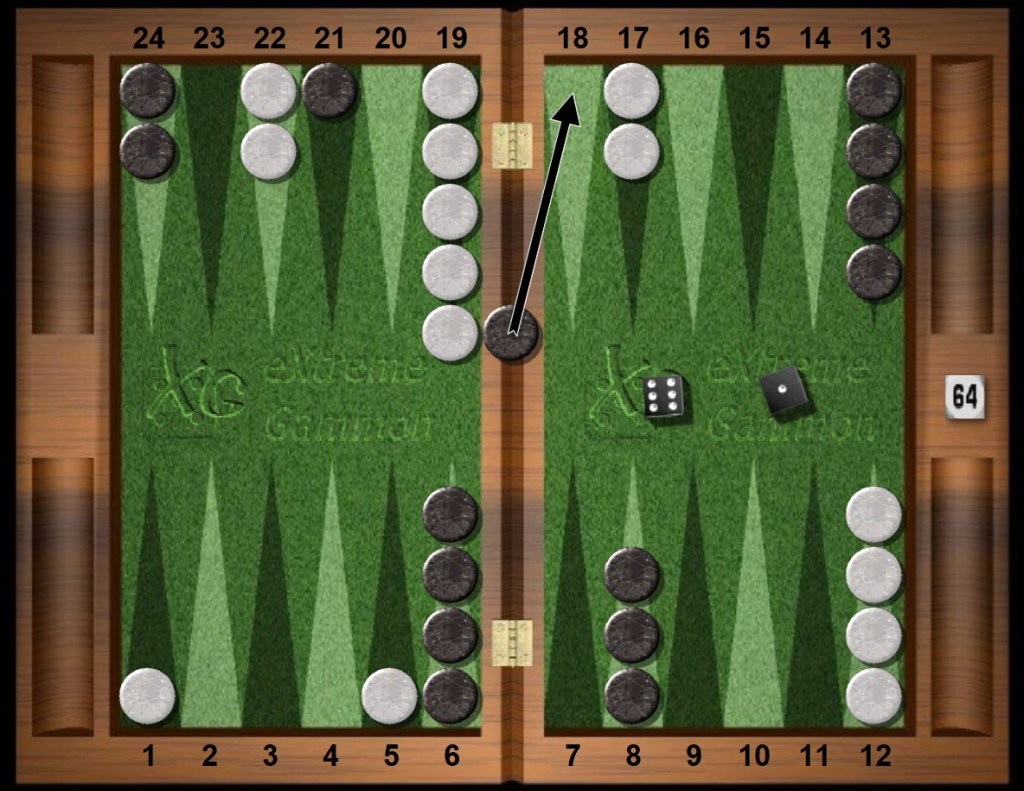
Great return hit from the bar with White double 55s, which also makes the white home point with outfield spares, partly blocking Black’s new dancer on the bar.
Black rolls 61s from the bar. Five rolls behind, Black’s game plan now is to play a provocative defensive style. Opportunistic. Looking for a chance to turn the tables. An anchor is vital to both Black and White. Black slots two forward anchor prospects with his four backmen.

With the roll of 36s, White twin hits loose from the midpoint into the white home board.
With B54s, Black enters both dancers plus hits White’s home board slot.
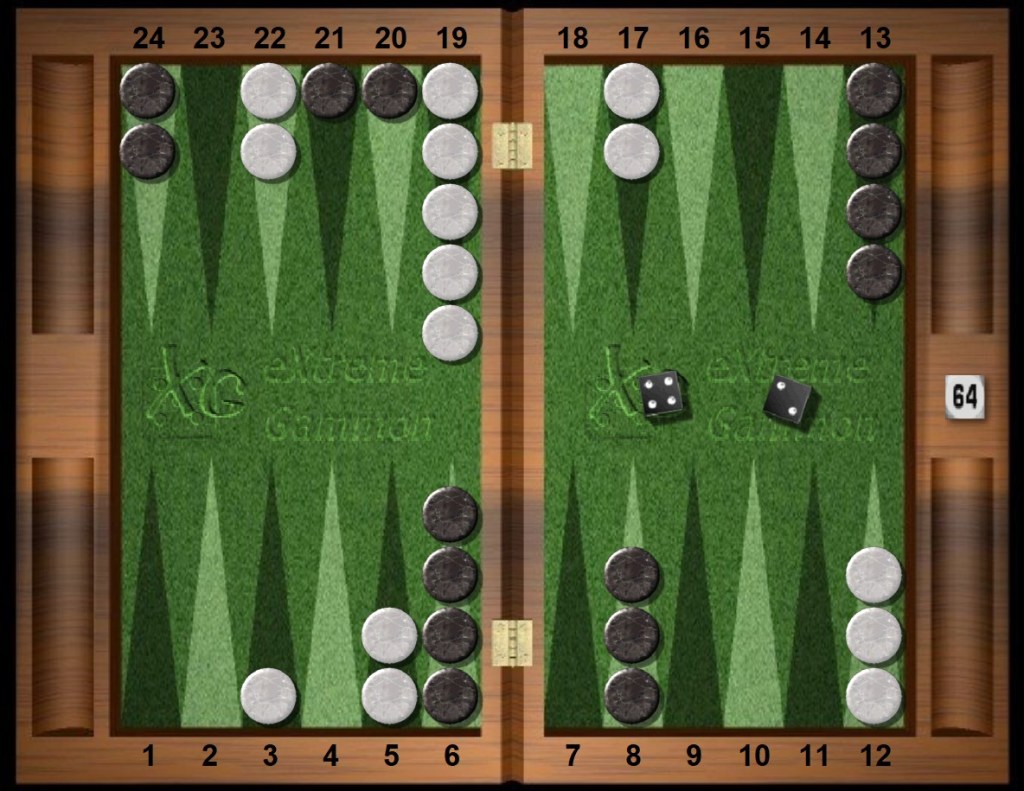
White enters from the bar with W34s and anchors on Black’s 5pt. Now White’s golden anchor.
Black rolls 42s. White anchor begets Black anchor? Golden anchor faces golden anchor? Or beef up the black board with a new home 4pt?
The parallel structure (two-way holding game with golden anchors) and the three-roll White lead in pips say Black’s anchor may last longer, providing the occasional shots at white outfield blots. With the deuce Black slots the 4pt since White is likely to run her blot next roll. If White hits the black home slot, it is not a tragedy but merely more timing in a holding game.
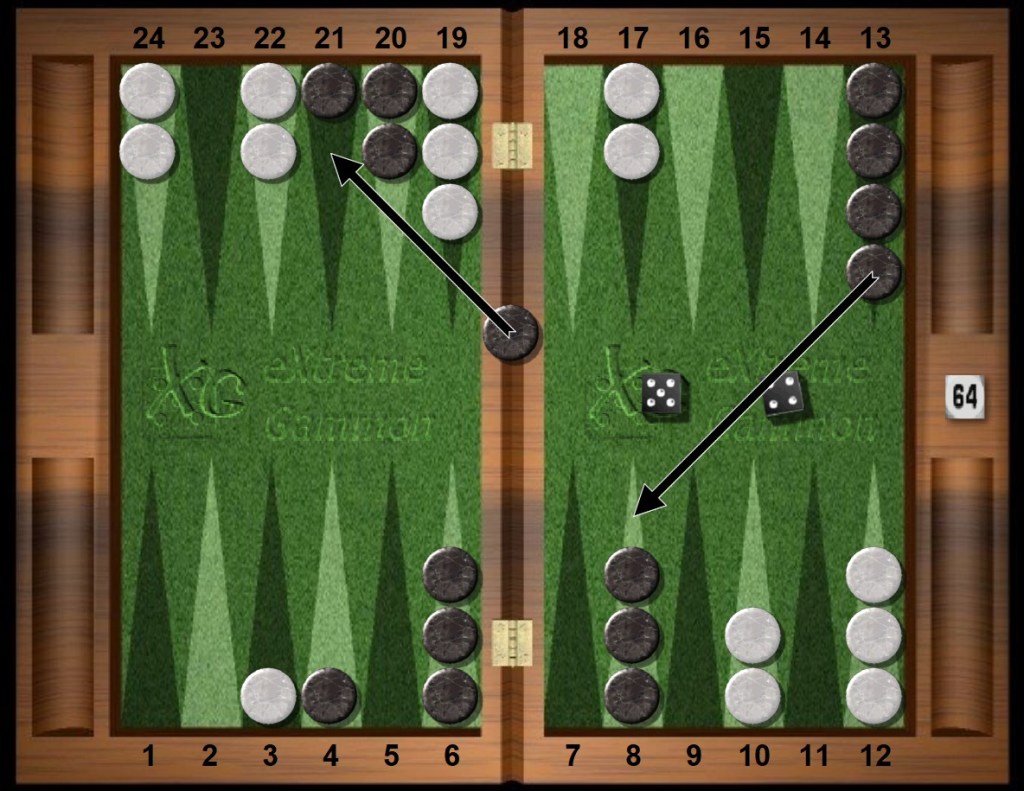
White gets a second round of double 55s. White points on the guff black blot and runs the white anchor.
Black rolls 54s from the bar. To spurn the backgame anchor and cover the Black 4pt blot would be a blunder. Hence Black must briefly enter a backgame to tighten up his prospects. White’s single backman will soon be running into the outfield. Then Black’s home slot will graduate to a valuable home board point. And if White hits anyway, it adds timing to Black’s defensive anchors.
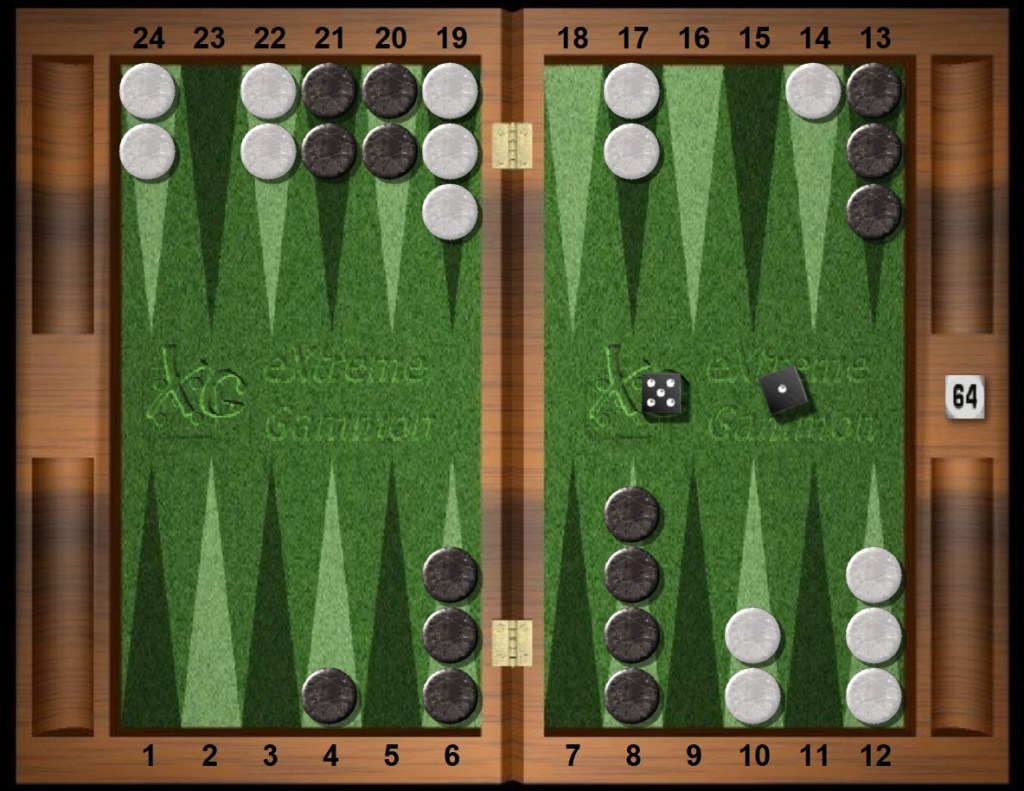
White rolls 56s. White runs into her outfield.
It is worth counting Black’s hitting shots. Sixes and sevens (with blocked 33s) is exactly the same shot tally as two vanilla directs — twenty shots for Black to hit. When Black misses, White’s clearance is reasonably good.
Hidden within the analysis of this backgammon position is a tremendous mistake in Black’s thinking: Will Black always hit the white outfield blot after a lucky toss? Black’s next dice test this assertion.
Beforehand, however, notice that leaving the white blot in Black’s outfield leaves fewer shots, but is a far worse play because most black hitting rolls do not break an anchor.
Black rolls 51s.
Should Black break anchor to hit? Black has no home board improvement yet. It is thus too early to break the backgame defensive structure to hit. When that conclusion is true, Black should leave blots like teenage acne inside Black’s home to build a board quickly. With the 51s Black slots both the 3pt and the 5pt.
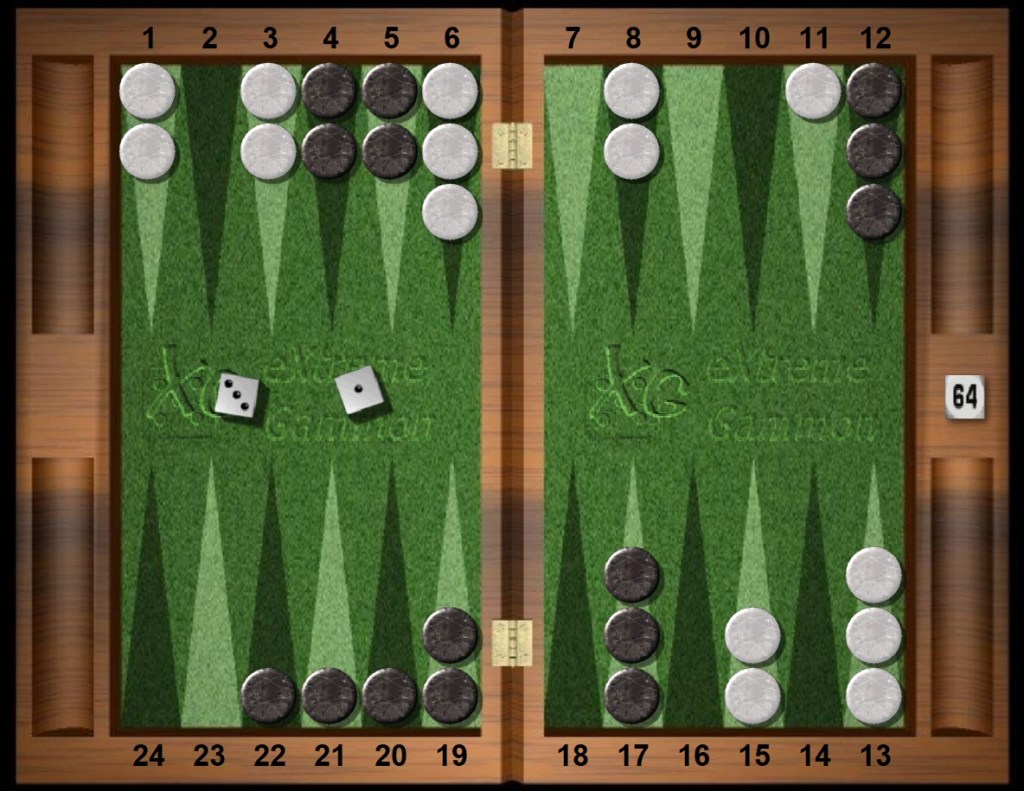
White knows what is happening and can make the 11pt (not 10pt) with her 13s roll, leaving a free blot to tempt and taunt Black into hitting too early. The play itself prepares to clear her outfield more easily.
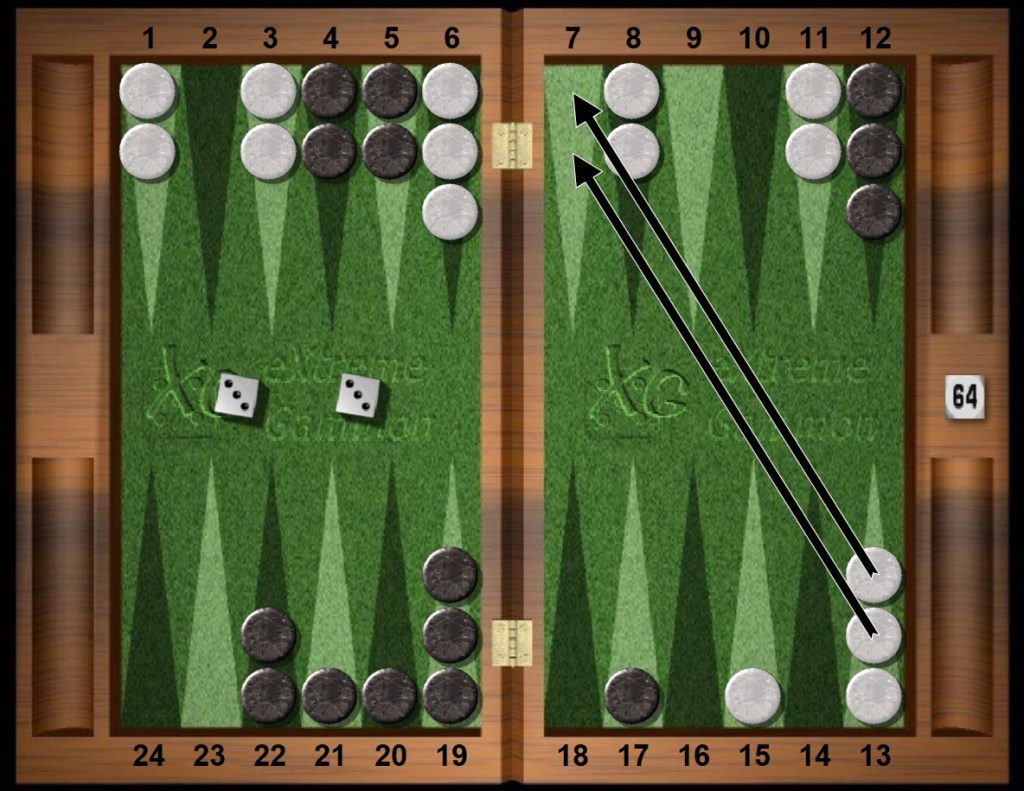
Black misses anyway and with 52s breaks his 8pt, putting checkers inside the home board.
Amusing. White strands her 15pt and 13pt with the roll of double 33s. White taunts Black again by breaking the midpoint to make the barpoint, but now White prefers not to be hit.
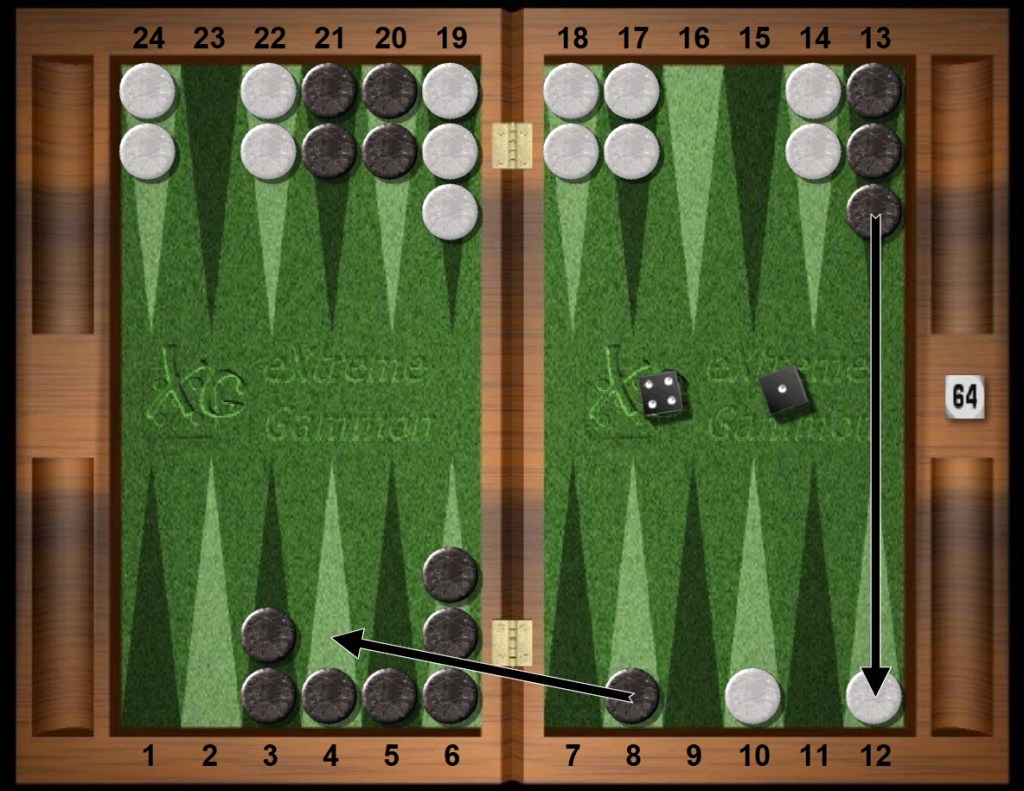
With the roll 41s, now Black can hit and cover. Suddenly White’s home board and Black’s home board are the same raw strength. White is on the bar. Black slots his golden point again, but Black has covers should White dance. What if White dances? Is it a cube?

With 24s White enters from the bar and manages to safety her outfield blot.
With double 22s Black covers his golden point, creating a solid menacing 4-point home board. Attacking the white blot instead would be reckless.
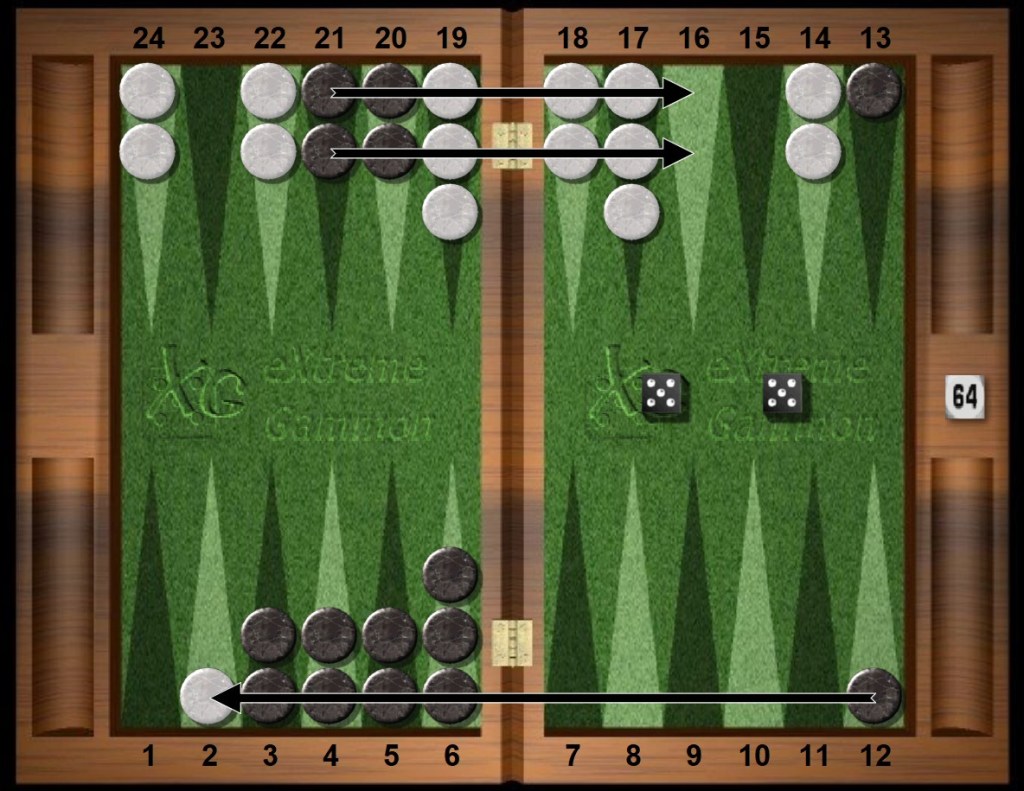
White rolls 12s and scoots her outfield spare ahead. The white runner is paralyzed.
With double 55s Black hits loose and advances the back anchor, which is slightly better than advancing the golden anchor.
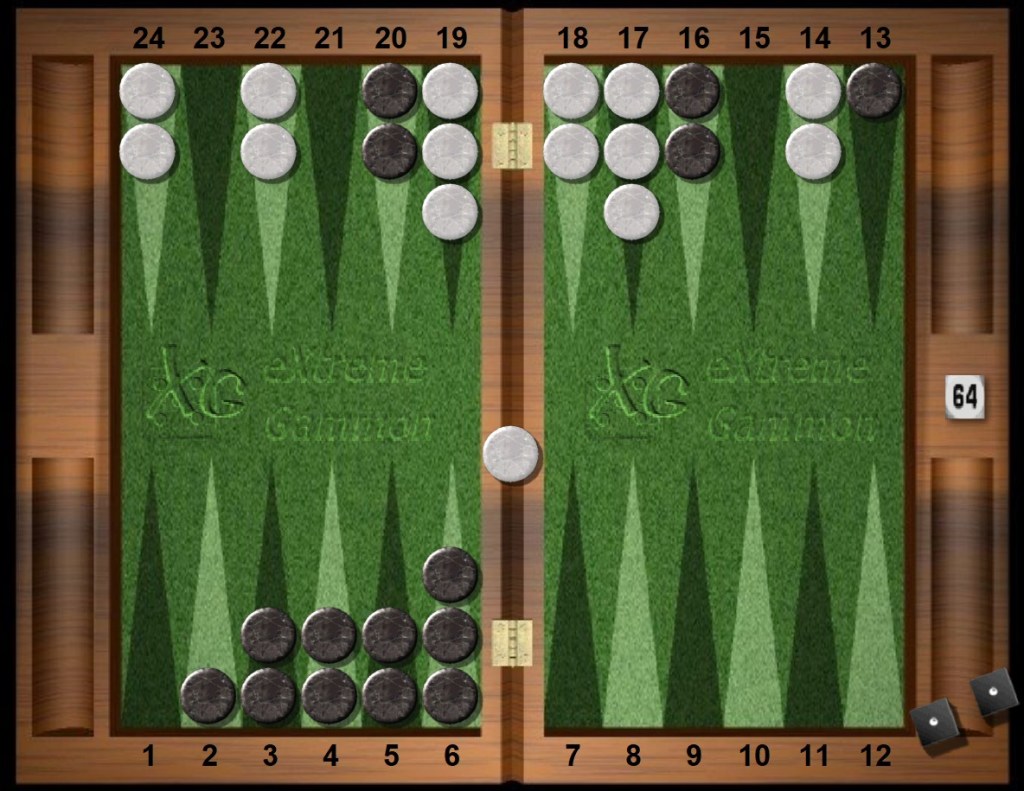
White dances.
Black cashes the first game of the match. Black draws first blood.
In summary, White left a poison blot on her 11pt and Black nearly fell into the trap of breaking anchor early to hit with his roll of 51s. Early means without a home board prepared. At the last moment Black recognized the peril and refrained. Suggestions: Collect poison blot positions. Be aware of possibilities for poison blots. Adjust shot counts in response.
 the baron talks backgammon