Backgammon has plenty of intrigue. Some cube decisions can tempt paint to strip itself. Other choices seem routine, mundane, dull even. However, whether to drop a cube or continue the game at twice the price? That is never a dull question. Deserving a thoughtful answer.
When a backgammon position is on the cusp of Take or Pass, be they both the same, the player accepting the doubling cube needs a few moments of silence and respect. After all, the situation is a lost cause. Pay the stake now? Or struggle to lose 3-out-of-4 similar doubled games from here?
An expert will usually choose to pass the dull positions but accept any complexity of a new intrigue. Where skillful checker play can reverse fortunes.
That said …. What do you think about the cube decision in reference takepoint #105?
Cash game. White doubles Black in this position. Then White will toss the dice.
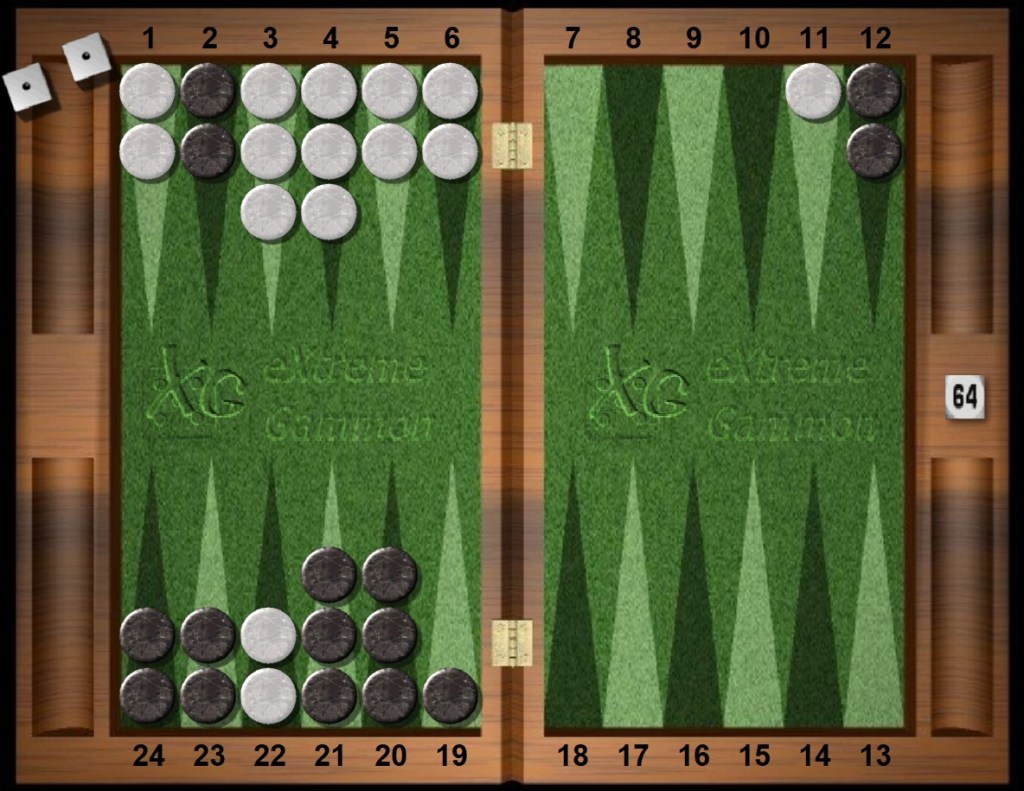
Both White and Black have a mediocre anchor. White’s board is still intact, Black’s has an exposed blot on the broken 6pt. Only a midpoint checker can cover the black 6pt. Black is behind in the race too by roughly the midpoint checkers. Plus White threatens to hit and escape.
White has an easy Double of the cube.
Should Black Take? Can Black Take? Why would Black take the cube in this situation? Suppose the position above is a reference take point. Black has lost. It doesn’t matter whether Black passes the cube and loses one stake with certainty or whether Black continues the game at double the stakes yet loses the original stake on average. Both are bad, although both are equal in the long run.
A reference position of a takepoint affords a unique opportunity. Black can take or pass the cube for reasons not based on equity, since the current equity is precisely minus one stake. Unusually, the selection of pass or take is based only on the likelihood that your opponent will muck up the situation while playing White. The better player should seek complexity before sliding into defeat.
If both sides typically would play simple tactics to finish the game, then skill is blunted and Black as the better player should pass the reference cube, thereby starting a new and more volatile next game in a finite session.
If White has complicated strategic goals to achieve, with delicate and precise tactics, plus plenty of volatile contact, then Black can take a reference cube. Is that the case here? How can Black win? Overview, first Black avoids being hit (25-in-36 White rolls) plus not parlay another shot after awkward Black sixes. A safe black blot sidesteps an immediate gammon loss. Then Black must get luckier in hitting outfield blots or, failing that, have White leave a home blot later, then hit it.
Enough of a temptation to continue the game? The answer to that question, dear reader, is up to you. Rollouts suggest Take or Pass differ in equity by a mere 2mp (or one cent in five dollars). If White is a good player, then future White checker play is likely smooth sailing. Hence, Pass.
 the baron talks backgammon