This game begins with standard point making then shuffling checkers about awaiting the order to charge, thereby running ahead until Black and White face each other in a holding game. Hoping for the other to crack. An outfield standoff.
The cube is untouched, of course. The game has been balanced throughout. The strategy, delay tactics where each side waits and waits until someone breaks.
At that moment both players — Black and White, or you and me — must reflect on the doubling cube before each upcoming roll. The dam is about to burst. A crisis looms over the next few rolls. The doubling cube grows in power and gently glows in no man’s land.
See the position below.

A moment of crisis becomes an exchange of jeopardy. And another exchange of jeopardy. And another. Until one side faulters and the other side cubes.
Black rolls 64s and frantically looks around for another play. The six is forced in this situation. Black’s outfield 14pt has a special relationship with White’s outfield anchor. Borrowing from chess, the White and Black points are said to be in opposition to each other, six pips away, glaring.
White has the extra checker on her barpoint as a buffer for White’s roll of 6s. Black has run out of time and must bring an outfield checker all the way into Black’s home board, stranding the other outfield blot. A six roll, direct plus indirect, tally to seventeen shots that hit, a shade less than half the rolls and the top shot count of any single sniper. Two outfield points in opposition cause this flurry of fisticuffs.
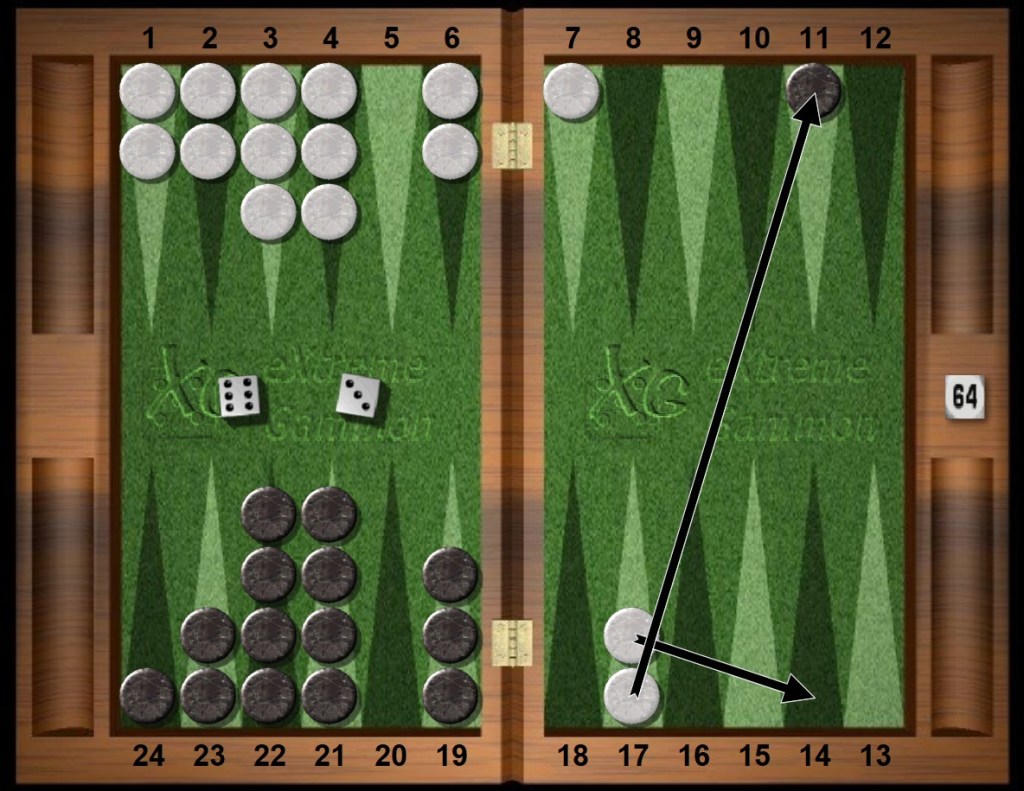
White hits the black blot on the midpoint with her roll of 36s.
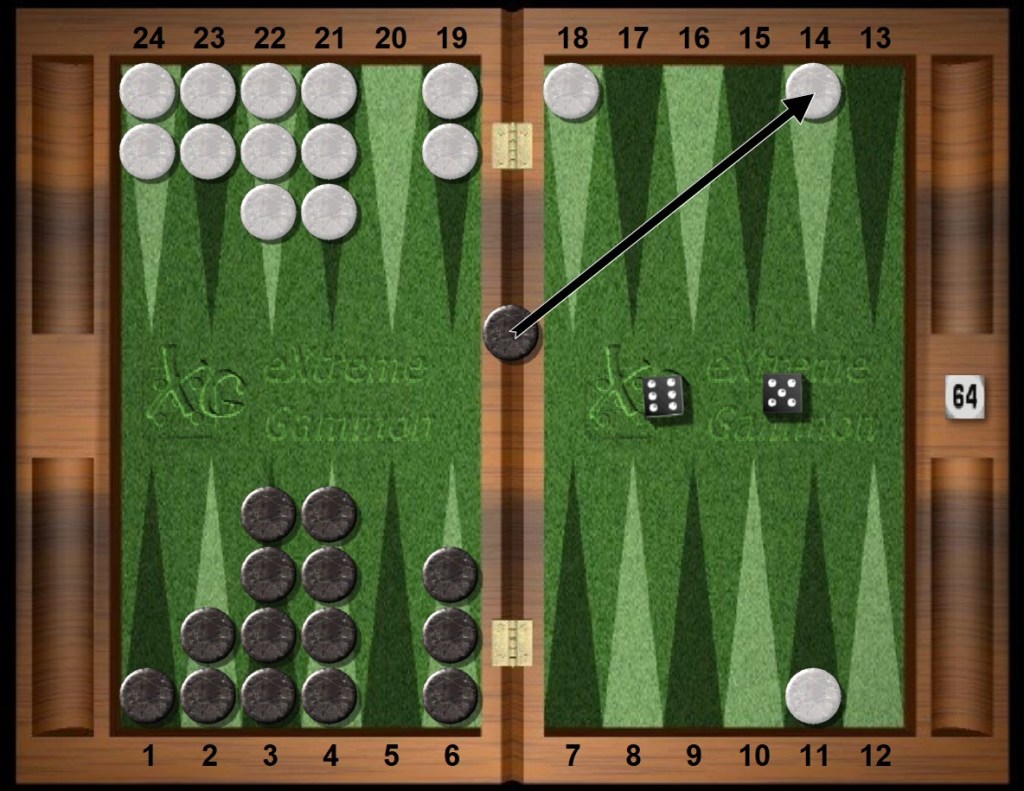
Black leaps from the bar to hit the white outfield blot with 65s, conveniently called lovers leap.
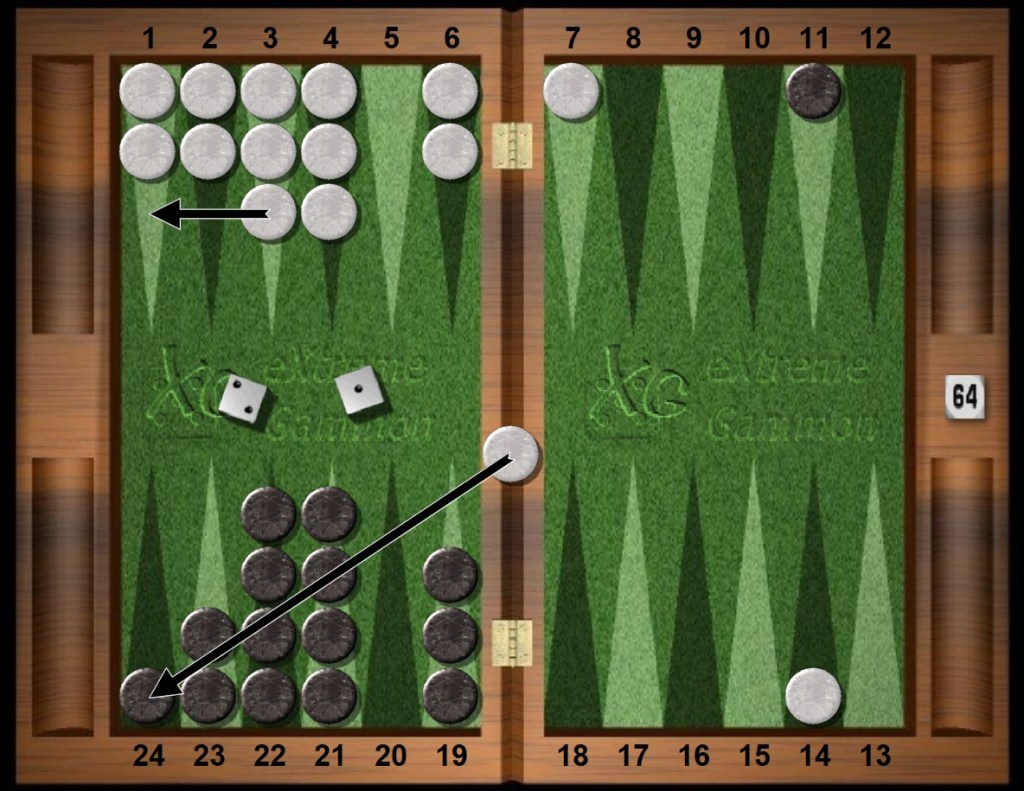
White enters from the bar with 12s, and hits Black’s ace point slot.
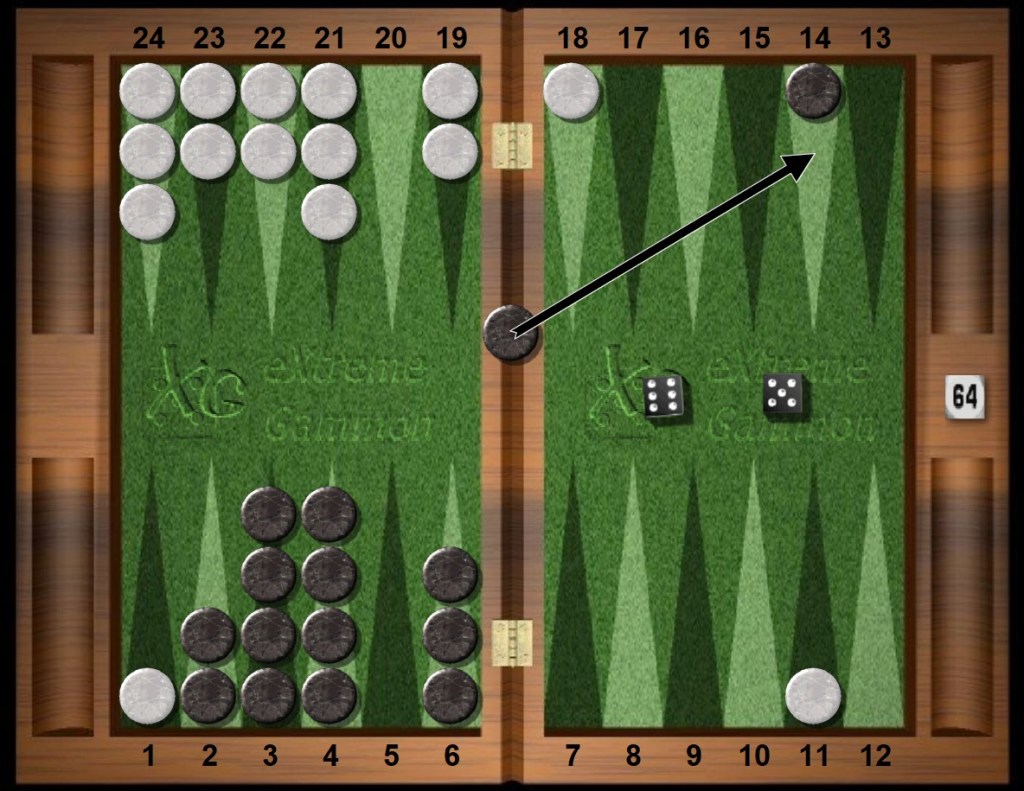
Black again leaps from the bar with 65s, but this time Black remakes the outfield 14pt.
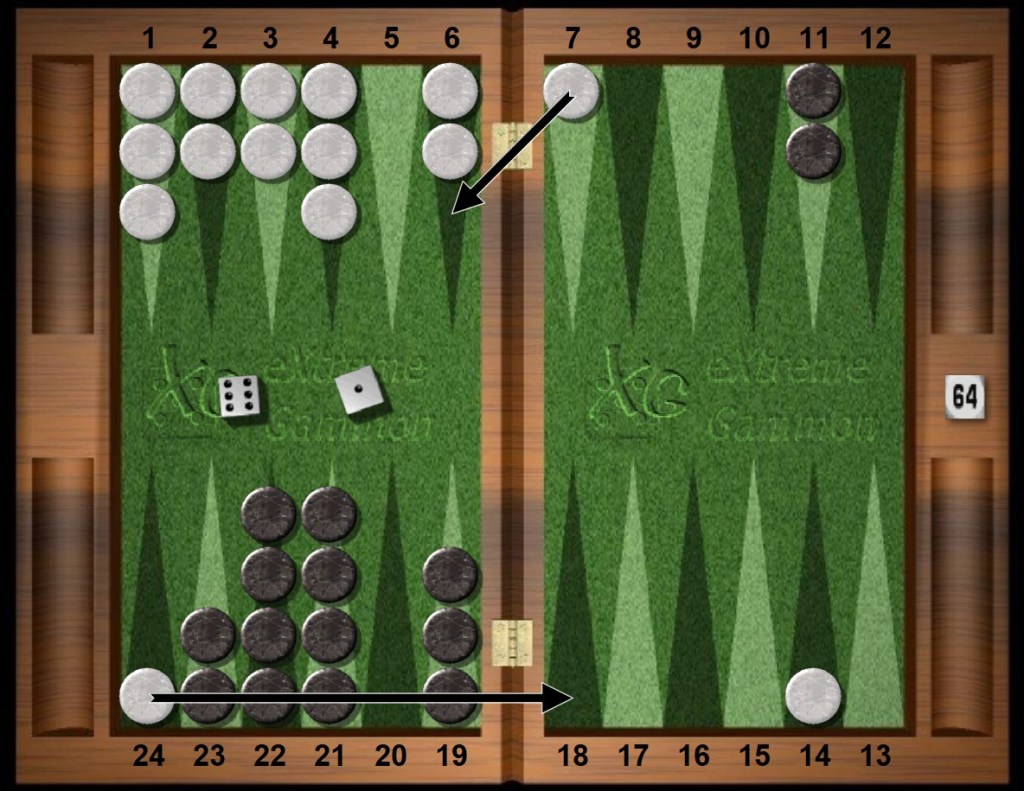
White gets her checker out of Black’s home board with 16s, playing 24/18. Stopping on the black 18pt keeps the fatal shots on the white blots at a minimum: direct plus combos on the 18pt instead of two directs on the 17pt. White also saves the third white blot from a gammon insult with 7/6.
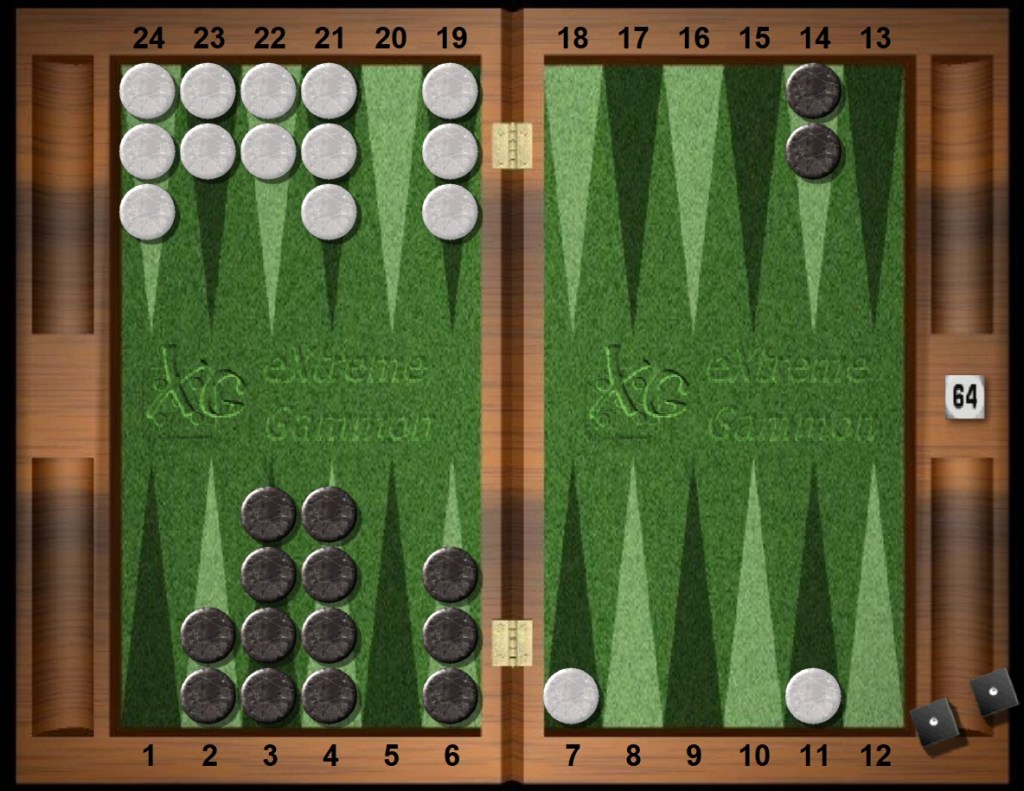
Both Black and White keep the doubling cube in mind, but the wild swings from Black to White and then from White to Black, all violent exchanges, finally settle on this position as a possible first double. Black has not yet hit a white blot here. It is risky to cube on the promise of attack. Much better to hit and get an attack rolling, then cube. But Black’s situation does look very tempting indeed.
After study of the game, it seems that either Black can cube now and White will take or Black can wait for a stronger double. According to long rollouts, this position is a reference first cube for Black. Here it is correct to double and it is correct not to double.
This position is very volatile. Market losers seem to be hit/dance or move freight with big black doubles on the dice.
No matter. Black decides to wait until after Black rolls. Correct.
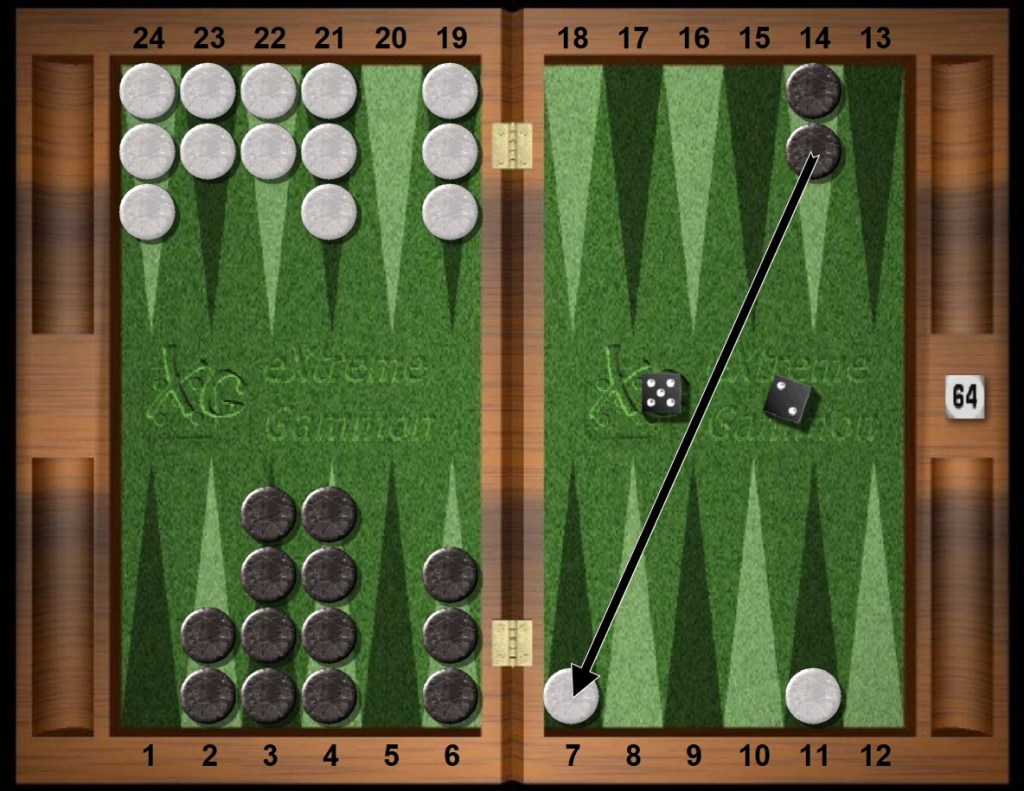
Black hits White’s trailing runner with a combo seven, obliterating White’s prior play of correct 24/18 7/6 without mercy.
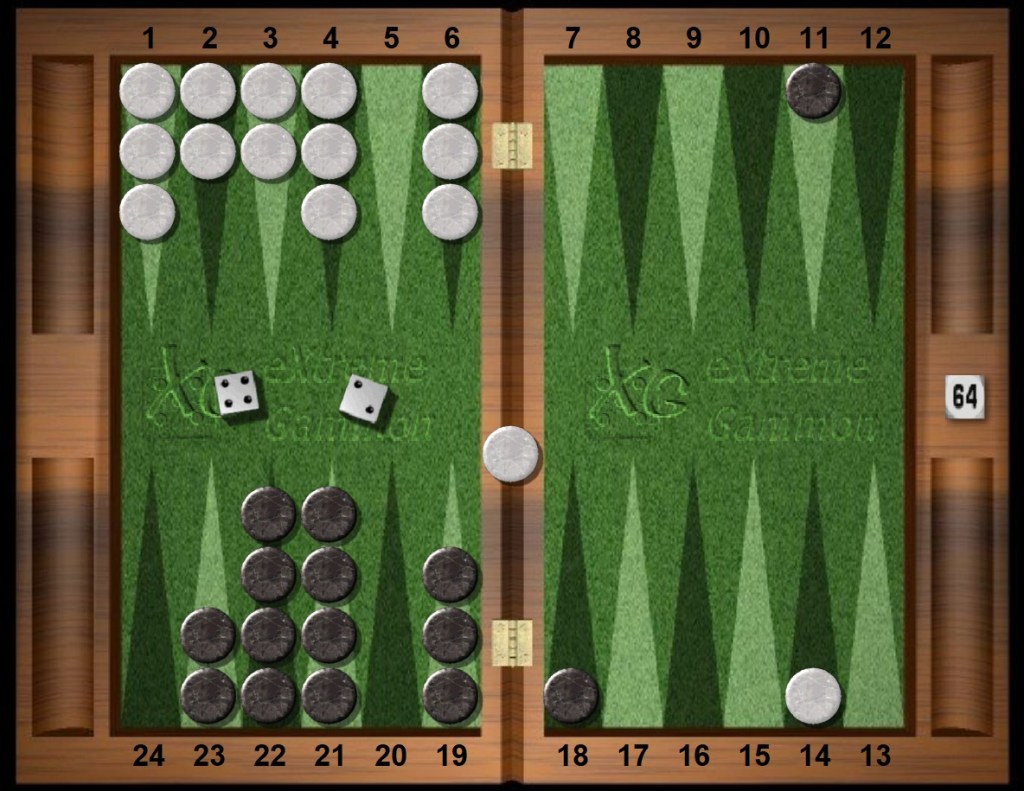
White rolls 24s and cannot get off the bar.
Black doubles.
White passes.
Every Black-hit-and-White-dance exchange seems to be market losers; that, and big doubles on the dice propelling Black’s outfield point home — also market losers.
Study tip: Keep the doubling cube foremost in mind when a placid game rapidly converts into a rough and tumble brawl at the crisis point. The doubling cube is the uppercut that finishes the fight, but exchanges provide the jabs. The cube action becomes a multi-step process.
 the baron talks backgammon