Cash game with Jacoby rule. White opens with 14s, bringing down the best builder from the midpoint and splitting the white backmen. One standard play for a 14s opening toss. White 14s: 24/23 13/9

Black replies with the roll 63s and selects the run to the 15pt instead of the usual big split, since White’s split runners hit about twice as often now. Both plays of 63s are now acceptable.

Black finds the usual big split 24/18 13/10 too loose, a style choice.

White hits the black blot in the outfield and brings another builder down into the attacking zone. This time a golden anchor is just not right. White must attack and pocket the pips in the race.

Black enters from the bar remaking the 24pt anchor, then Black hits loose on the white blot on Black’s 2pt. A tempo play that tries to grab the initiative from White. Although the quiet play of 13/9 is almost as good, from fighting spirit alone Black must be a player and get into the game — throw a punch and take the initiative.

White enters from the bar and, with the other backman, hits the loose black home blot.
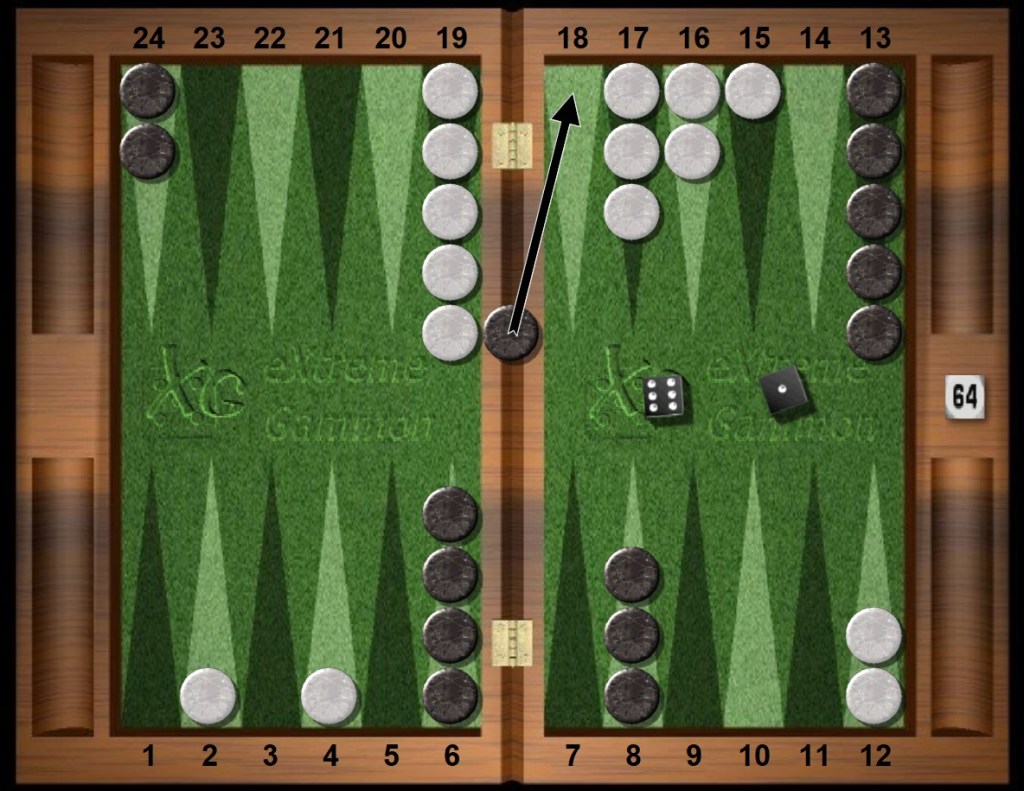
Again, Black enters from the bar, then proceeds to slot the white barpoint, hoping to anchor and establish a better defense. Act now by starting White’s barpoint and threatening to make it, in the heartland of White’s broken prime. Of course, Black realizes the situation could get very ugly.
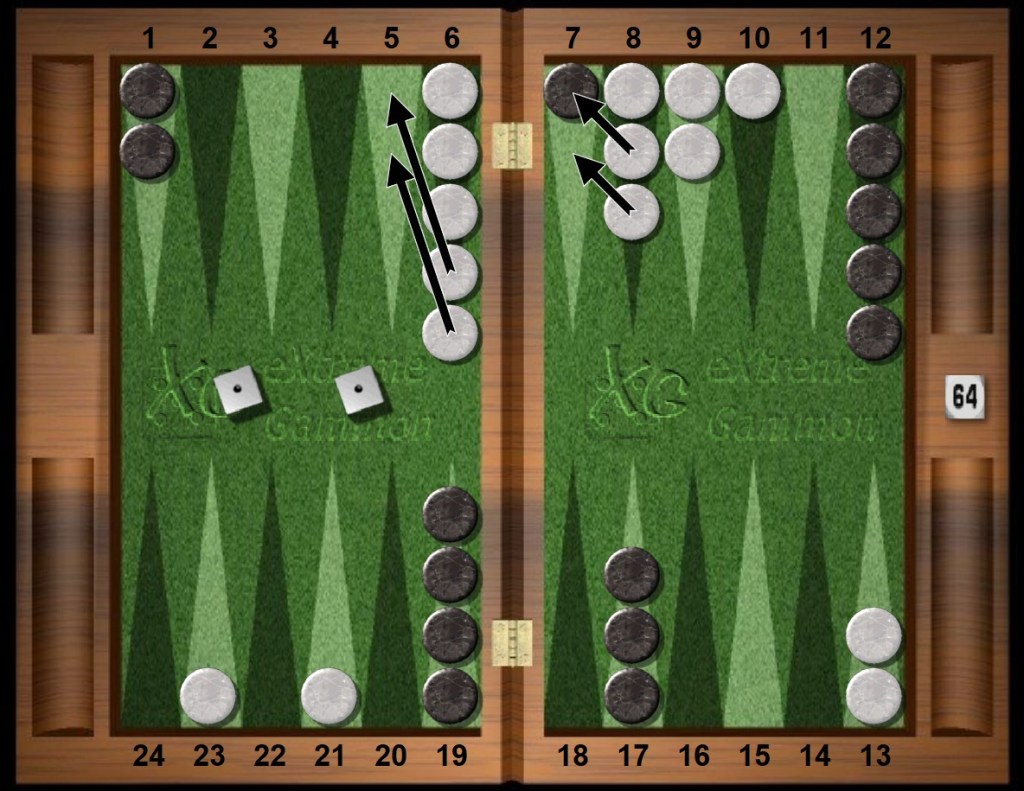
White rolls snake eyes, namely White double 11s. Black’s grab for a barpoint anchor is thwarted when White points on the barpoint blot and makes the home golden point. Spectacular roll for White — two new key points plus a black blot dancing on the bar. White will soon consider a cube. Black knows this and must somehow do something about it.
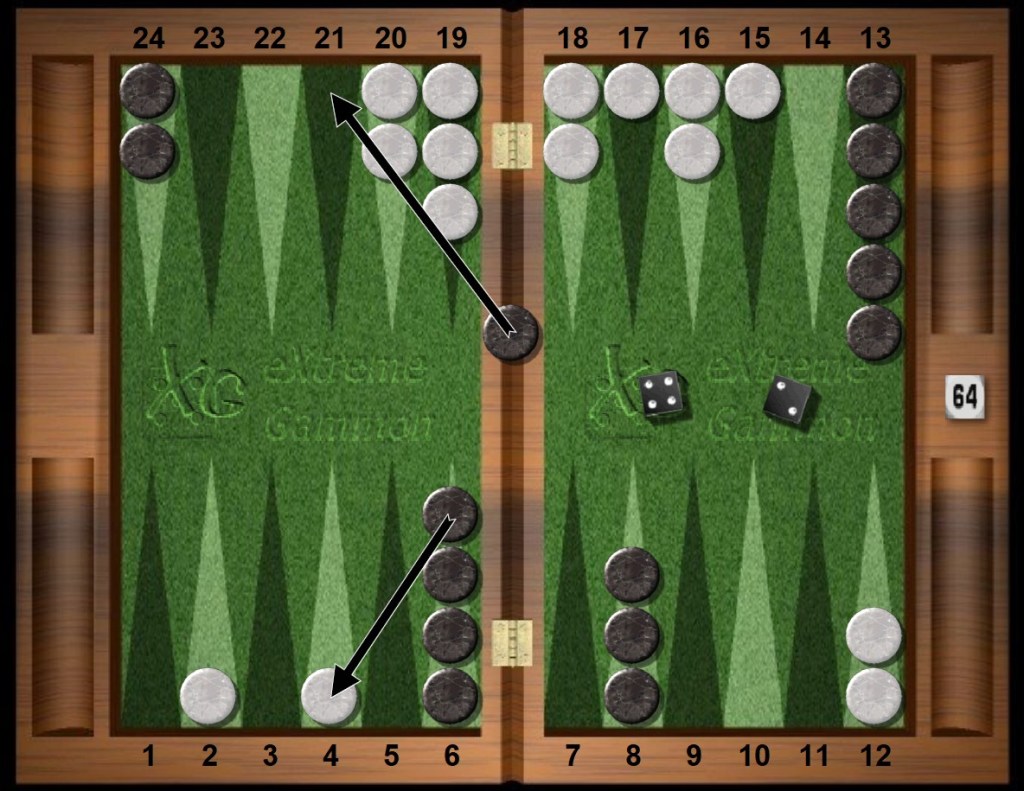
Black enters again from the bar, slotting at the front of White’s developing prime. Black now makes another tempo play by hitting the white runner loose. See above.

Instead, Black could play quietly with B/21 24/22 (the white 4pt and 3pt). White’s impending cube is an easy Pass when Black plays quietly in White’s home board, without the loose hit.
B42s: By hitting loose with 6/4* Black cuts White’s impending market losers by about 150 exchanges (in 1296), from 736 after 24/22 to less than half at 584 after 6/4*. The volatility also rises with the loose hit — from low after 24/22 at 0.033 to medium low after 6/4* at 0.057.
Finally, the tempo hit 6/4* spooks White. Should White double now from the bar? An expert would cube here, but plenty of good players as White would wait a roll — a psychological victory for Black.
An excellent tempo hit which (1) directly reduces White’s market losers, (2) increases volatility thus requiring more equity for the same certainty, and finally (3) messes with White’s mind and White’s courage while the White dancer stares back.

White doubles. Should Black take or pass?
Truth be told, Black fought the good fight, and Black did his country well, and his 86mp equity for a romp within Take Territory is his only reward. An expert would take this cube. But the real lesson is the tempo loose hit by Black in the hopes of discouraging White from a cube — maybe. A good tempo hit following the hidden numbers as well as a dose of subjective gamesmanship.
 the baron talks backgammon