The short exchange seen below captures some elements of risk versus reward in the opening.
In a cash game White opens with the roll of 36s.
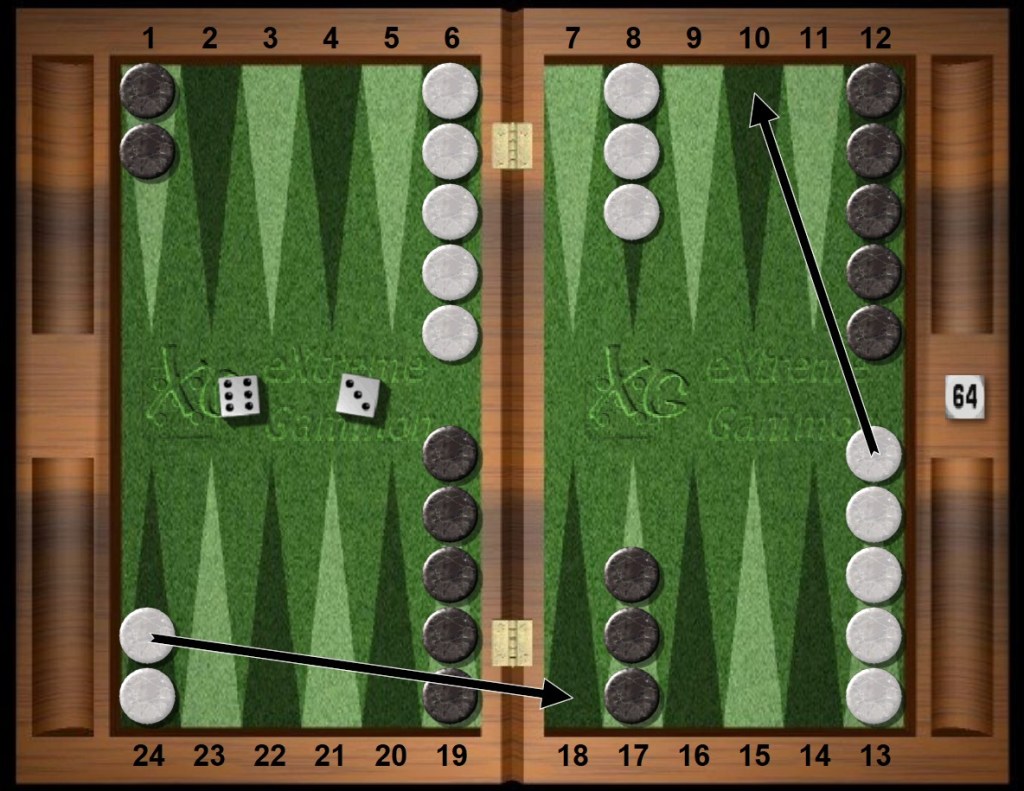
White makes the big split 24/18 to start a barpoint anchor, happy to engage in an exchange of hits should Black prevent White from anchoring. White also brings down a new builder with 13/10, susceptible to the extra black roll of 54s to hit. Good value for money, good reward for risk.
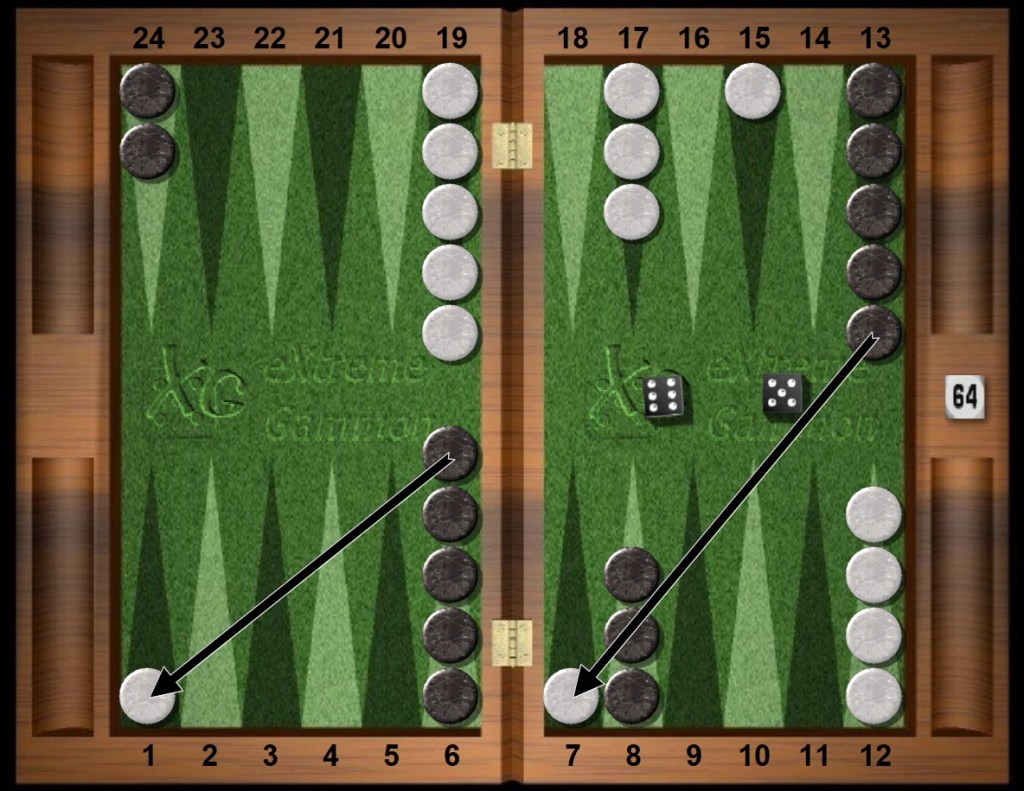
Black replies with 65s, formerly a natural running roll but now far more useful as a twin hit of the white runners. Only ones allow White to hit from the bar and only most doubles on the dice allow a white anchor. This too is good reward for Black’s risk. The twin hit does increase volatility in the position, but only somewhat compared to the classic lover’s leap 24/13.
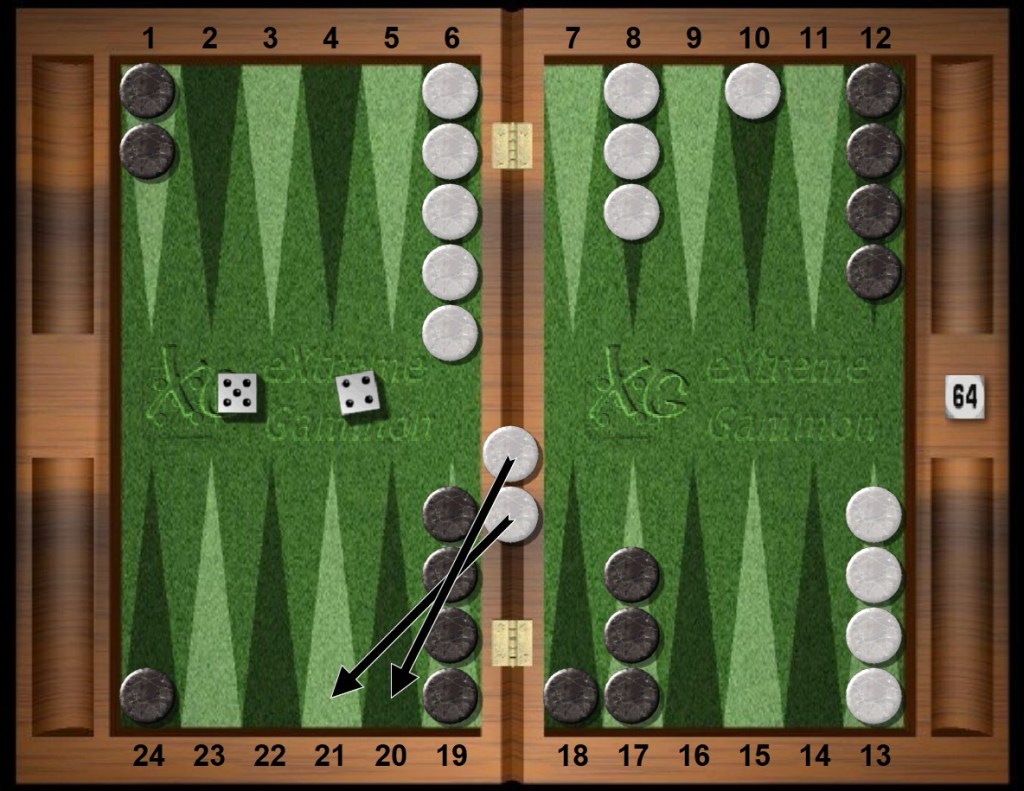
White rolls 45s and enters both checkers from the bar. Eleven rolls for White would have hit Black and nine more rolls would fail to enter a dancer. White’s 45s double entry is forced, one of a dozen split yet advancing rolls for White, all fine but not great.
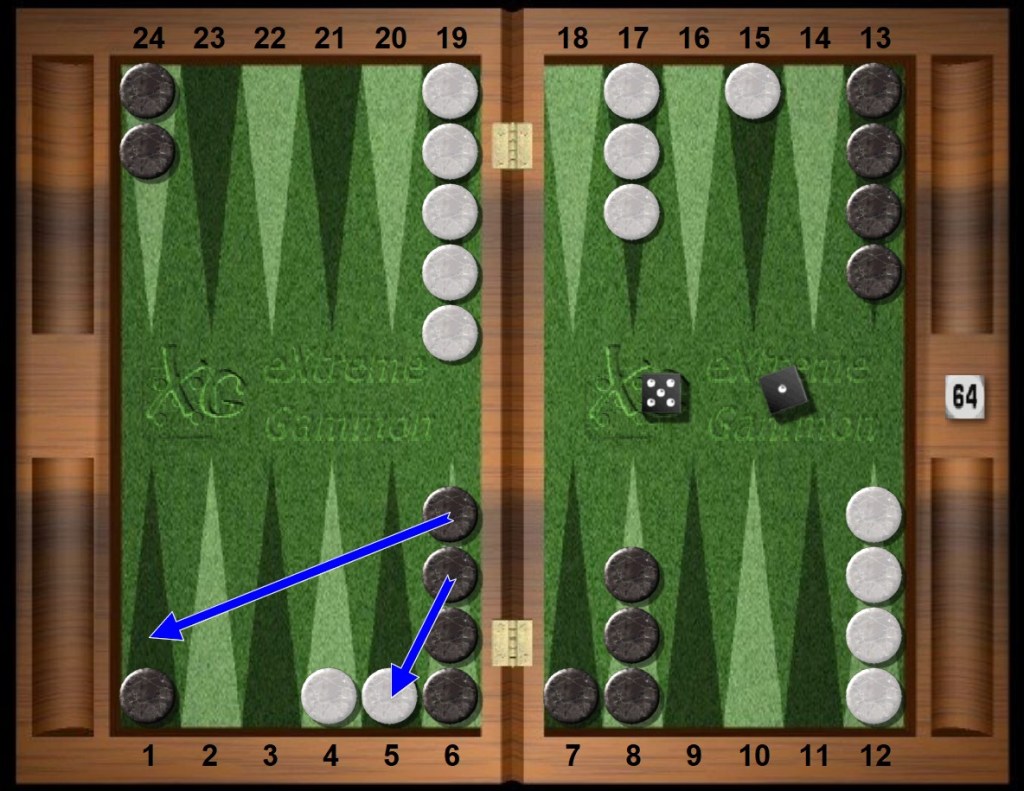
It is here that Black loses the story of balanced risk versus reward — Black’s second toss of the dice early in this game. Black chooses to hit loose on the golden point with 6/5* and cover the acepoint with 6/1. The new loose hit skyrockets the volatility but only promises an attack by Black when White fans.
The alternate and better play (not shown) is the quiet yet stable 6/1 8/7, leaving no black blots but no white checkers on the bar. White can anchor only with aces (eleven shots) or, failing that, maybe make a new outfield point (four shots) as a consolation prize. The safe play keeps the volatility about the same as the previous 65s twin hit. And Black still keeps a small running lead of one average roll.
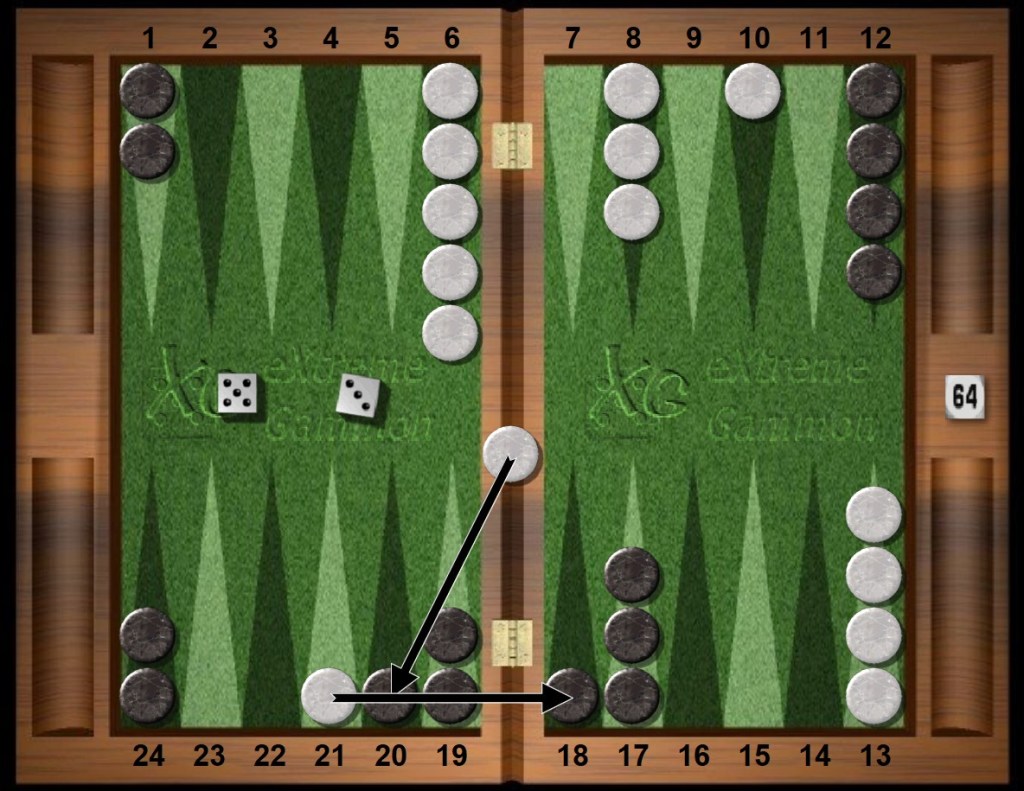
White rolls 35s, enters from the bar to hit the black home blot then conveniently hits the other black blot on the barpoint. A spectacular stroke from Lady Luck.
Different dice combinations: What other great replies are there for White from the bar? Quite a few, actually. White could simply anchor on the W21pt, thereby bringing Black’s nascent blitz to an abrupt halt. How many shots to anchor for White? — Fourteen, which is three more shots than Black’s previous safer play 6/1 8/7 would leave to anchor. Precisely what does Black gain by avoiding blots? The reward of a possible blitz unencumbered by stray blots.
Volatility is a quantity that measures both Black’s great rolls and White’s great rolls in a position. Reduce White’s number of great rolls and Black reduces volatility but usually increases Black’s equity. Here, eliminating the impending hits of black blots by White better manages the risk-reward exchange.
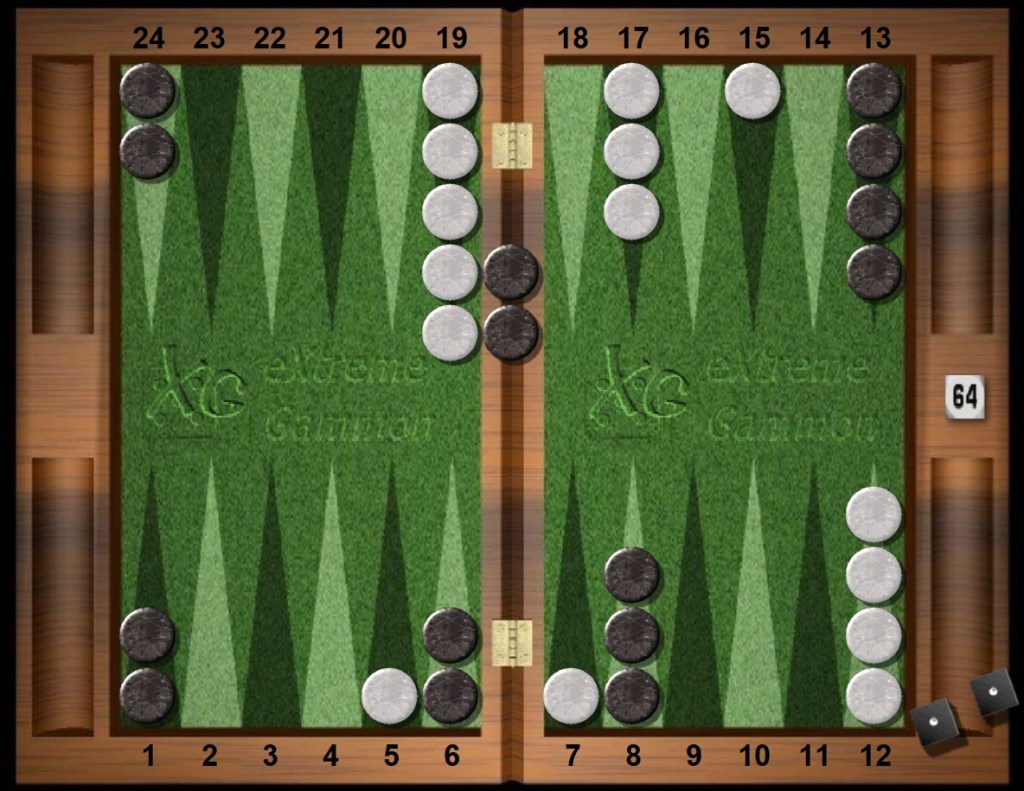
Here is Black’s situation before his third roll of the game. Two dancers on the bar. Clearly, something is amiss with the balance of risk and reward during this sequence.
Study of the early opening leads to a deeper appreciation of conflict in backgammon, the fulcrum and leverage of risk versus reward. The tipoff here is the immediate demotion of Black’s natural running toss of the initial B65s and its replacement with an aggressive twin hit loose — a correct play. But then the follow-up roll of B51s for Black must be examined afresh, carefully and in detail. Compare what risk is traded for what reward, then adjust the conflict accordingly.
 the baron talks backgammon