Cash game.

Black opens with 31s and makes his golden point in his home board. The best possible opening toss: 6/5 8/5
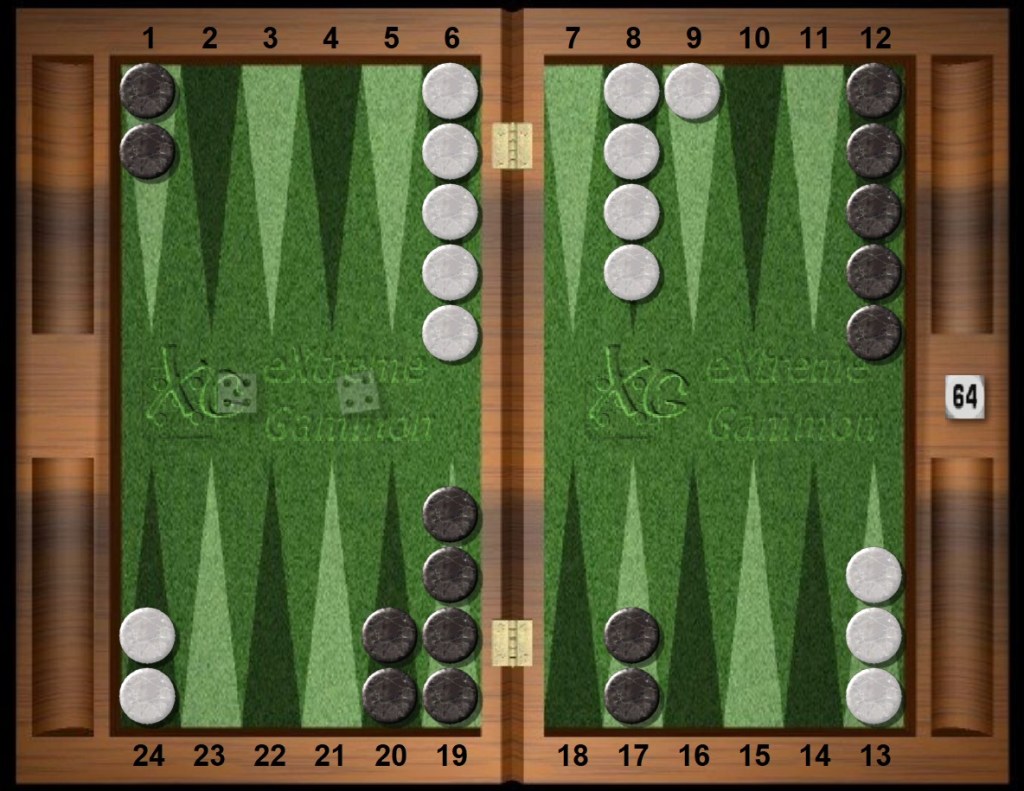
White replies with 45s. White is prevented from the usual big split but has the old-fashion play of two checkers down from the midpoint: 13/8 13/9
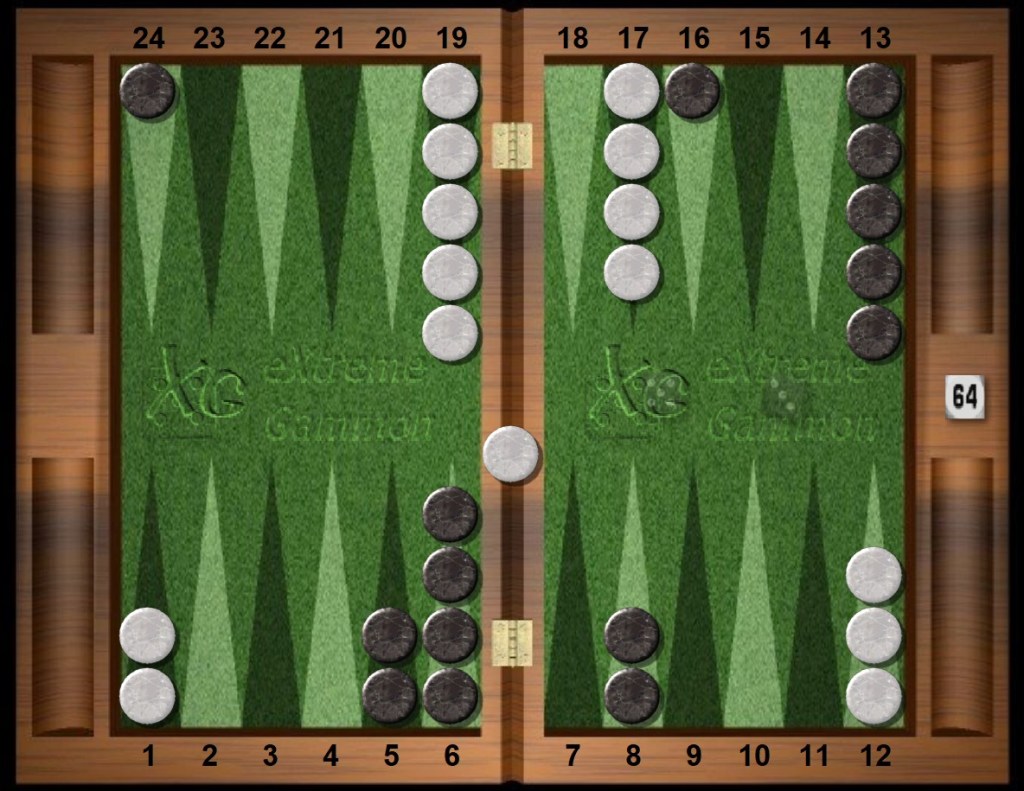
Black rolls 53s. A good roll permitting the natural 3pt occupation. It is an even better play to hit White’s outfield blot, taking the lead in the running game: B/16*
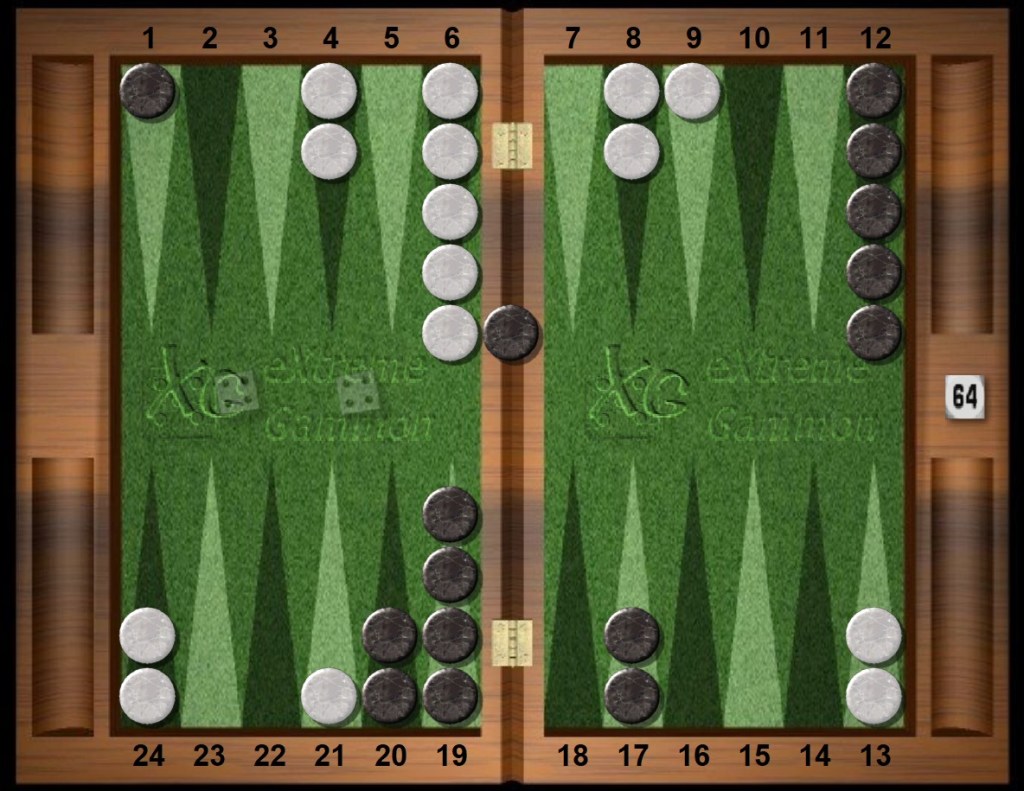
White rolls double 44s. A great roll for White which compensates for Black’s better dice so far. White enters B/21 from the bar, hits the outfield black checker 13/9* and then makes her home 4pt with 8/4(2) while Black has a new dancer.

Black rolls 65s from the bar and, unable to hit anywhere, runs all the way to the 14pt: B/14
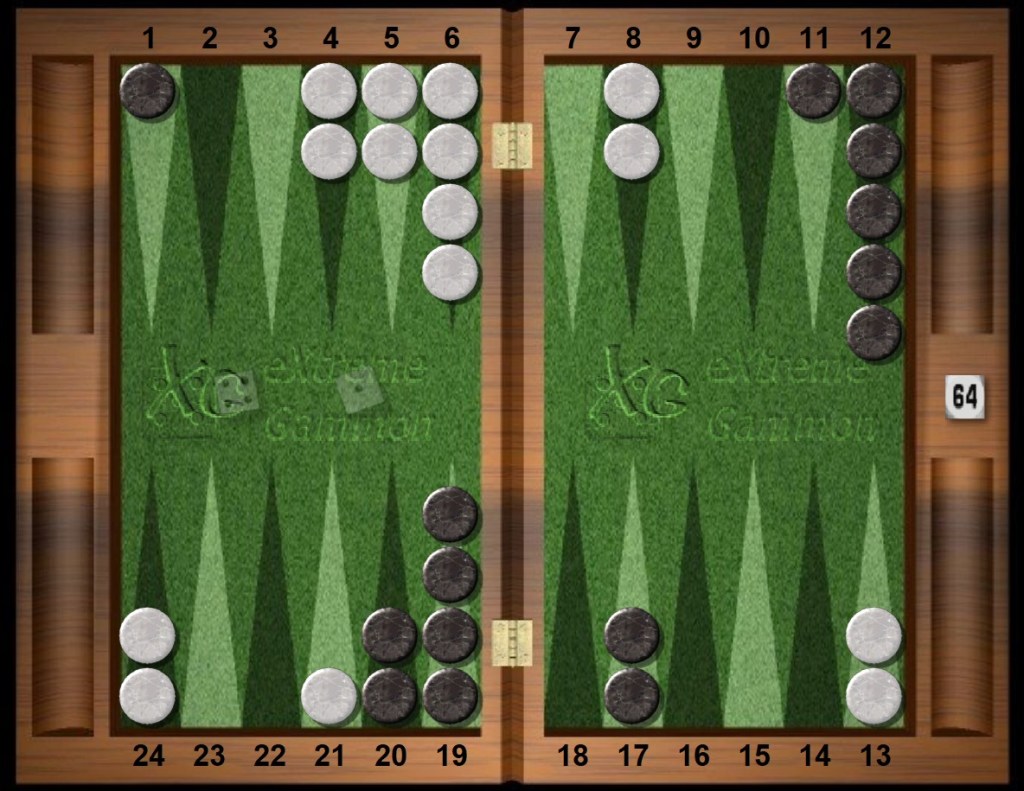
White 14s. White misses Black’s outfield blot. White makes the golden point 6/5 9/5 and creates a powerful trinity home board.
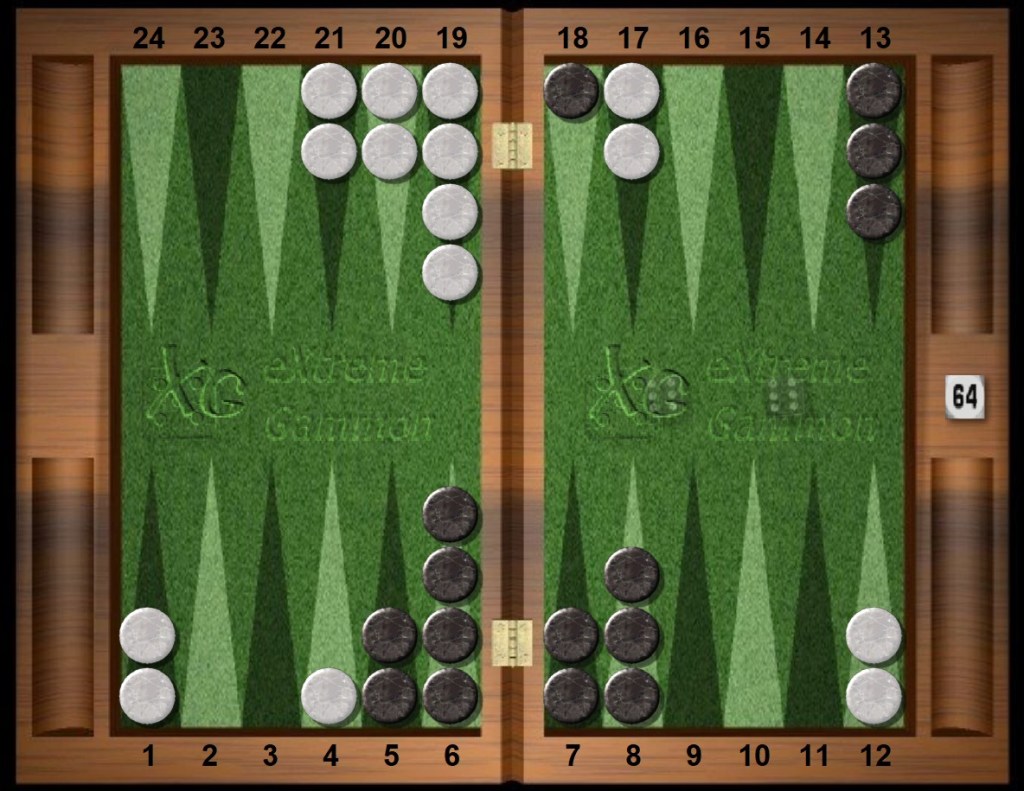
Black rolls double 66s, boxcars. Black builds his blockade with the barpoint 13/7(2) and the spare 14/8 then dares to run partway into the outfield with 24/18, awaiting White’s double direct attack.
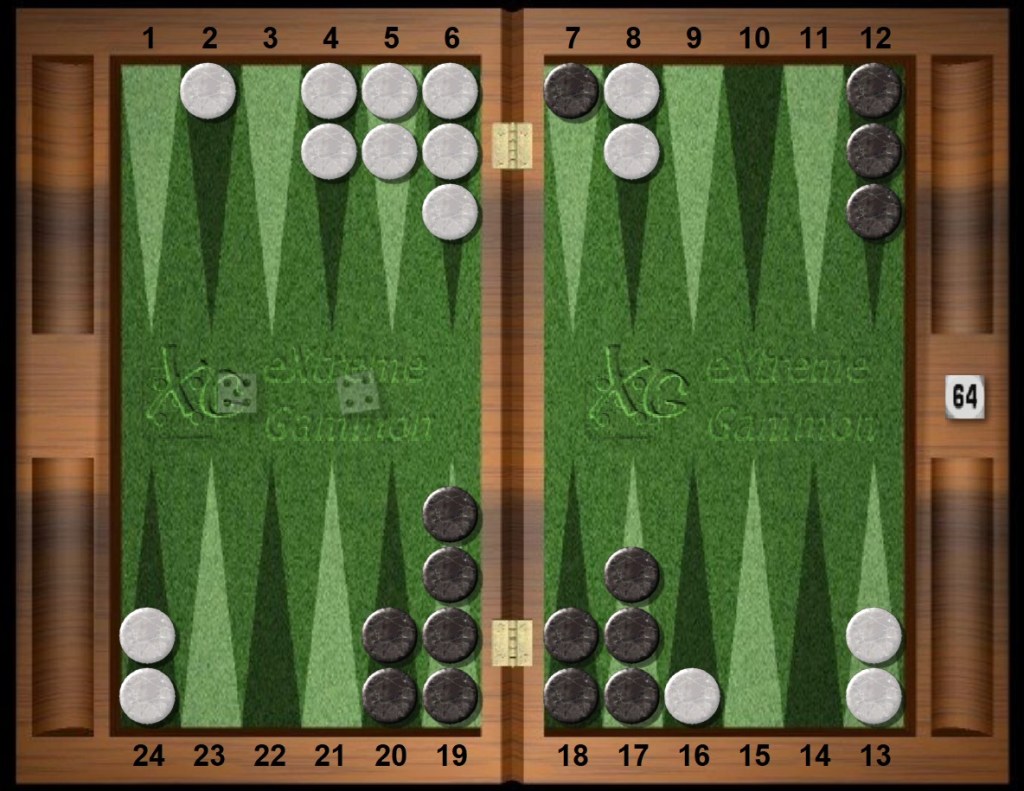
White 45s again. White surprisingly misses the black outfield blot. White jumps over the blockade with the five and blots safely on the home 2pt. Very unfortunate for White not to hit: 21/16 6/2
Black pauses to consider a double.

In the middle game with lots of contact between the armies a helpful activity is to assess the chances of winning from the perspective of the three generic game plans: a running game, an attacking game, and a blocking game. Joe Sylvester (aka Sly) suggests that Black has a first cube if all three game plans favor Black. Here is a perfect example.
The Race: Almost two rolls up in pips and on the roll, Black has the racing edge. A smallish edge, but convertible into a full Houdini escape. Fives (15 shots) safely stack the midpoint, two further shots (three-six) escape the black blot to hit the white outfield blot, and three more shots scoot to the safety of the blockade. Twenty rolls in total accomplish the escape to a running game. Indeed, a running game may be the best strategy.
The Attack: Double counting a few running hits, the vulnerable white blot in the outfield is hit by fourteen 4s plus the two running hits: 16 attacking hits in total. Attacking the white outfield blot looks good too as a game plan, despite White’s stronger home board.
The Blockade: Although White may have the stronger home board now, Black’s prime is a better blockade in the longer term. Rolling this prime home is quite reasonable.
Therefore, based on Sly’s rule, Black is substantially ahead in all three game plans.
Black Doubles.
But when to drop? When to take? White needs to decide.
Black just waxed eloquent with blah blah blah about game plans and then, sheebang, the cube suddenly appears and the crowd goes silent.
White has the 6pt-5pt-4pt structure in her home board, all checkers still in play, some communication, and … not much else. White also needs to estimate gammon losses and compare to Black’s fewer gammon losses. Before the opening roll (B31s here) both White and Black lose gammons about one game in eight. Now, Black loses far fewer gammons but White loses significantly more gammons. Guessing, Black’s excess gammon wins are still about one game in eight (or B18% G-wins versus W6% G-wins)
White’s dilemma is whether the holy trinity in White’s home board is enough to win one-quarter of the games while avoiding White’s gammon losses in one game in eight.
Unlikely. White passes the cube.
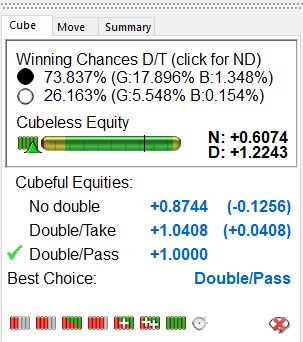
Rollouts proclaim that White does not have enough equity in this game to take this cube. Black has 74% game winning chances with 18% gammon wins but almost 6% gammon losses
 the baron talks backgammon