In backgammon, bad luck will follow you and love you like a bride. You need to remain dispassionate. The wheel will turn. The wheel will always turn.
Here is the most recent game, encapsulated.
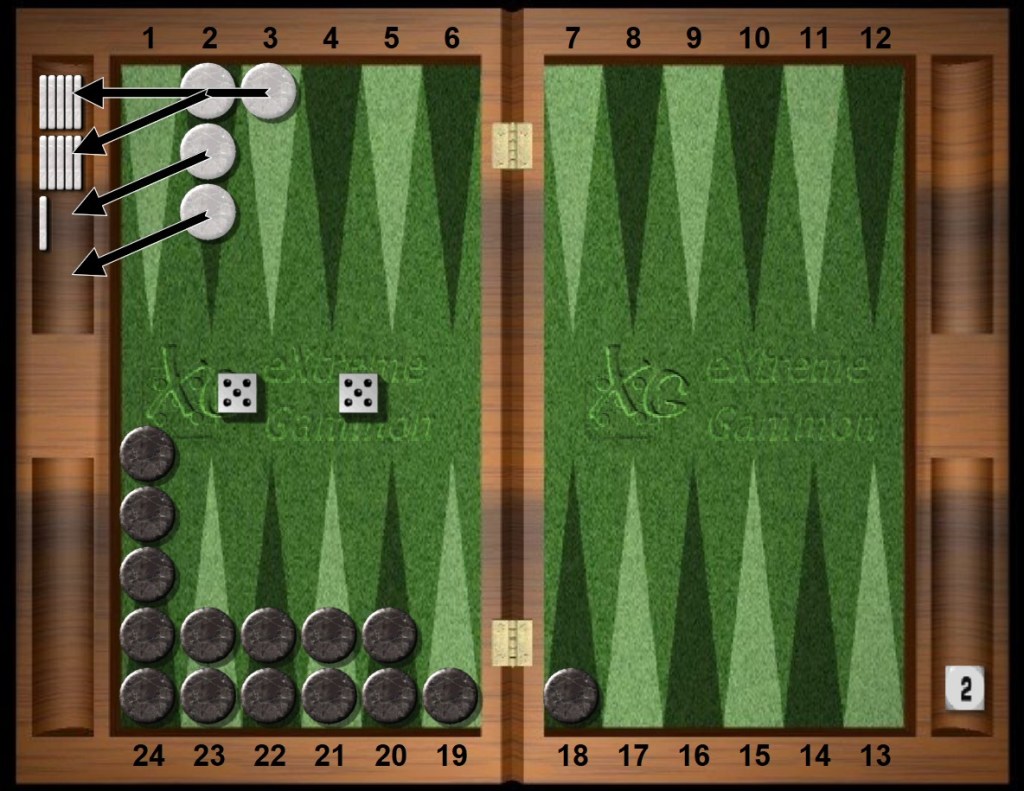
Despite Black’s desperate yet careful scurrying, White’s final roll of double 55s has crushed Black’s soul and gammoned him.
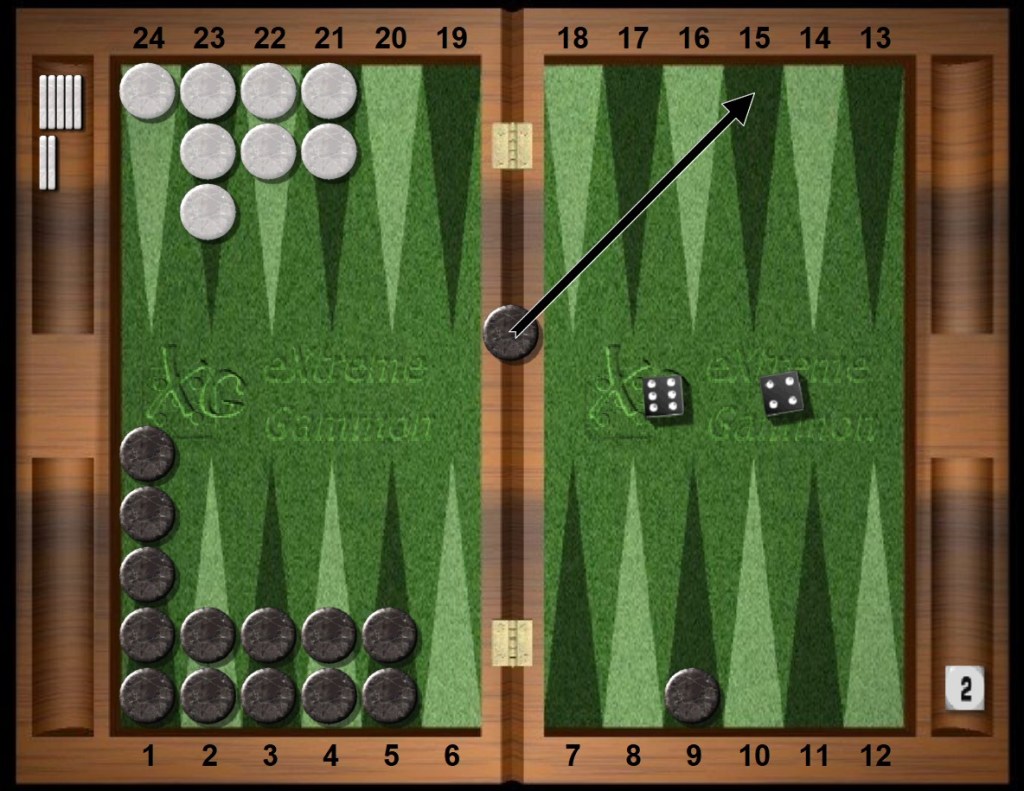
The final scurrying begins here as the two armies separate, breaking contact. In Black’s remaining two rolls the scurrying is impeded by low dice. Black maximizes crossovers and focuses only on getting one black checker off. Sometimes rewinding the game in reverse exposes the issues yet mutes the emotional luck factor.
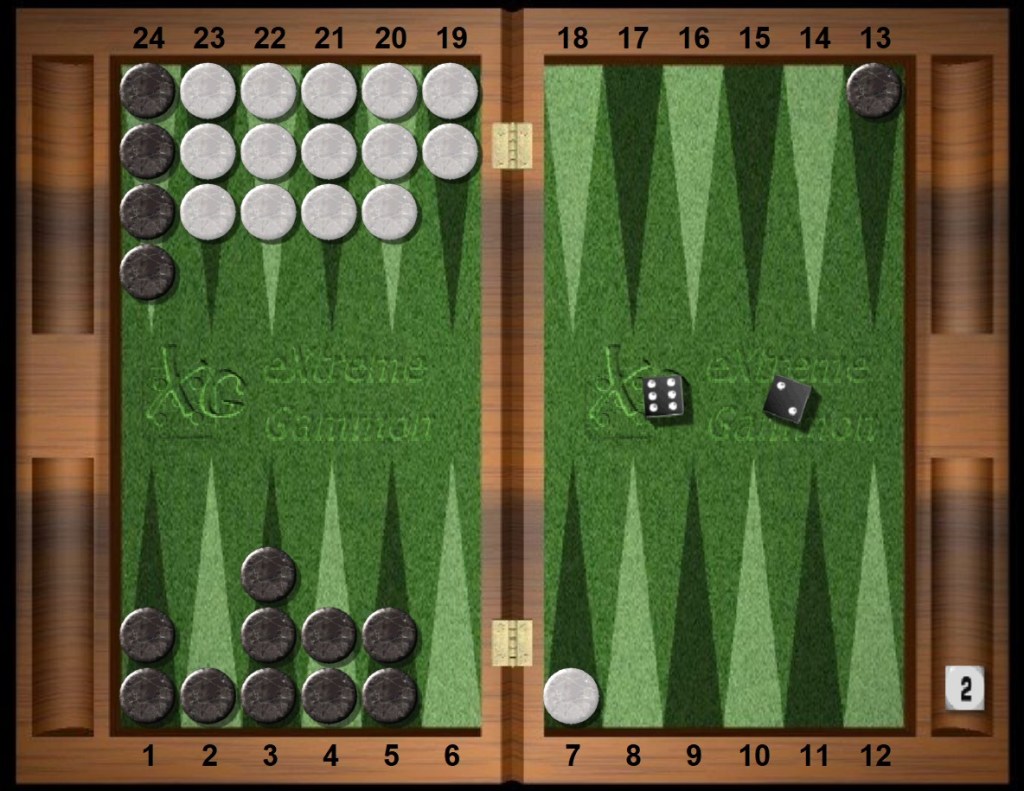
Of course, there are often serious mistakes involved. Black to play 62s. Black can hit and bury the outfield checker: 13/7*/5 or Black can exit an anchor spare 24/18 13/11, refusing to hit and leaving seventeen shots. Note: 24/16 leaves a majority nineteen shots. Hitting the white blot is a blunder, and Black makes the mistake.
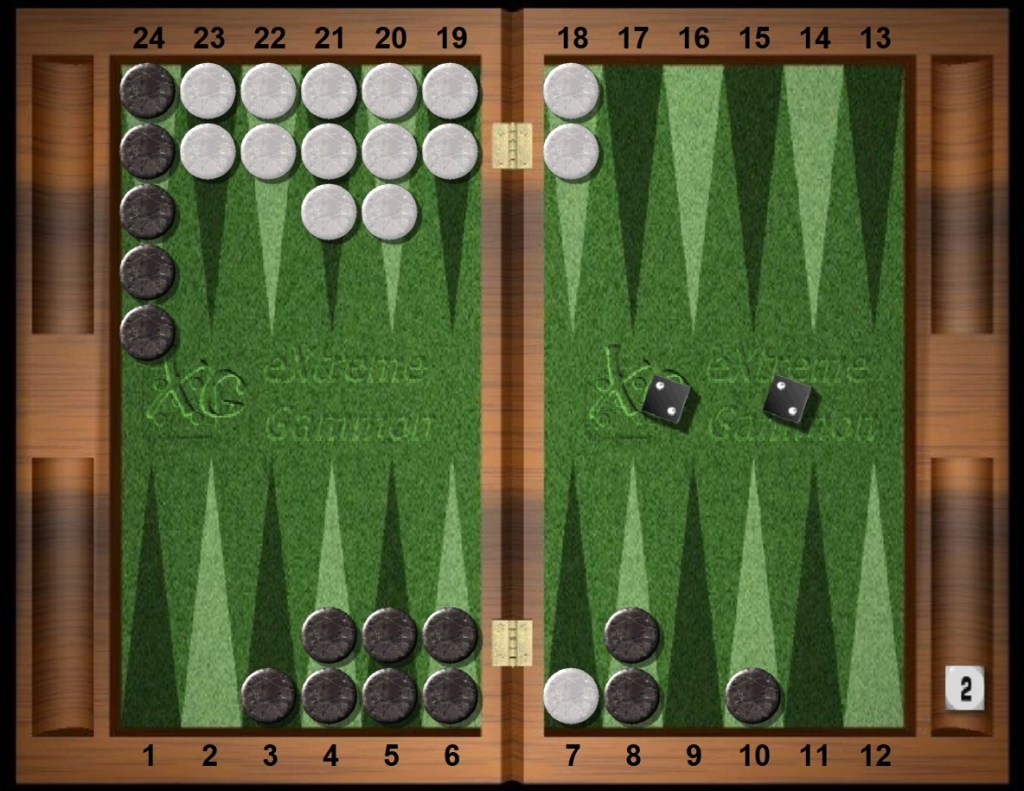
Saving the gammon means maximizing crossovers during the scurry home. Winning the game (or losing only a single game) means hitting late from a deep anchor before Black’s board or prime is broken. The correct play is 10/6 8/6(2) which makes three crossovers, kills sixes, and preserves the home board awhile longer. In the game Black plays the slightly incorrect 10/2, a 2mp error. Picky, but note the shift in priorities.
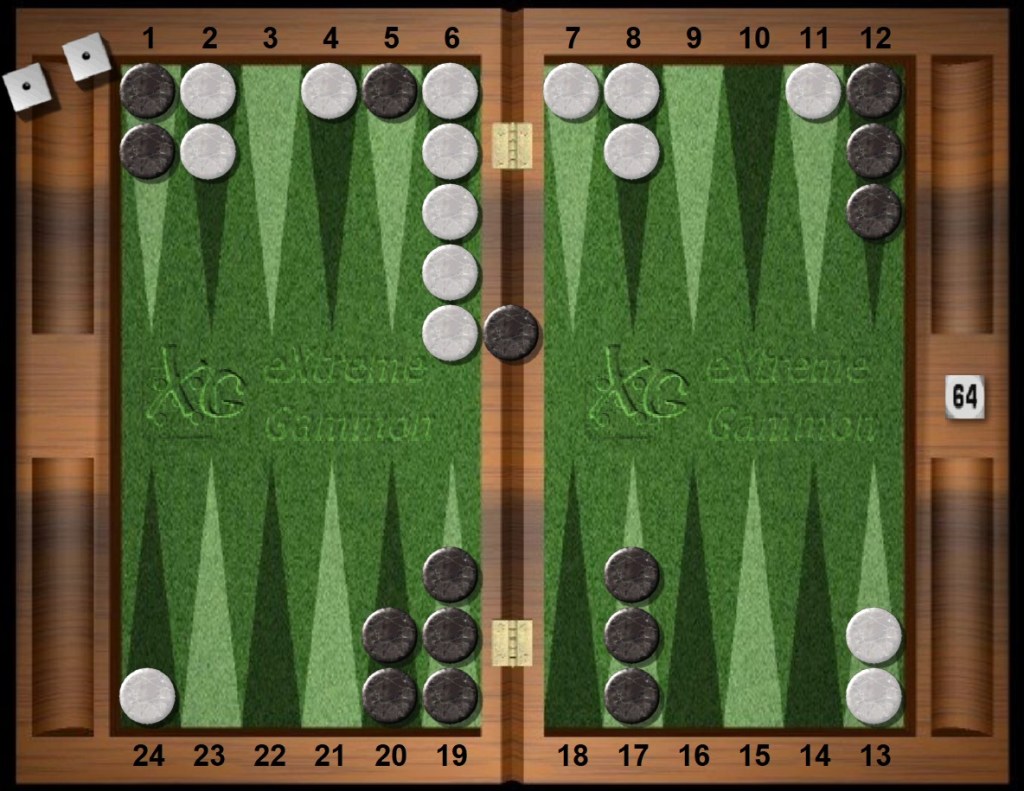
Moving back in time, White to roll. White doubles. Black is dancing on the bar. White has a racing lead, White has attacking opportunities although not always lethal since Black has a deep anchor, and soon White will firm up her structure. Black is in jeopardy of a gammon loss. An easy double.
Black has enough assets to take the cube. Black’s deep anchor is key, since it prevents a closeout blitz. And Black could advance the anchor higher, especially entering from the bar, which would stabilize Black’s game plan. Although spartan, Black’s structure is solid. An easy take.
Review of the equity after the game reveals the numbers that back up the qualitative guesses during the game. The situation is gammonish. Ballpark, White wins about triple the number of gammons as a new game but Black still wins some gammons, about 2/3 the usual. Total wins (single and gammons) are about three White victories for every two Black victories. This ballpark estimate puts the cube situation well into the doubling window.
White doubles and Black takes.
Moving forward in time now from the start of the game, how did this position arise?
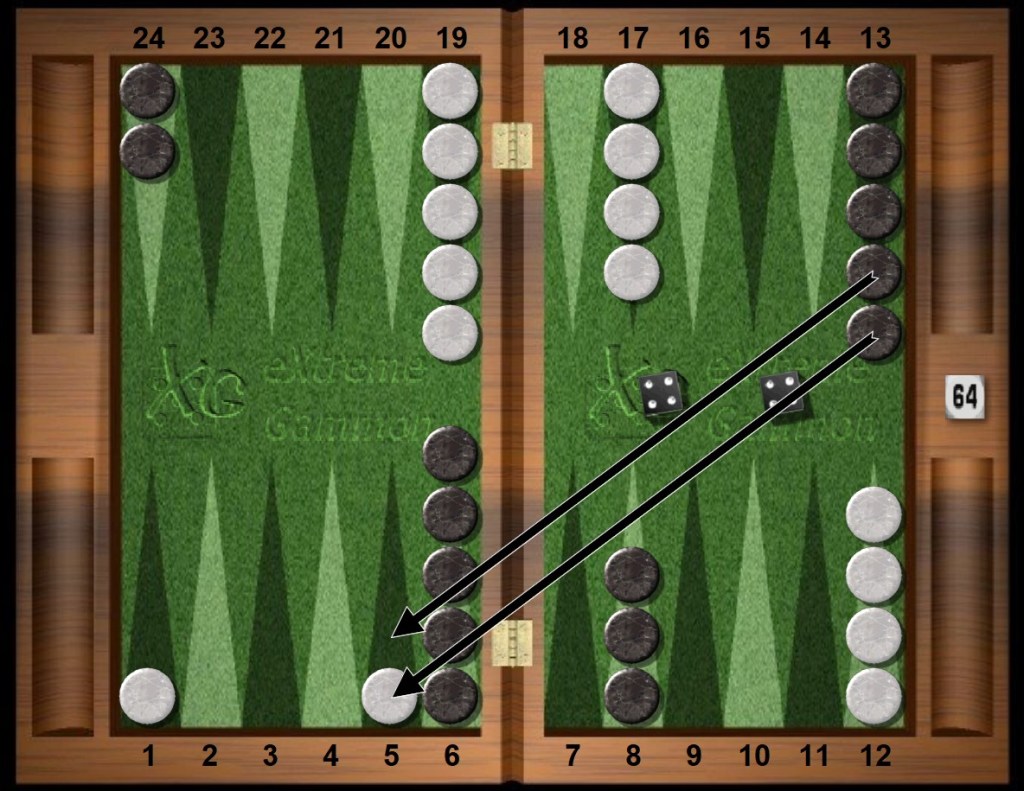
White opens with 45s and splits to the golden point. Black rolls a monster double 44s and points onto the golden point, sending the white blot to dance on the bar.
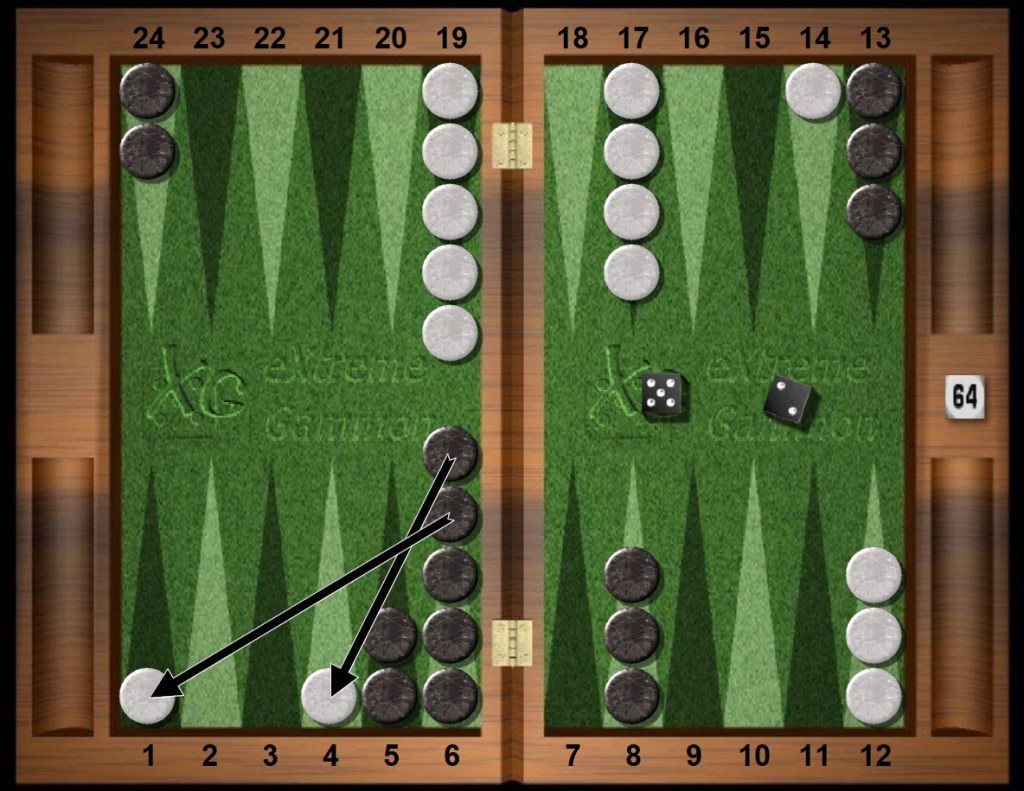
White enters with 24s and starts the more advanced anchor location.
Black rolls 52s. Here the twin hit loose shown above is perfectly acceptable, granted by royal decree from the noble Black 5pt.
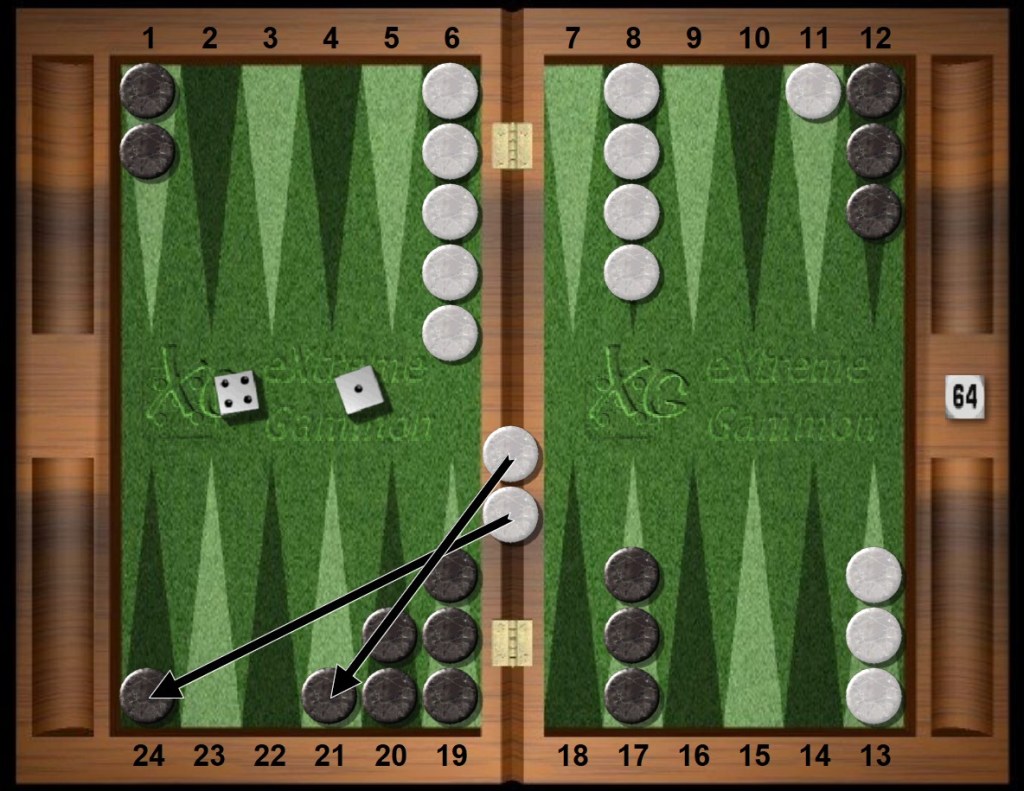
White has her first twin hit moment with 14s from the bar. Unlike Black, White loses very few pips whereas Black now has four checkers back in White’s home board. The twin hit exchange causes Black to fall behind in the race.

Black enters one checker but dances the other checker on the bar.
White rolls double 66s. A running game is fervently in White’s future although not yet a transition to a footrace.
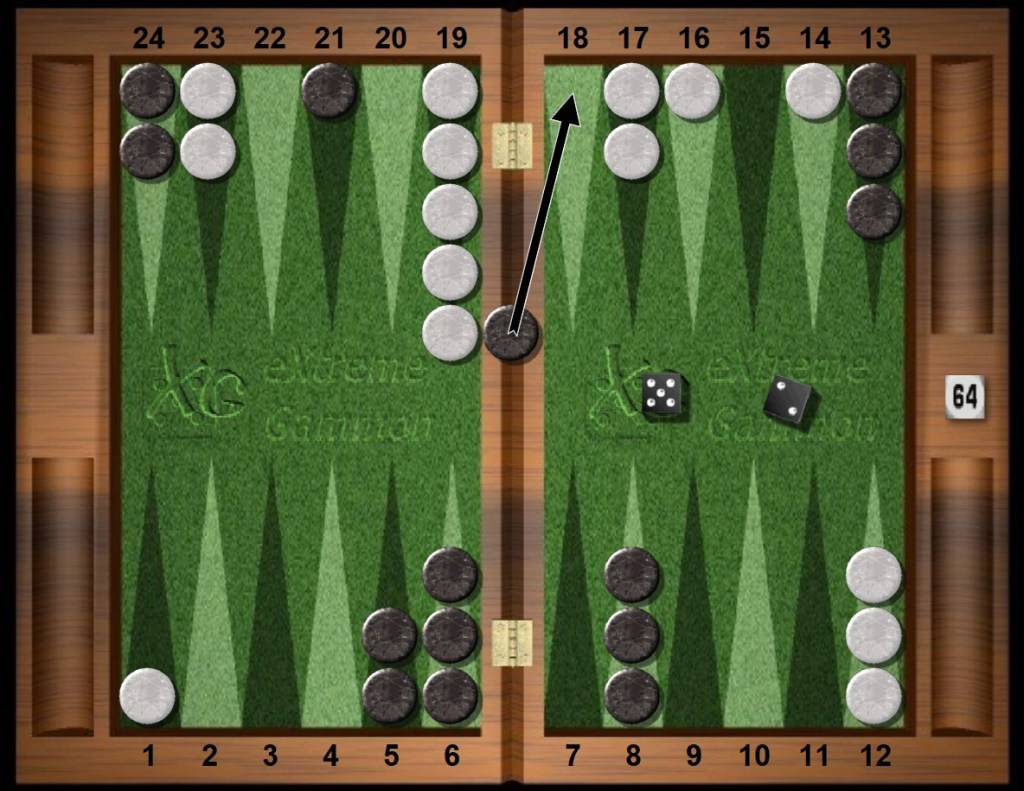
Black enters from the bar with 52s and continues to the 18pt, hoping to make a high anchor amid White’s structure.
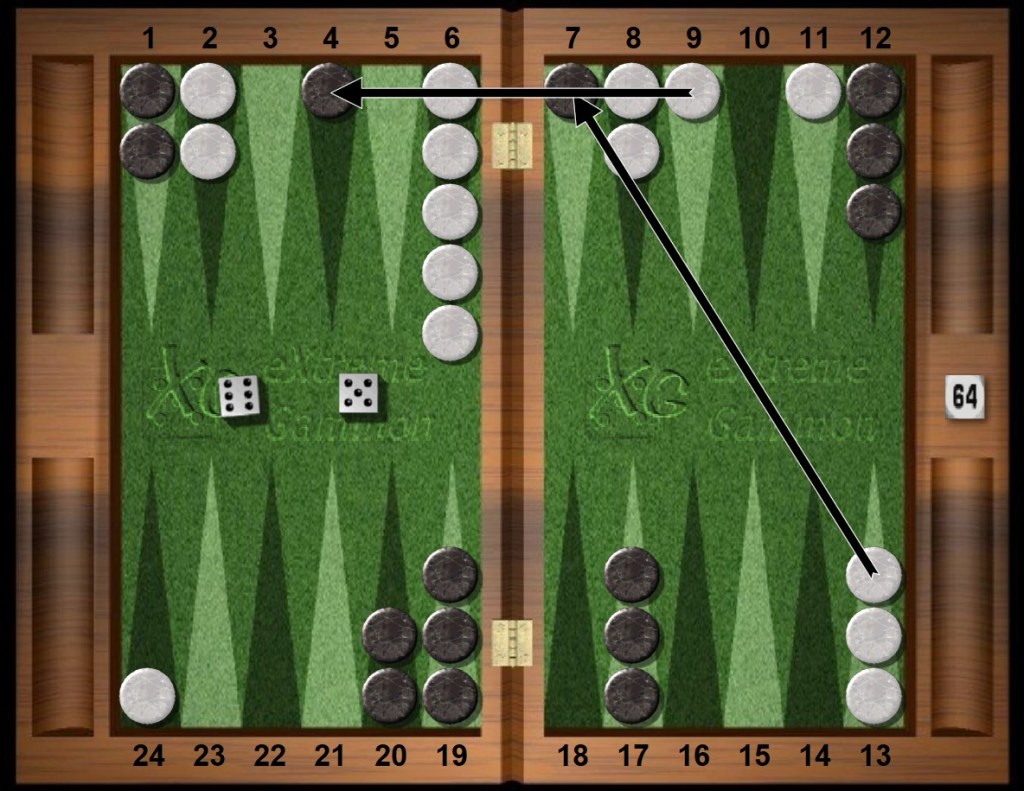
White rolls 56s and twin hits loose again. Black is thankful for the acepoint anchor.

Black enters one checker from the bar, missing the white blot. The other black checker dances on the bar.
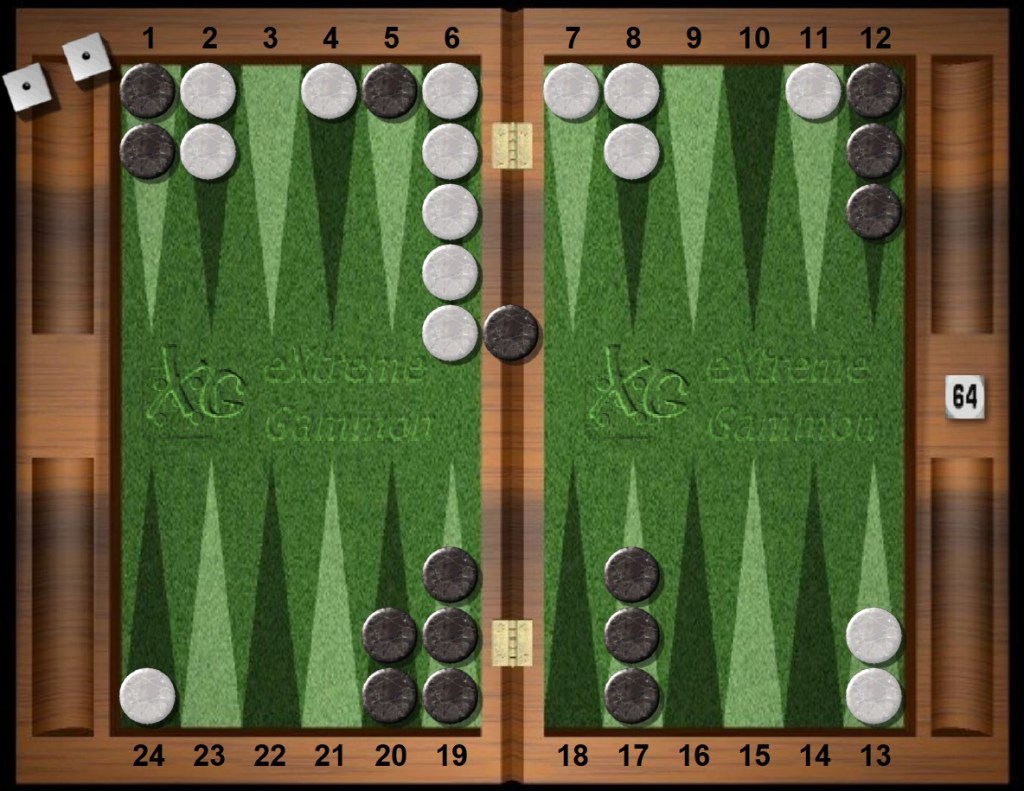
As noted, White doubles and Black takes.
It is easy to get emotional over a gammon loss. Regressing time backwards allows logical analysis to prevail and emotions to subside gently.
The wheel will always turn.
 the baron talks backgammon