A barker at the backgammon carnival barks again: miniature koans ! Get your miniature koans over here. Step right up. Plenty for everyone …
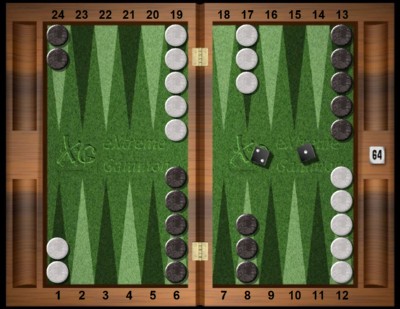
Black opens the game with an initial roll of 21s. He slots his golden point and adds a builder.
White replies with double 44s.
White makes her anchor on top of the Black 5pt, the slotted blot, and precious golden point swapped into an anchor of iron. White then makes a better blockade.
On the bar, Black rolls a colossal double 66s and dances a jig as a pratfall.
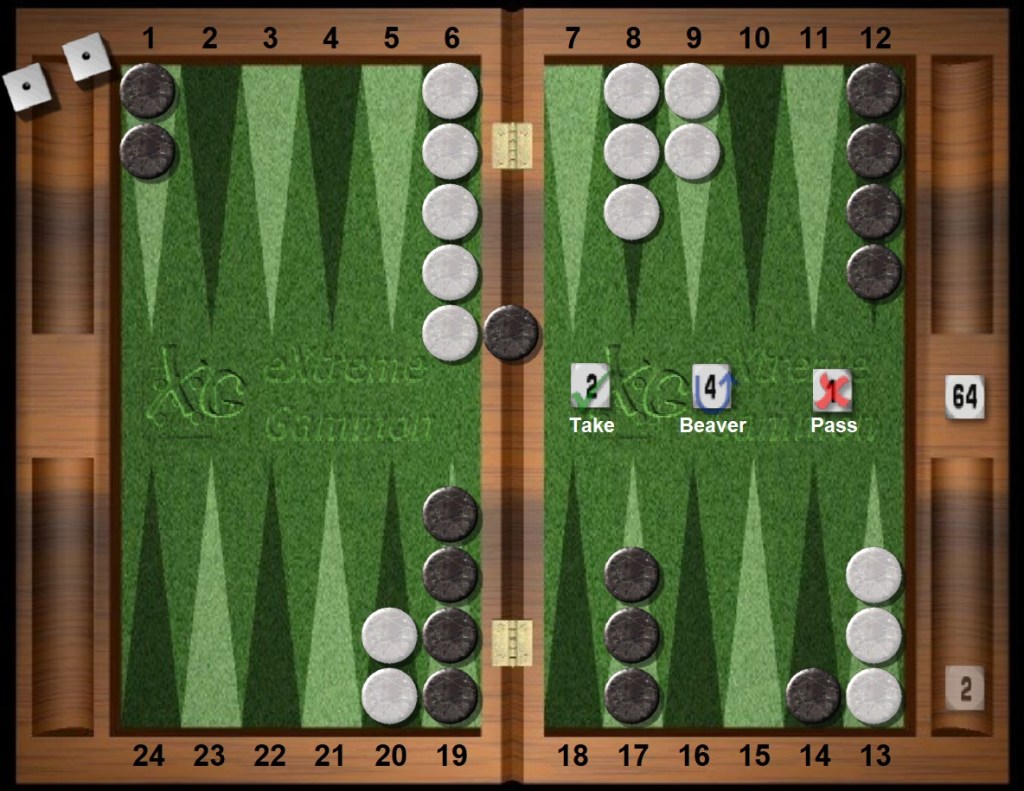
White Doubles
{ ignore whether the Take or Pass is important }
{ capture the miniature game as a koan }
This board position bumps into a reference cube — White can Double or White can wait and risk but a pittance in equity.
game flow: in cash games, an early volatile cube or some brewing gammons in the offing, even two victories in every three games, even swapping for extra gammons while volatile plans leave room for creative backgammon
Before the opening roll, roughly one new game in seven finishes as a gammon for either White or Black — 1/7 gammon wins by the act of starting a new game
Now, after Black’s big loss in pips — two dozen from the dance plus twenty from the hit blot at the outset,
now, after White’s strong anchor and hungry builders from the double 44s,
and now, during Black’s seniors moment upon being hit and dancing on the bar,
the gammon possibilities change.
Gammons:
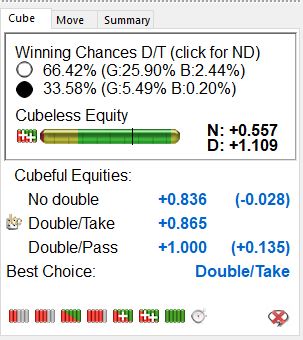
Black’s gammon wins plummet from the original 1/7 to about 1/18 in this situation
White’s gammon wins skyrocket from the 1/7 pre-game gammons to above one-in-four on average
The key follow-up question: What are the market losers?
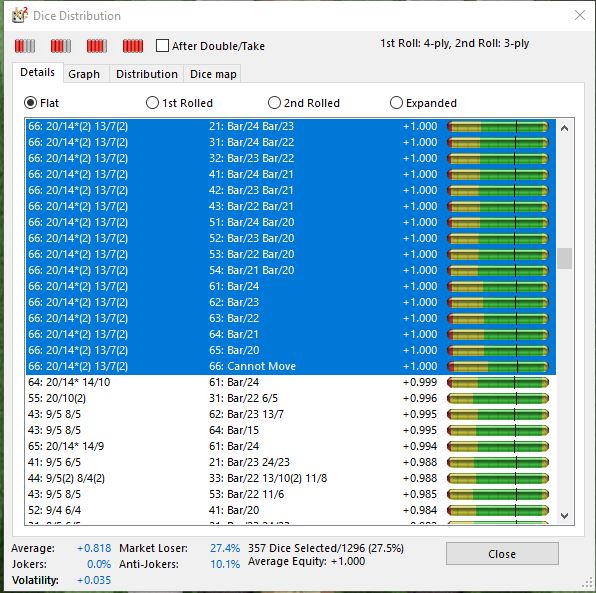
If White next strengthens the home board (with or without doubles on the dice) or hits the second black blot, and then Black rolls poorly (including dancing again), the exchange is likely to be a market losing sequence. About one exchange in four of White rolls then Black rolls (357/1296) cause Black to Pass. After White Doubles and Black Takes and such a market loser occurs, White gets paid off by cubing now, before the ML sequence.
Strangely, the Jacoby rule plays little part in this cube decision
 the baron talks backgammon