Backgammon is about the mixtures of game plans.
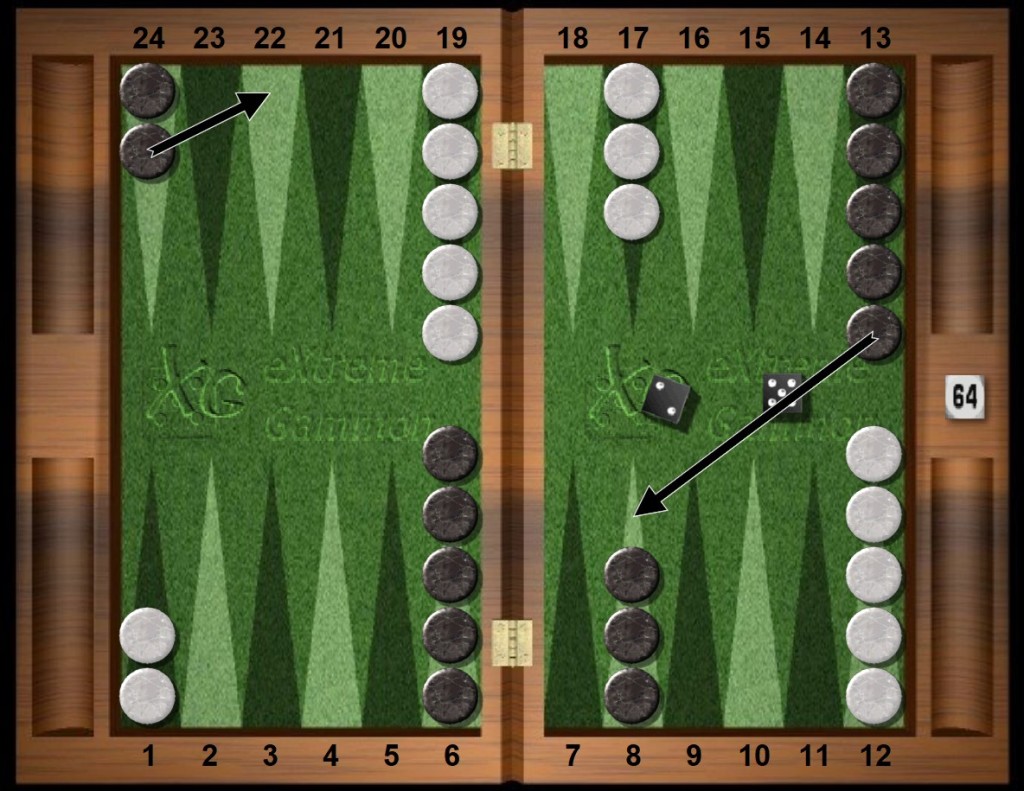
Black opens with the roll 52s on the dice and splits his backmen then stacks his 8pt.

White replies with the roll 36s and bolts her runner blot into the outfield. The running opening for White is slightly better than the standard big split opening because the split would bring the associated white 9pt builder into direct range of Black’s minor split.
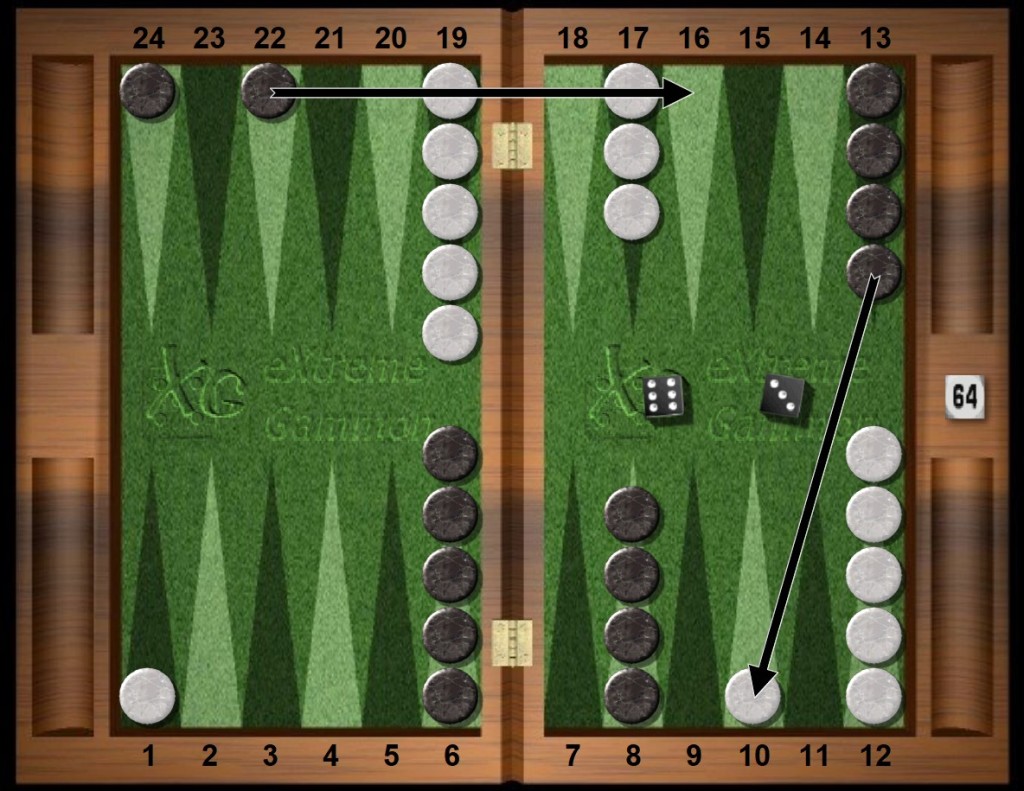
Black also rolls 63s. Black hits White’s outfield blot then advances a backman into the outfield with the six. This blot may create another blocking point on the 10pt.
Instead, if Black clusters the two runners with 24/18, which grasps for an anchor yet begs to be hit, the future running game could evaporate.
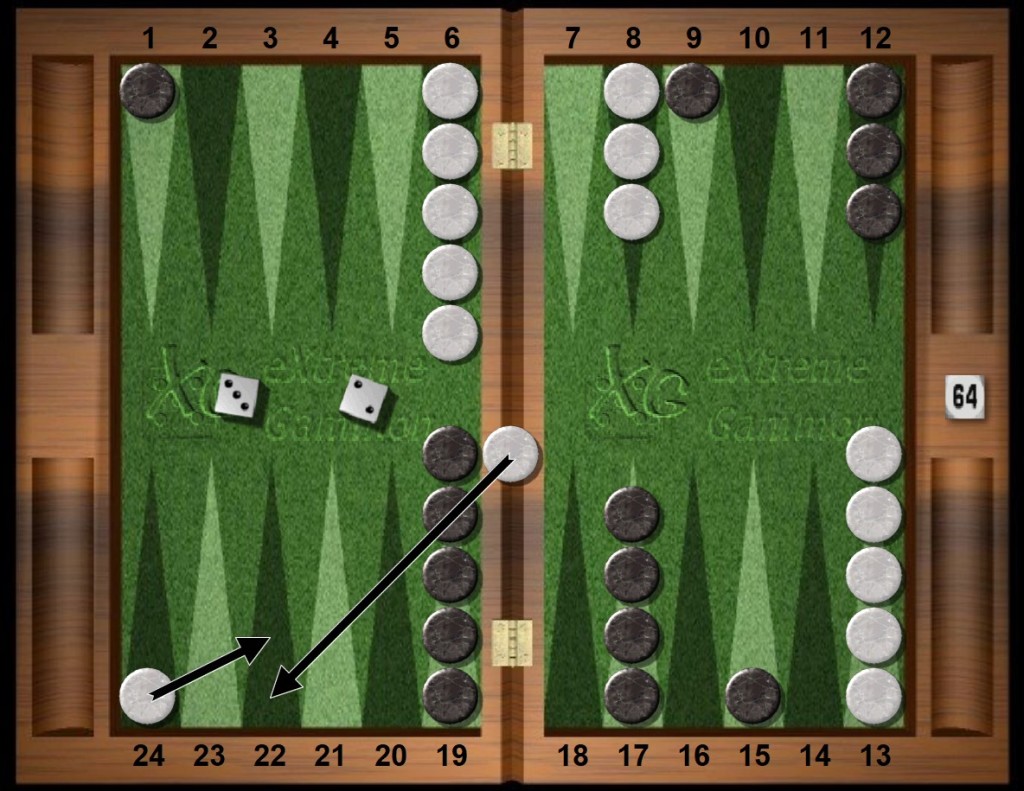
White rolls 23s from the bar and anchors inside Black’s home board. A saving structure. Yet White has advanced only four pips and achieved no new structure since the start of the game. Black is clearly a couple rolls ahead in the running game.

Black rolls double 55s, moving freight. Black’s usual home board 3pt is occupied. Hence Black makes his 1pt with the 16pt blot and the 6pt spare. A running game plan looks even better now. The remainder of this game becomes an annotation of the battle from an exclusive vantage — the game plans. Note Black has been consistent in following a viable running GP.
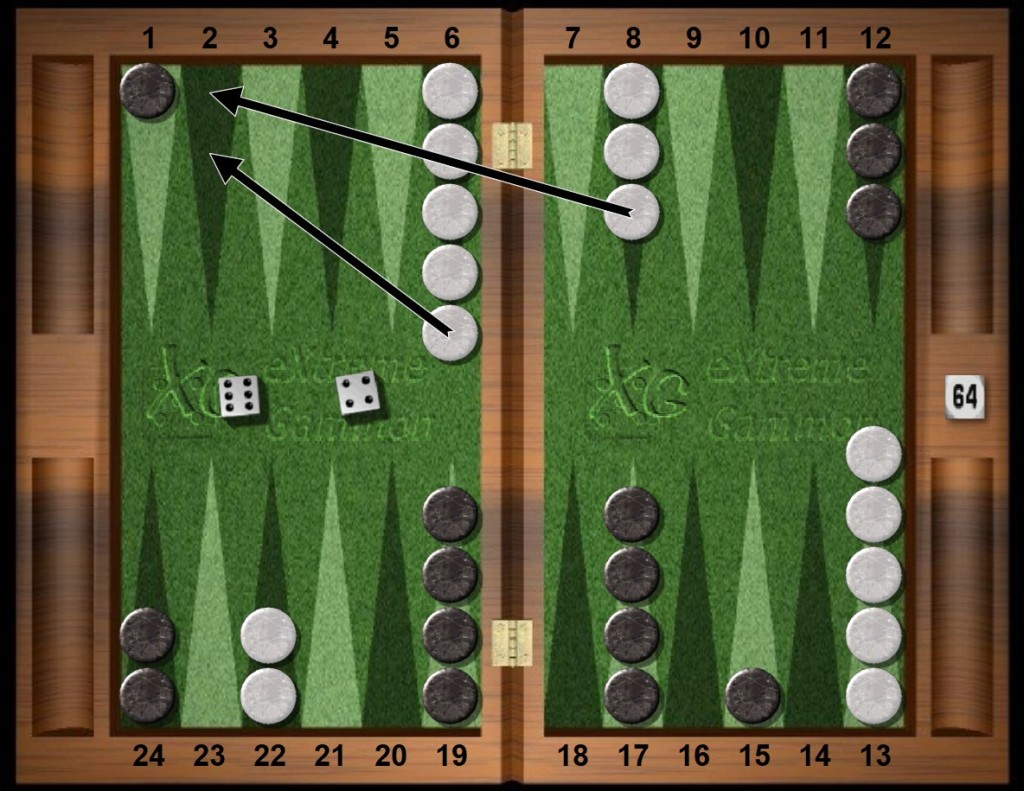
White rolls 46s and makes her deuce point. Finally, a new asset.

Black rolls a similar 64s. Black makes his 4pt.
The Running Game Plan
Every successful build of a new point on the board improves the running game plan, because those pips are not wasted. Advancing a blot destined to be hit loses both bunches of pips: the current blot location and the pips from the blot’s advancement. Later, with bad luck, after blot hits and bar dancing and primes blocking, the running game can quickly disappear.
The full scale run of Black 24/14 with 64s also beckons but, as noted, there is a big difference between a speculative run of a distant blot and the safe run into a new forward point — with a new point the running lead is banked for now, whereas an outfield blot still needs to be missed. Thirteen shots hit the black outfield blot so only 23 shots allow Black free rein to run. And there may be another round of shots at the vulnerable blot.
Moral of the story? Building points early in the game enhances all game plans. The running game plan for Black is still good because there is room behind the modest White anchor for Black to transition towards a pure race.

White now rolls a similar double 55s and launches a potential blitz by making her 3pt and pointing on the black blot at her acepoint.
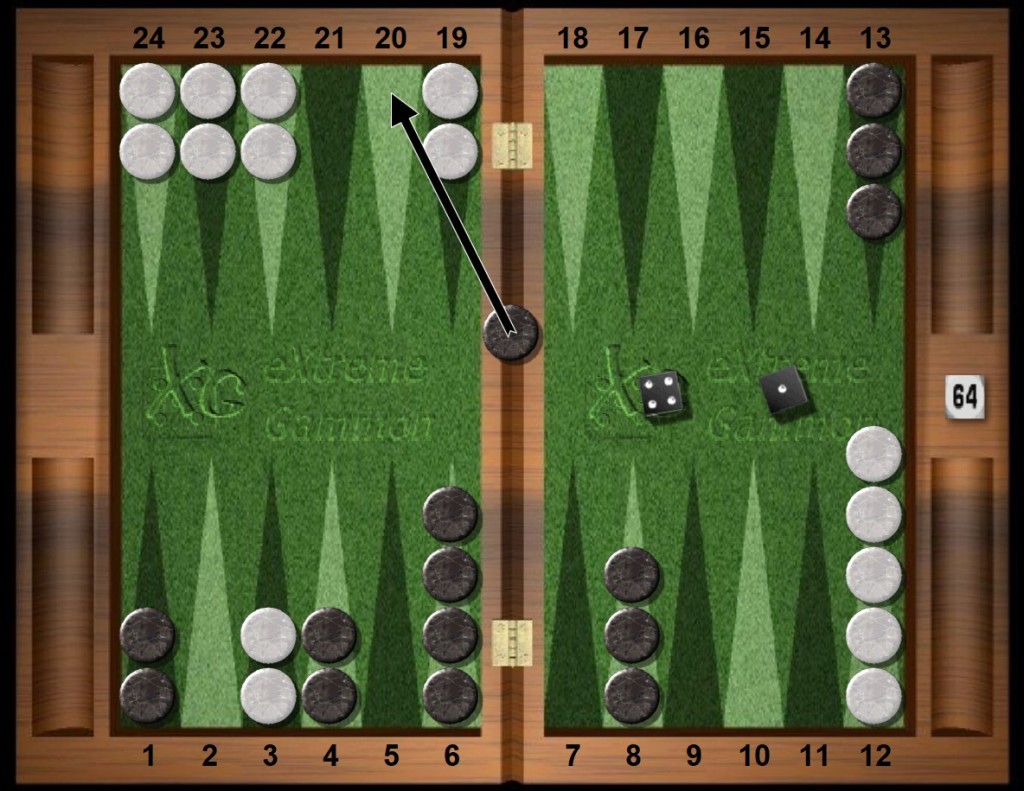
Black rolls 41s from the bar. Black enters, out and about, with the four from the bar and pushes the ace closer to home.

White rolls 56s and buries a midpoint spare.
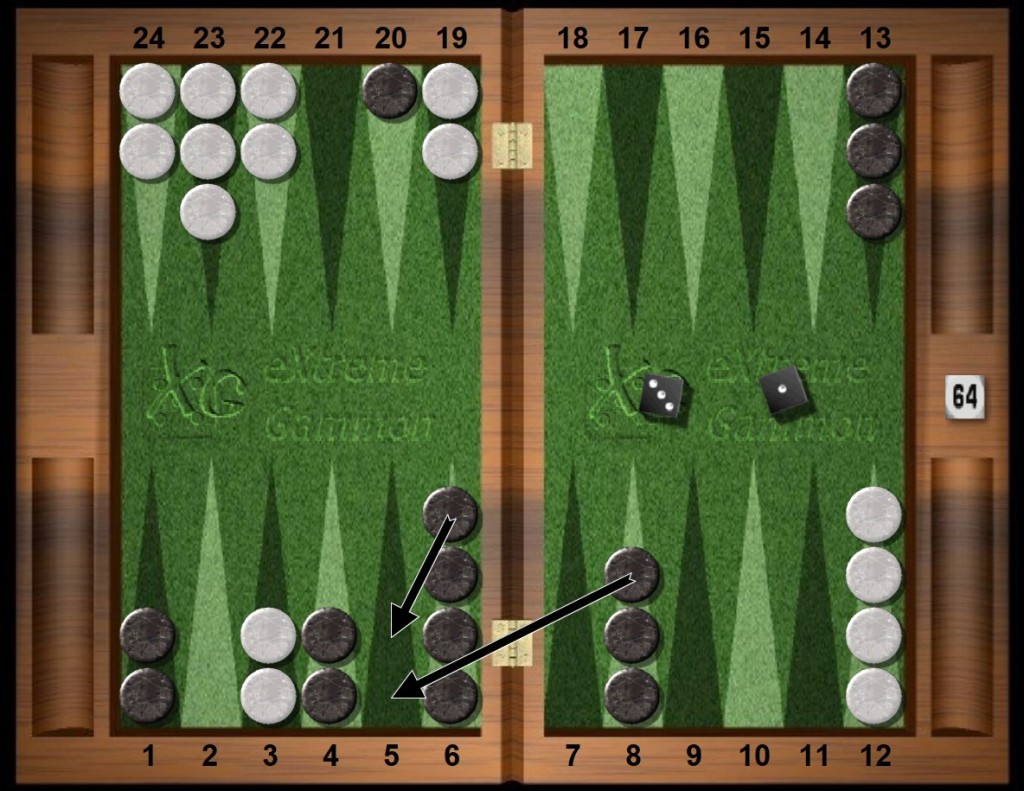
Before Black rolls, Black pauses to consider whether a cube is in order. Black’s running advantage is solid, but White has no imminent flaws.
Black rolls 31s. No safe passage for the runner. Black makes the golden 5pt, which helps both attacks and blocks as alternate game plans. The play preserves four pips and restricts White to loose hits (except 44s or 11s).
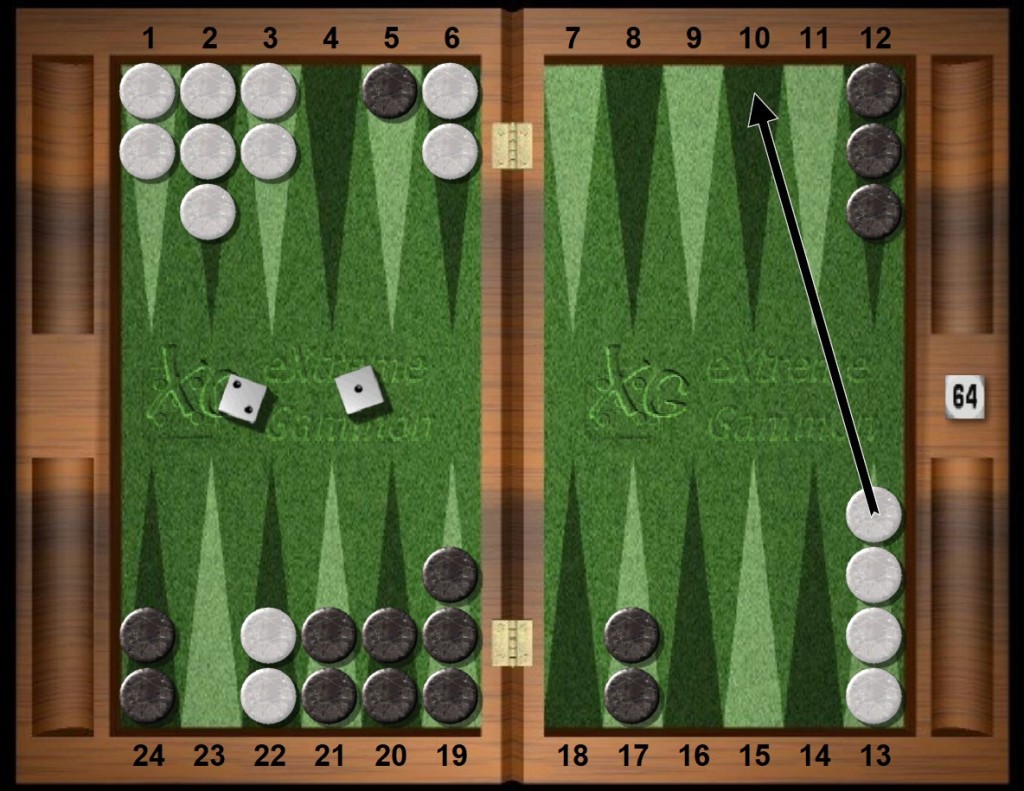
White rolls 12s and is “forced” to expose a new blot somewhere vulnerable. Observe that neither breaking the white home board with White 3/1 3/2 nor hitting loose with White 6/5*/3 is acceptable. When Black misses the outfield blot, White has an extra checker to attack after the correct play. However, the gig is up already.

Black doubles and White passes.
Black did not have a cube before his previous roll, namely before making the 5pt with his 31s. And White had not yet been forced to expose a white blot. Since White correctly passes, this exchange of “Black makes golden point then White exposes blot” is a market loser, here made real on the board.
In this game Black soon had a running lead but nurtured the other game plans anyway. As the Black running lead grew and White eventually chipped off an outfield blot, the threat of Black’s other game plans along with the running game plan caused White to pass the first cube.
 the baron talks backgammon