Yet another opening sequence with perfect play and hidden decisions.
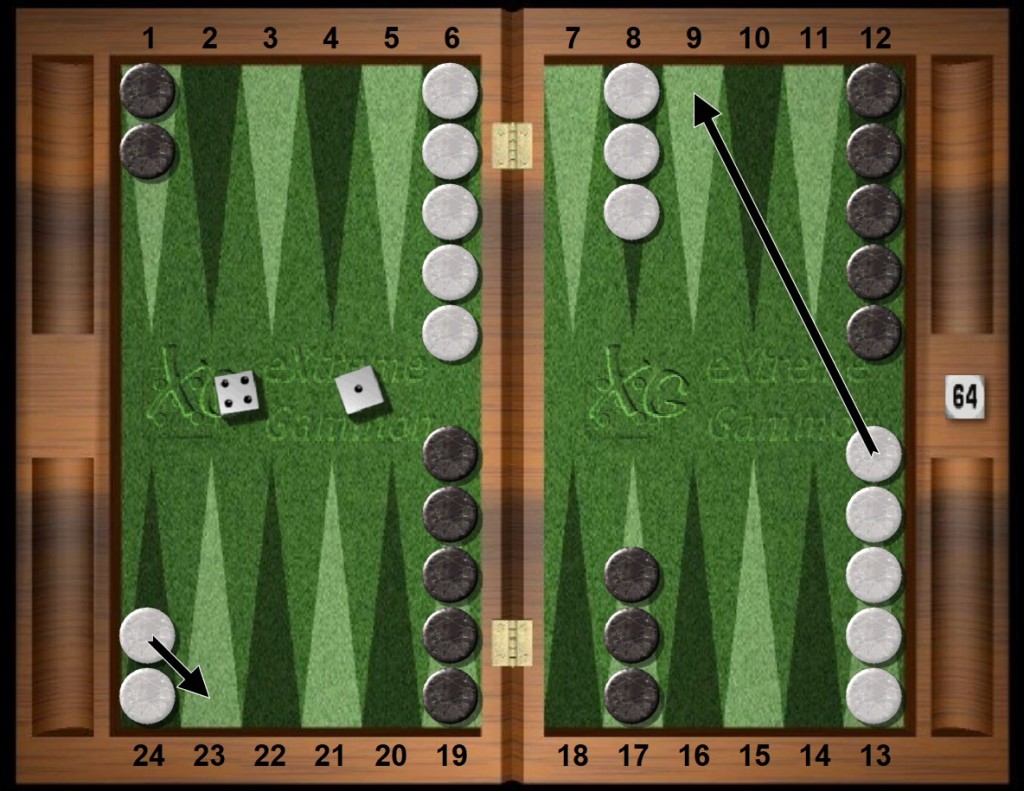
White opens with the roll 14s. White brings down a builder from the midpoint 13/9 and makes the efficient minor split 24/23. Having the opening roll is always positive equity and White plays it correctly here.
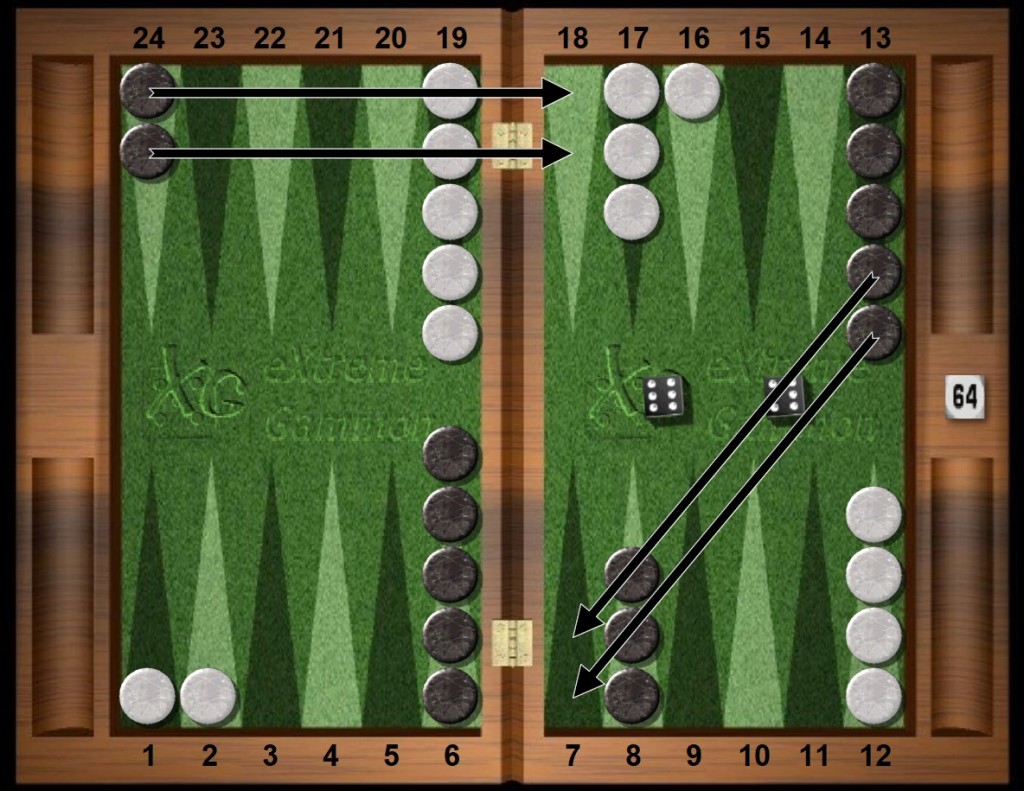
Black replies with double 66s, a joker roll with running strength, blocking strength, and latent attacking strength. Black plays the balanced grab of both barpoints, 24/18(2) and 13/7(2), establishing structure and ready for future attacks.

White rolls 46s. There are in fact eight sensible plays, with two plays vying for the top choice and the other six as small mistakes. Here are two choices.

The correct play 13/9 covers the white outfield builder. The white six becomes forced, 8/2.
But why is it slightly better than all its mates?
White opened acceptably but Black crushed the position with double 66s. White must seek safety by containing the weaknesses to exactly one geographic area. White wants to avoid unnecessary violence: minimize vulnerable blots and isolate White’s weaknesses.
If White survives the next few rolls, then White’s outfield 9pt will act as a landing post or as a blocking threat.
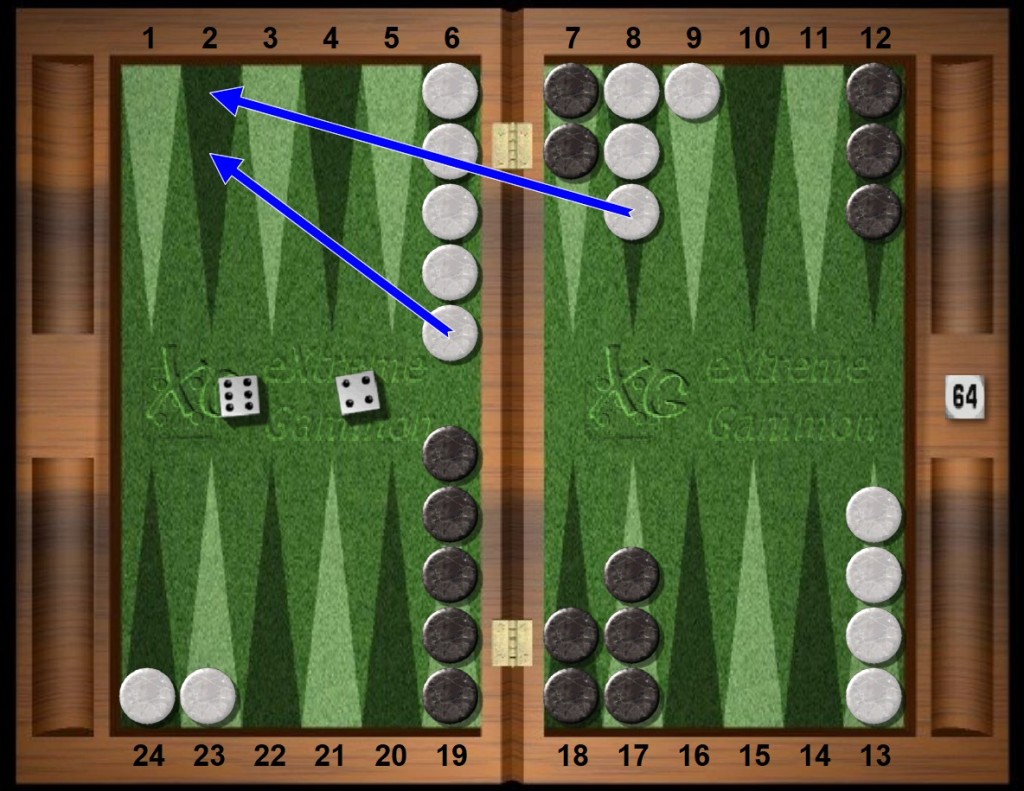
Blot management. Making the home deuce point is helpful, but leaves the unwise target of an additional white blot. First things first — White must survive.
After White makes the deuce point, Black is very close to a first double — about 30 milli-points of equity short of a first cube.

Before this roll and after White’s correct play of 46s, Black does not yet have a first cube. Suddenly Black rolls his second big joker, this time double 55s.
The politics of pouncing onto a blitz: the twin hits with two home points, crushing resistance and preparing for the aftertaste of the cube.
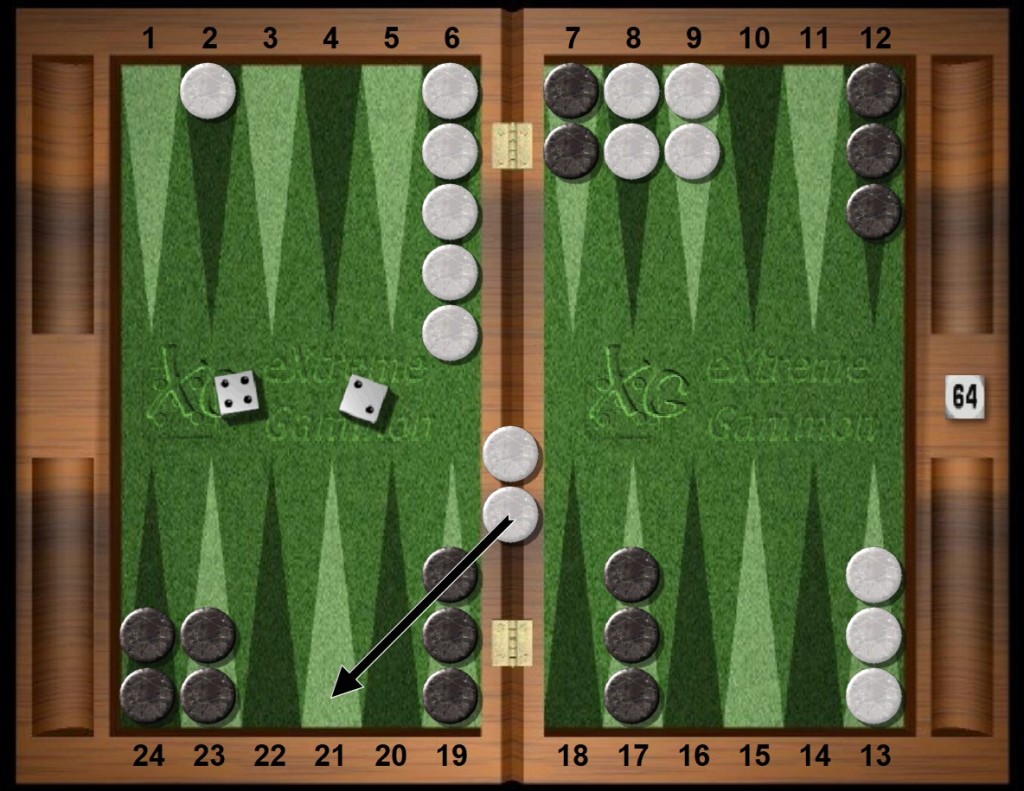
White enters only one dancer from the bar — who can blame White?
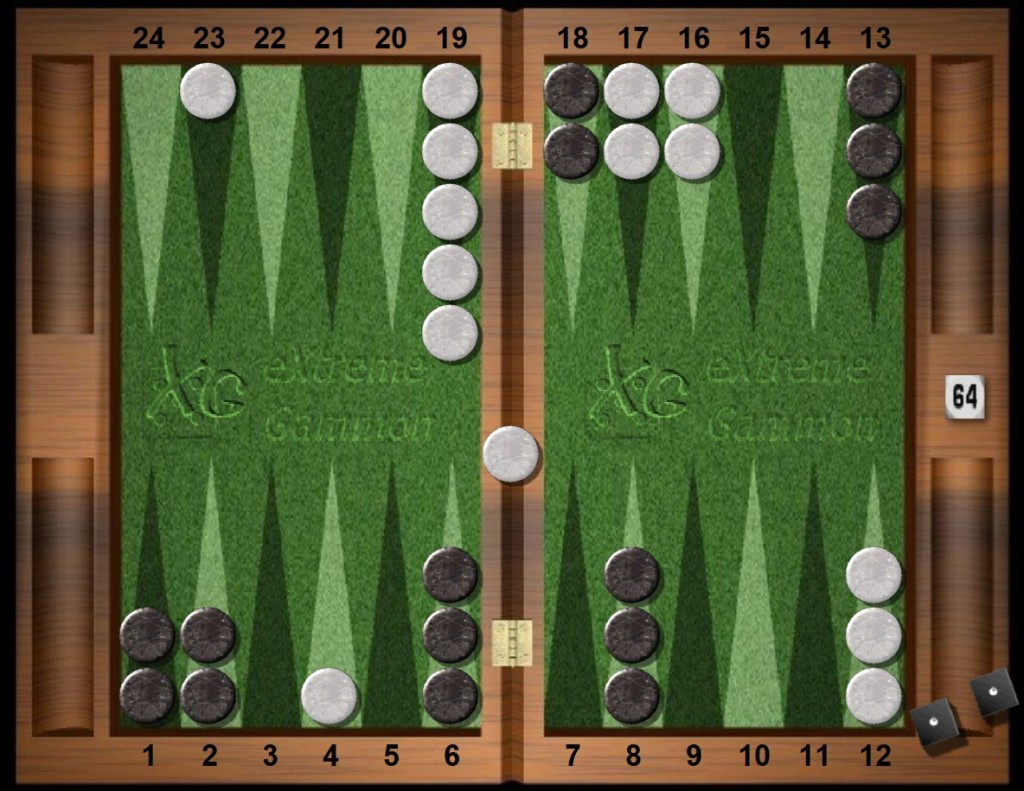
No need to roll the position out — a clear Pass by White when Black offers a first Double of the cube. Intuition and fighting spirit strongly suggest that Black must double. But a simple count will confirm the cube action.
Before White’s entry roll of 24s, the situation cleaves into four scenarios:
White dances both checkers after White rolls nine tosses (the square of three home points of 1s, 2s, 6s). Then Black doubles and White passes, guaranteed.
White enters both dancers with doubles (three tosses), thereby anchoring. Black does not yet have a first cube.
White enters one dancer but not the second dancer — half the time with eighteen tosses. Black doubles and White passes.
Lastly, White enters both checkers but does not anchor (six tosses). Then Black doubles and now White takes. Only this scenario directly involves an estimate of gammon fractions.
Hence, Black is far better than simple 3-1-theory says is needed. The double dance plus the single dance already tally to three-quarters. Adding more than half (to estimate gammons) of the six tosses with no dancers yet no white anchor and Black must cash this game.
Easy Black cube, and easy White pass after White 24s.
 the baron talks backgammon