Sometimes in backgammon there is beauty in perfection — and sometimes not.

Bringing two spares down from the midpoint and the other minor split to the 22pt and 10pt are both “acceptable” opening plays, but the chosen split of 24/21 and down of 13/11 is the usual start for an opening roll.
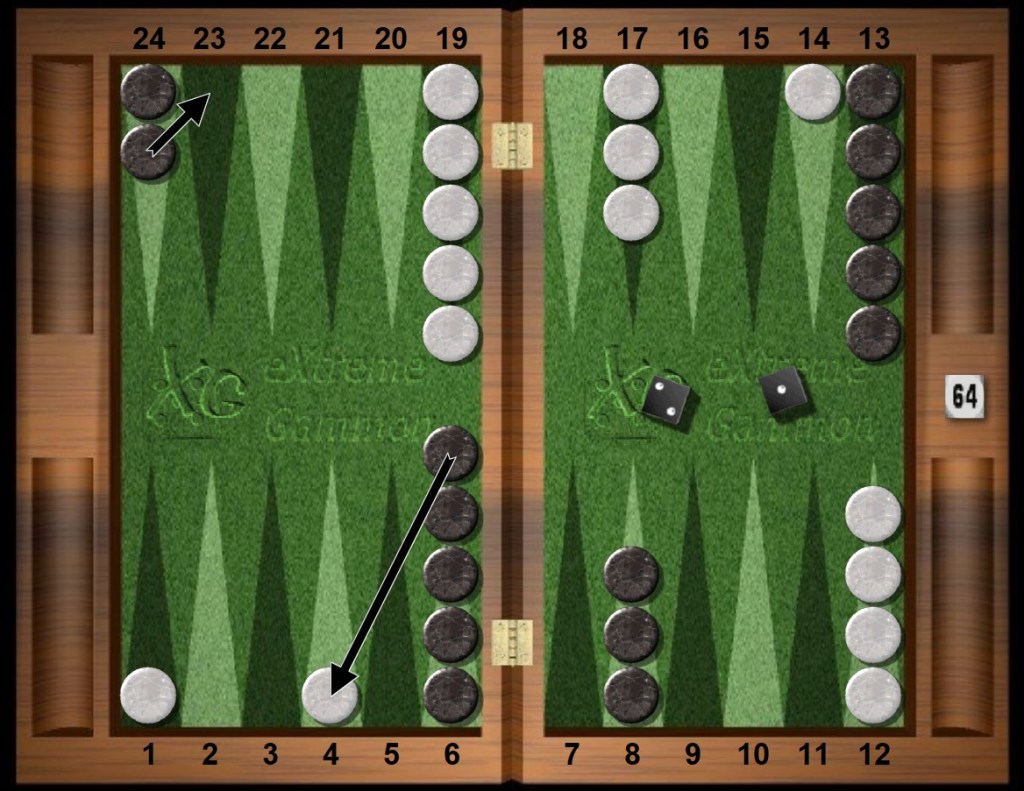
When White opens with the game roll 23s then White’s blot is safer and White’s anchor would be better.
Lady Luck and the opening gambit.
By a hefty margin the loose hit of Black 6/4* puts White on the bar. Only Black’s small split of 24/23 can lay the groundwork for turning an opening failure into a scramble and a reversal.
Black’s loose hit 6/4* is the best reply.

White 45s enters from the bar to hit the black home blot.
White could continue to run after the hit of the black blot, but since Black’s runners are already split, the chosen play 13/8 safely adds more attackers for White in the attack zone.
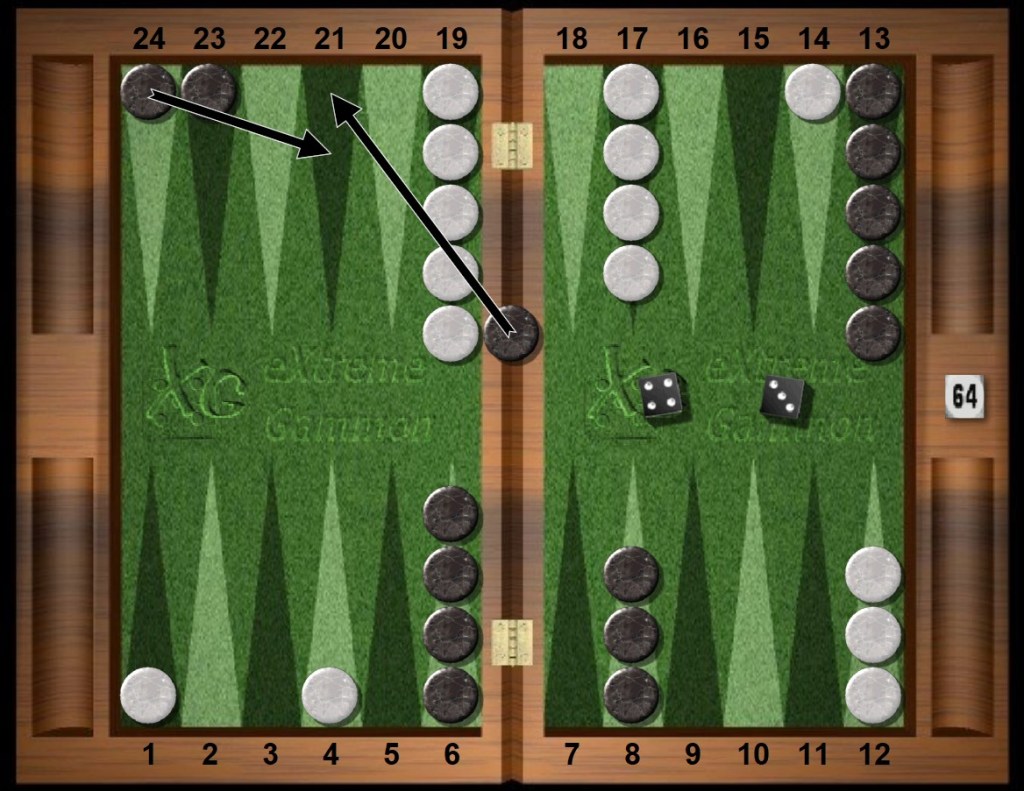
Black enters from the bar B/21 and anchors 24/21 with the roll 43s.

White also anchors with the roll 12s.
The Black and White positions are structurally similar but White has a solid running lead of three average rolls.

With the roll 64s Black safely slots the 3pt.
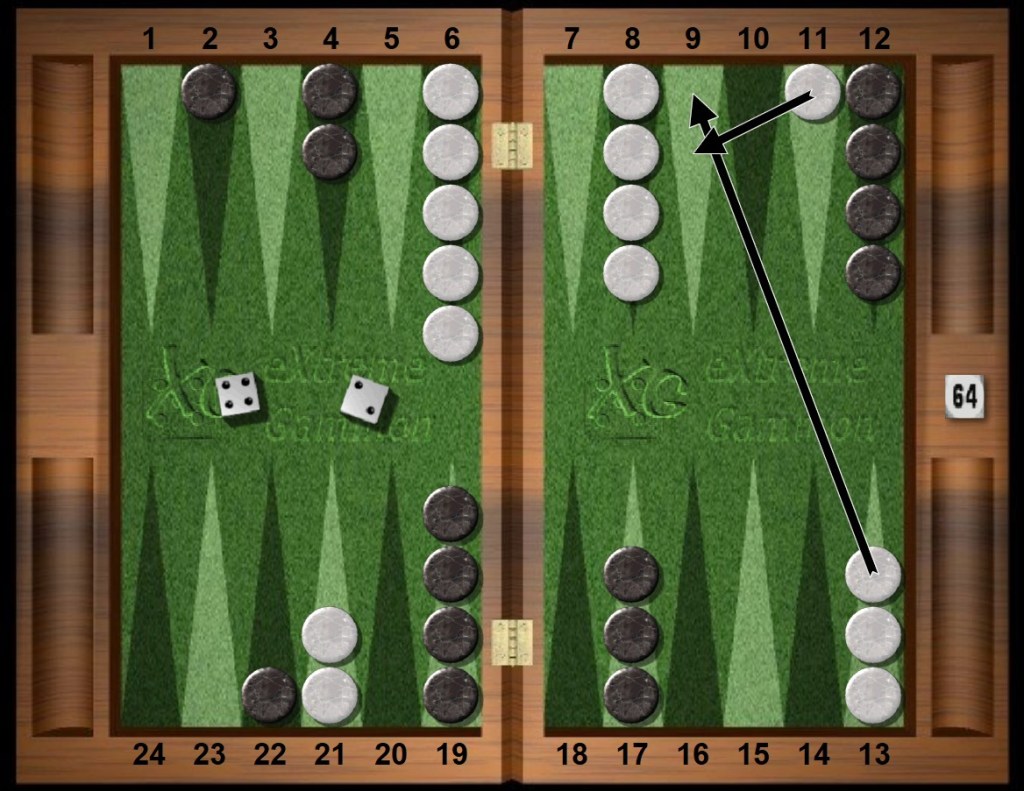
With the roll 24s White makes the blocking 9pt in the outfield.

With 21s Black makes the home 3pt.
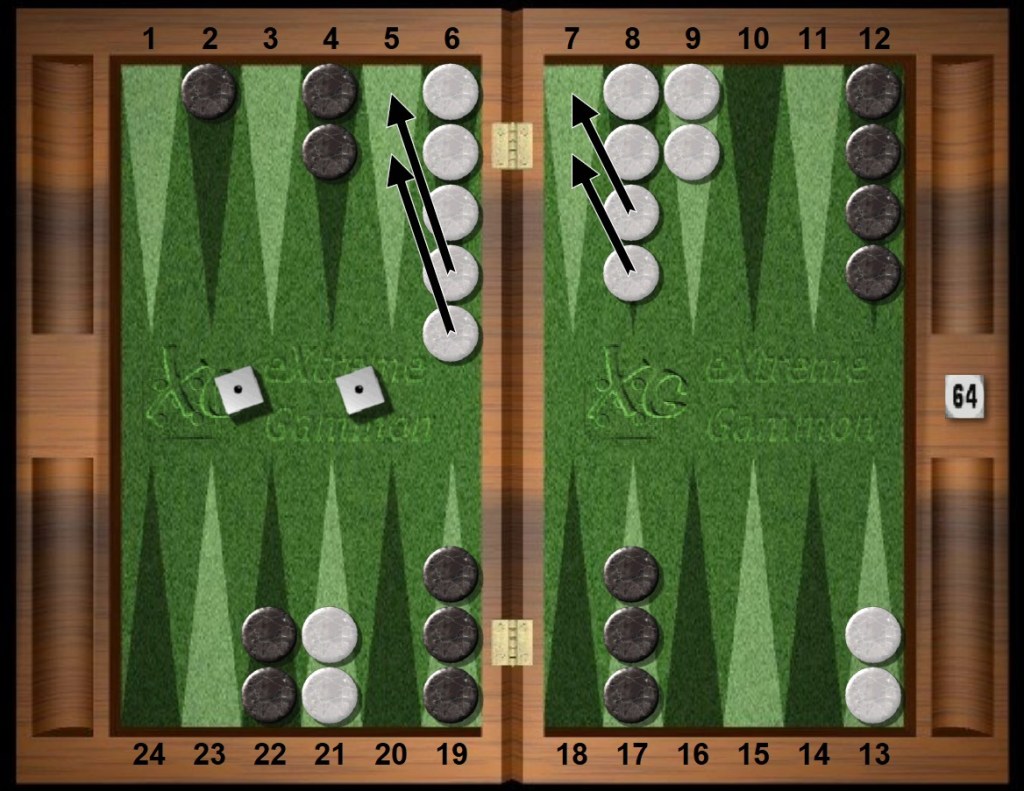
With the first roll of doubles, White double 11s allow White to make the two best blocking points, the home 5pt and the outfield barpoint.
Depending on Black’s next roll of the dice White can consider a first double of the cube.
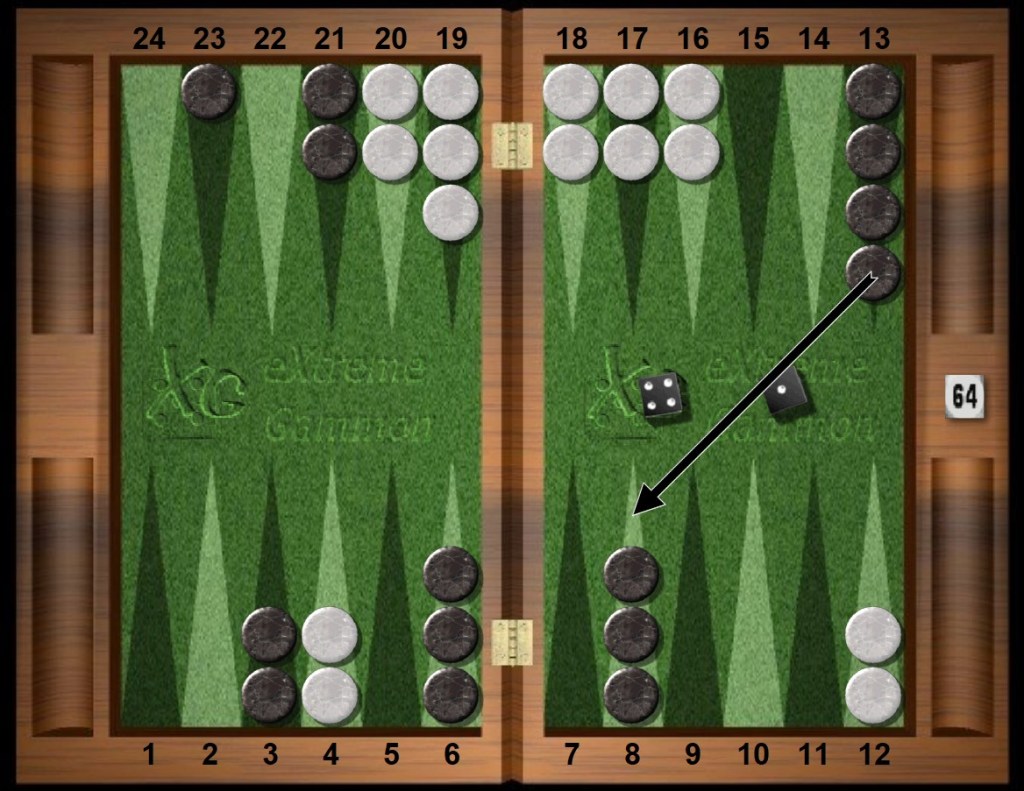
Black rolls 41s and quietly shifts the outfield spare to stack the 8pt. Black needs no further weaknesses in the position to reward White’s potential cube.

What a cube ? ! ?
This game is a work of art.
White’s opening minor split with 23s and then Black’s reply of 21s, hitting loose, has evolved to here — an early double by White. Both Black and White have high anchors. Both White and Black have outfield coverage from the midpoint. Both Black and White have working blockades, although White’s 5prime is much better. White also has a running lead of two average rolls.
White’s chances for a gammon loss are very low yet Black’s chances for a gammon loss is about average (meaning typical of an opening roll). The position is not very volatile. The high anchors explain this conclusion.
White has an early Double and Black has an easy Take.
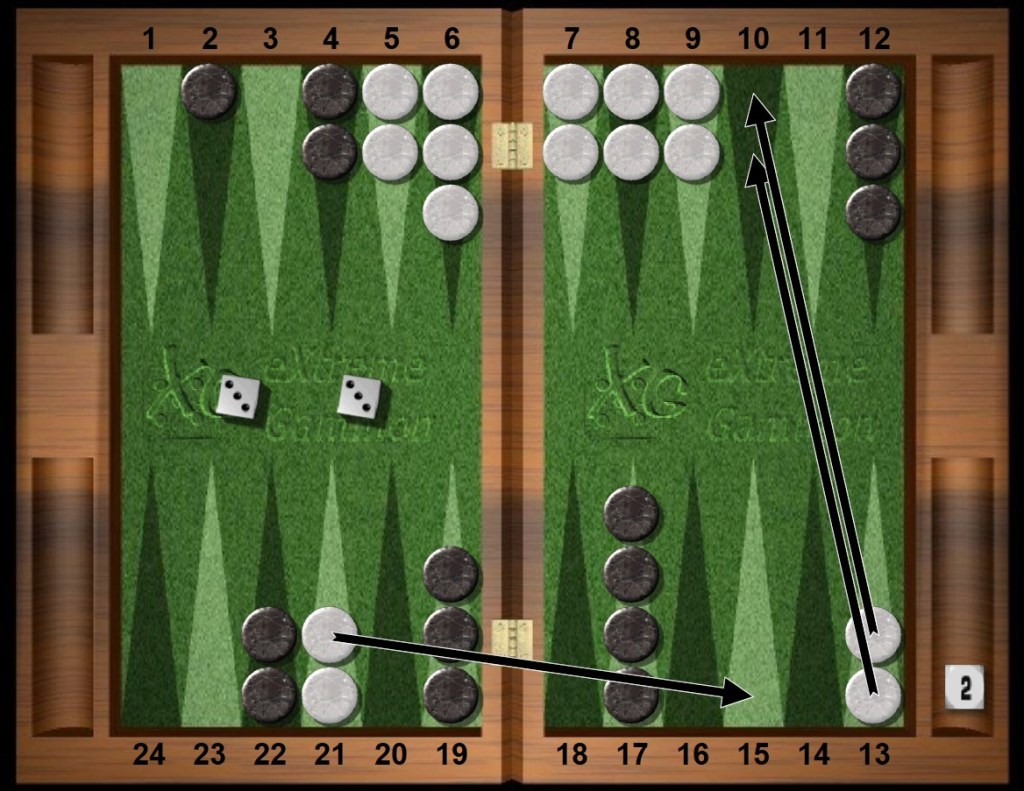
The dice roll and checker play immediately following any accepted Double is always interesting and often tricky to play correctly. Here White rolls double 33s and makes the full prime. White also runs from the white anchor, trying to induce an exchange of hits between White and Black blots, thereby increasing White’s gammon wins.

Black plays 51s simply to avoid increasing gammon losses.

White rolls double 55s (the third toss of doubles in a row for White) and safely runs the white blots home. The structure of this game is now a one-way holding game.
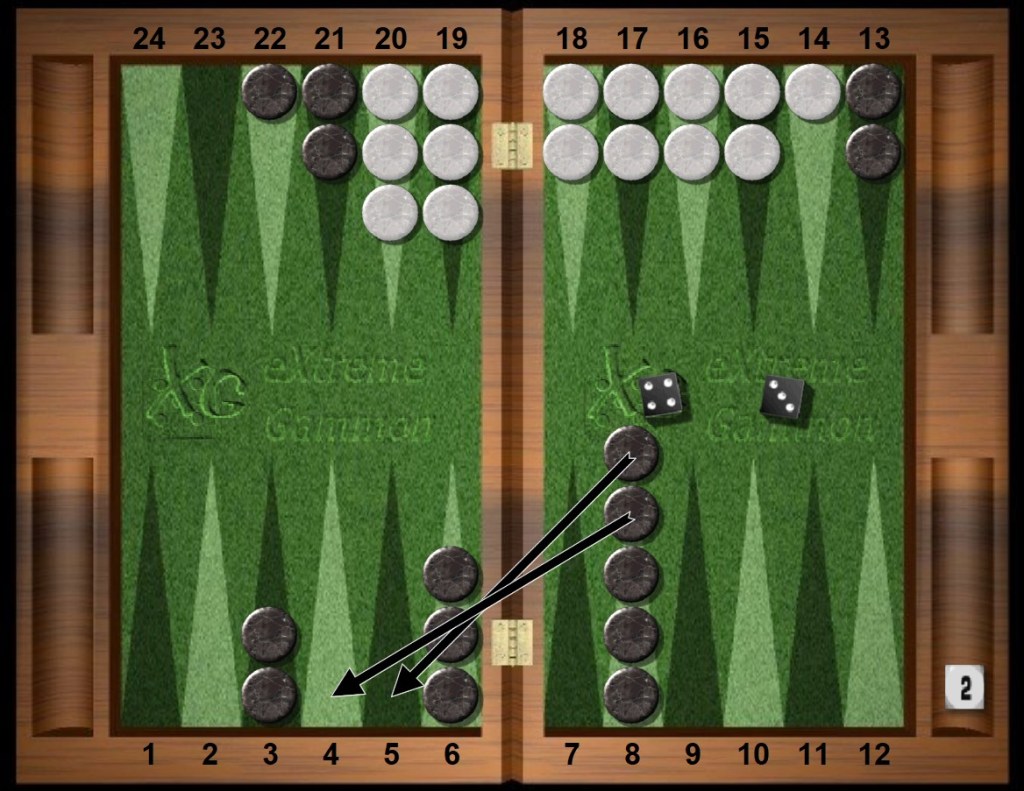
Black’s top priority is to build a strong home board quickly while awaiting a forced white blot. Therefore after 43s Black slots both home points.

With the roll 16s several of White’s plays are acceptable. White chooses a controlled break of the full prime by clearing the 8pt.
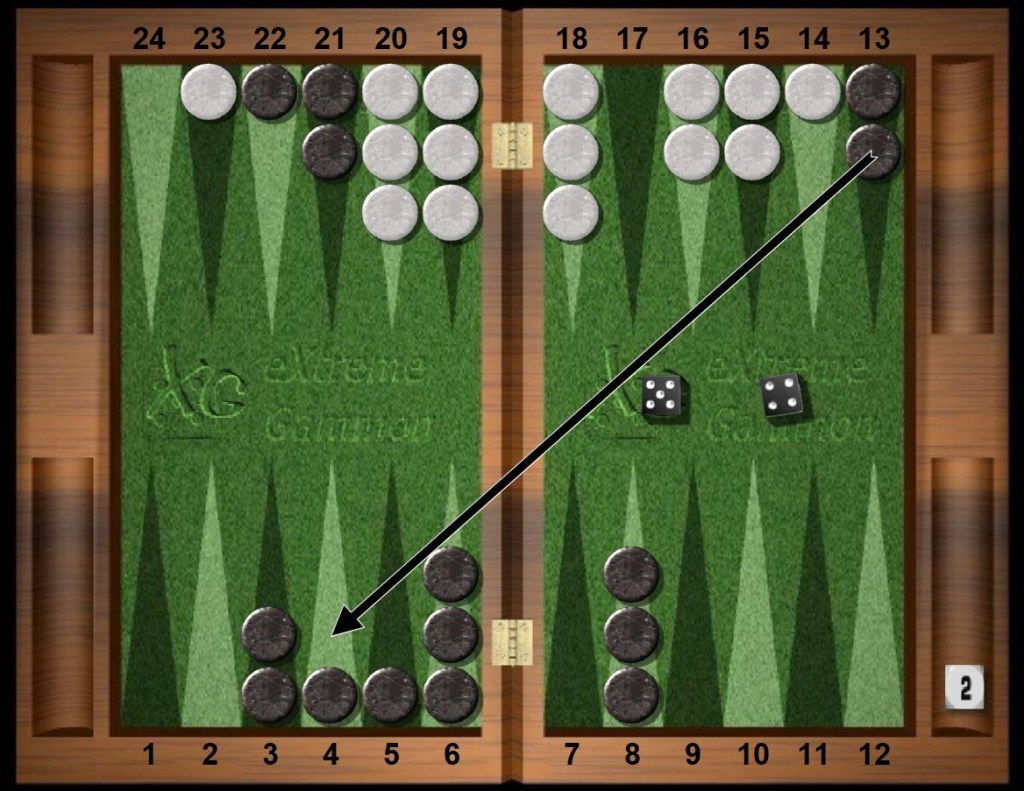
Black rolls 54s and theoretically can escape the third black runner but that would be a strategic error. In the game Black makes the home 4pt first with 13/4.

White 25s safely covers.
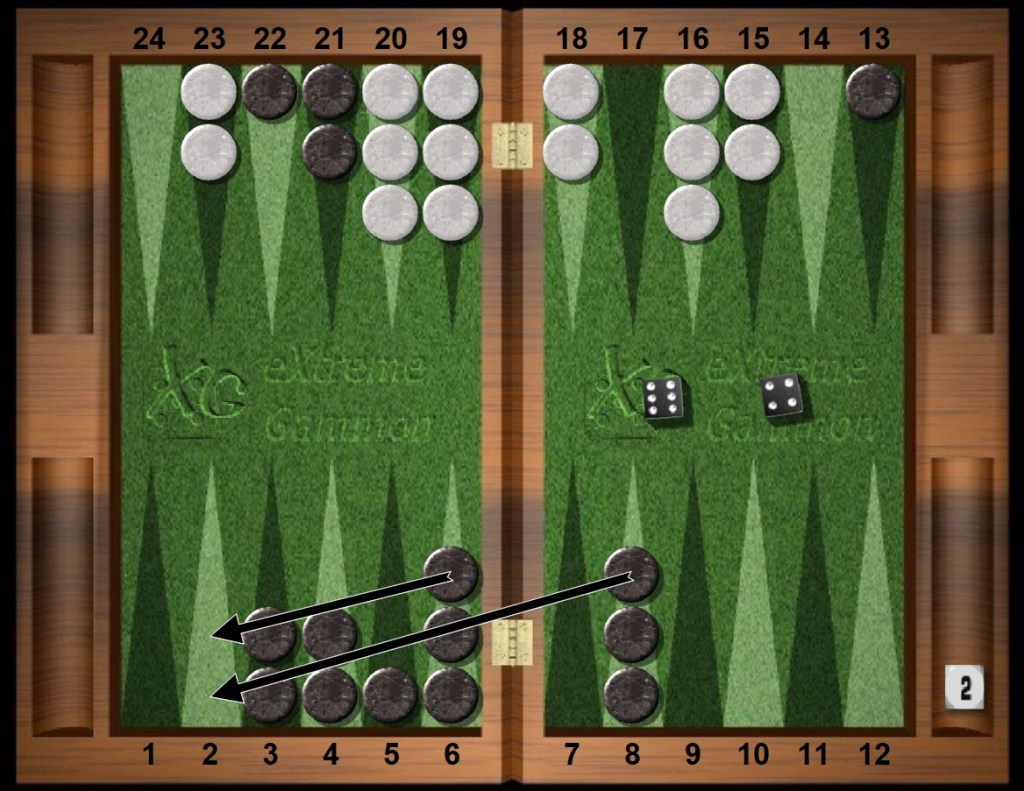
Black 64s makes a new home board point, in preparation.
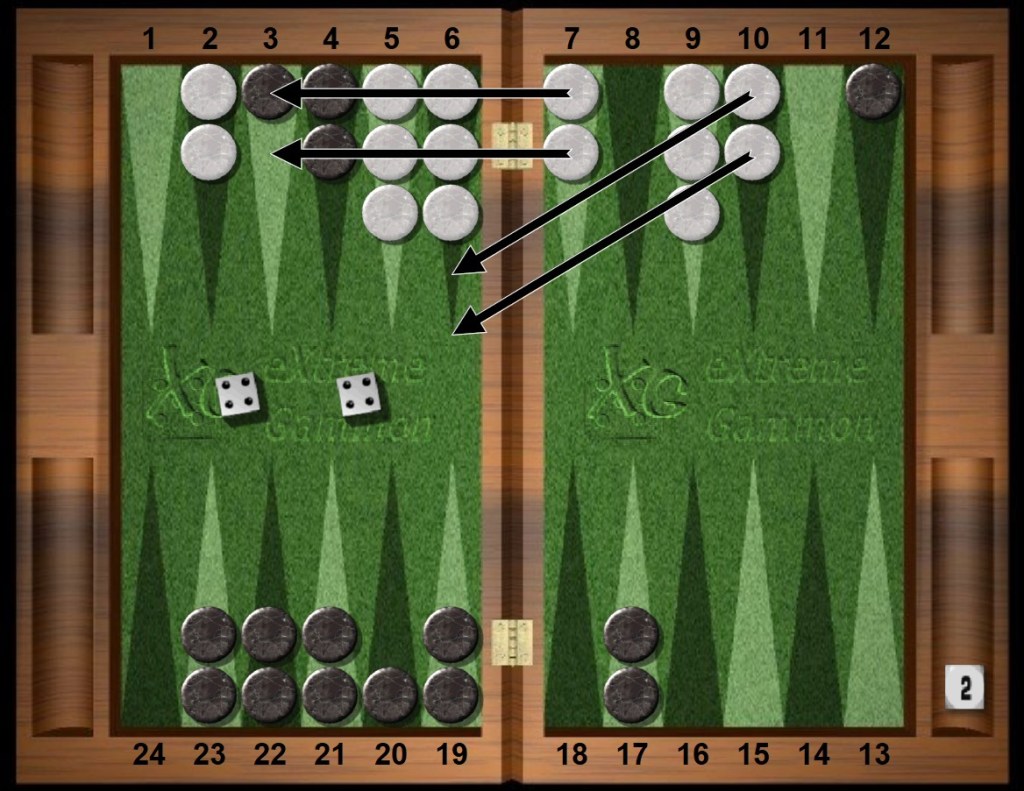
White rolls double 44s, the fourth such white doubles tossed, and shifts the points into the White home board, hitting the black blot.

With roll 43s from the bar Black enters as an anchor spare and covers the home 5pt
NOW Black is ready to attack White, if White is forced to blot an outfield checker.
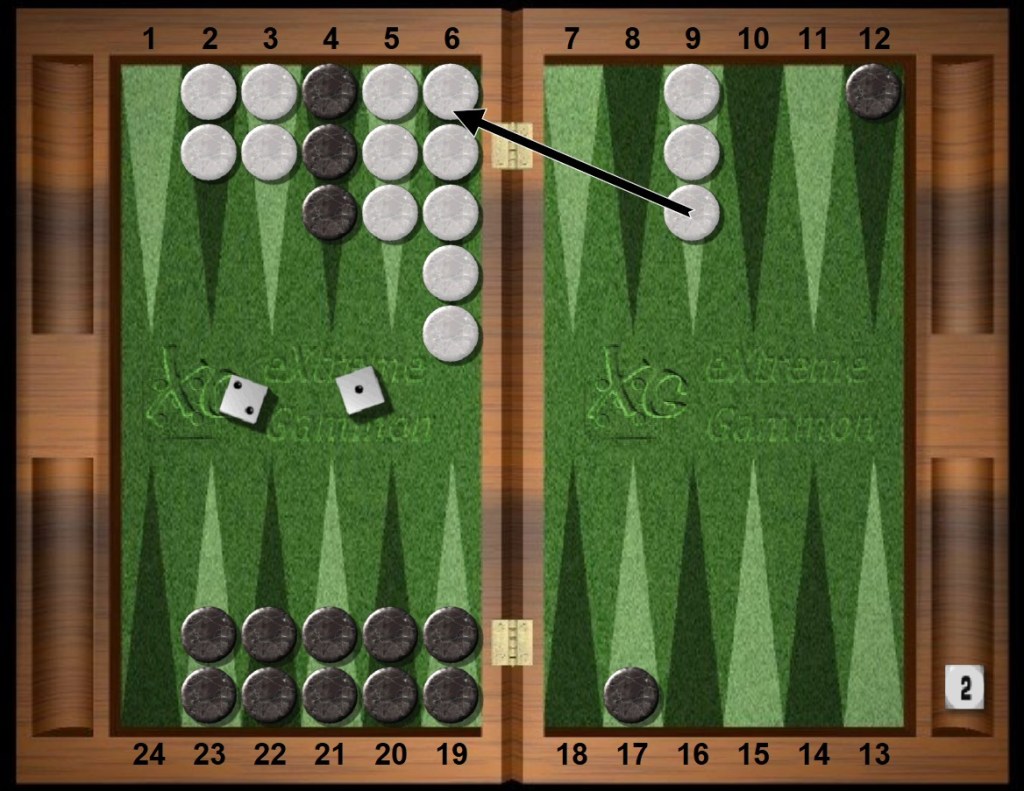
White 12s is a small but safe roll.

Double 44s, Black’s first roll of doubles in the game, allow better coverage of the outfield and home board if White is forced to blot.

White rolls 26s and is forced to offer a white blot for attack. White shifts the blot to the 7pt, minimizing Black’s hits to eleven shots.

Black gets lucky and hits with 43s. Black also moves the second checker into the outfield.

The best roll by White is 16s, which enters from the bar and escapes into the outfield. Unfortunately for White, it is not quite enough.

Black recubes.
Only eight shots miss (the small totals 11s,12s,13s, plus 34s and 44s). Some of those misses permit Black to make outfield points and, should White roll low dice, creates a second Black shot on the running white blot.
Black redoubles and White passes
And this game is beautiful.
 the baron talks backgammon